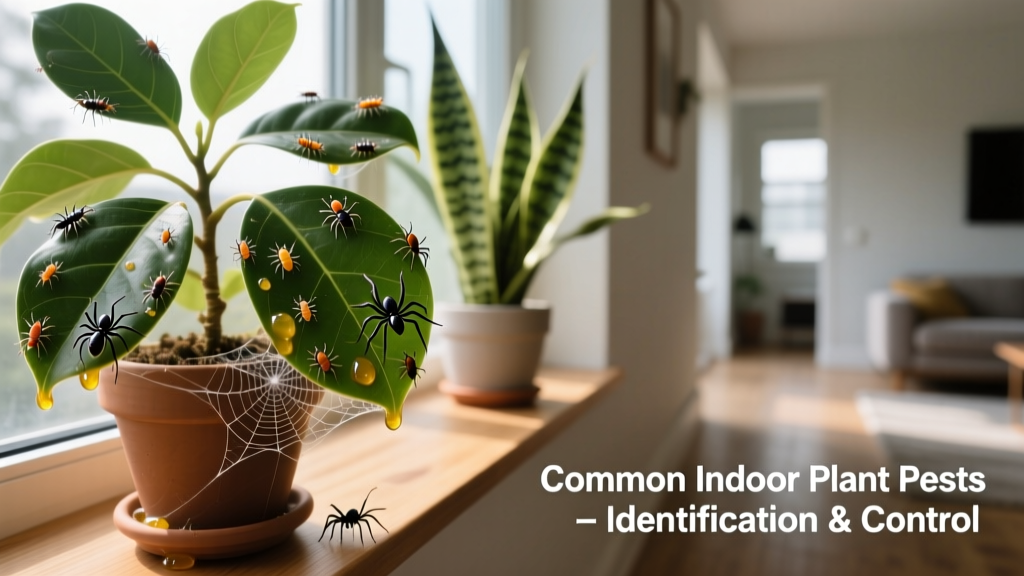
Small bugs crawling on your houseplant leaves, swarming near the soil, or leaving sticky residue aren’t just annoying—they’re early warnings of stress, overwatering, or hidden colonies. Left unchecked, pests like fungus gnats, spider mites, and mealybugs weaken roots, stunt growth, and transmit plant viruses.
Identification
Accurate ID starts with close observation—not just what’s moving, but where it’s hiding and what damage it leaves behind. Use a 10× hand lens to inspect undersides of leaves, stem joints, and soil surface. Look for eggs (tiny white specks), cast skins (translucent shells), webbing, or stippling.
| Pest | Size & Appearance | Key Signs | Typical Hotspots |
|---|---|---|---|
| Fungus gnat | 1–3 mm, dark gray, mosquito-like, weak fliers | Adults hover near soil; larvae feed on roots and fungi in damp media | Top 1 inch of potting mix, especially after overwatering |
| Spider mite | 0.4 mm, reddish-brown or green, barely visible without magnification | Fine webbing, yellow stippling, leaf bronzing, rapid defoliation | Undersides of leaves, especially on spider plants and pothos |
| Mealybug | 1–4 mm, oval, white cottony wax coating | Cottony masses in leaf axils, sticky honeydew, sooty mold | Stem nodes, leaf bases, and under leaves of succulents and fiddle-leaf figs |
| Aphid | 1–2 mm, pear-shaped, green/black/pink, soft-bodied | Clusters on new growth, curled leaves, shiny honeydew | Shoot tips, flower buds, and tender stems of peace lilies and herbs |
What Attracts Them
Houseplant pests rarely appear from nowhere. They hitchhike on new plants, enter through open windows, or explode from dormant eggs when conditions shift. Overwatered soil creates ideal breeding grounds for fungus gnat larvae—studies show 87% of infested houseplants had saturated media for >48 hours (University of Florida IFAS Extension, 2022). Low humidity favors spider mites; dusty foliage invites aphids and scale. Reused pots with residual biofilm also harbor eggs and pathogens.
- Unsterilized potting mix (especially peat-based blends retaining moisture)
- Bringing in new plants without quarantine (60% of indoor infestations start this way — RHS Pest Survey, 2023)
- Poor air circulation around grouped plants
- Leaving fallen leaves or dead blooms in pots
Treatment Methods
Natural Options
Start with least-toxic interventions—many pests respond quickly to physical removal and environmental tweaks. Blast aphids and spider mites off with a strong spray of room-temperature water. Wipe mealybugs with 70% isopropyl alcohol on a cotton swab—test first on a small leaf area. For fungus gnats, let the top 2 inches of soil dry completely between waterings; then apply a 1:1 mix of hydrogen peroxide (3%) and water to kill larvae on contact.
"A single application of neem oil soil drench reduces fungus gnat larval counts by 92% within 72 hours—but only if applied when soil is moist enough to carry it downward." — Dr. Linda Chalker-Scott, Washington State University Extension, 2021
Chemical Controls
Reserve synthetic options for persistent, multi-generational infestations. Insecticidal soap (potassium salts of fatty acids) works on contact against soft-bodied pests like aphids and young mealybugs—but must coat the insect directly and rinses off easily. Pyrethrin sprays offer quick knockdown but break down in sunlight and can harm beneficial insects like predatory mites. Always follow label directions: never mix neem oil with horticultural oils or alkaline products.
- Apply treatments in early morning or late evening to avoid leaf burn
- Repeat every 5–7 days for 3 cycles to catch newly hatched nymphs
- Discard heavily infested leaves before treatment to reduce pest load
Prevention
Prevention isn’t about perfection—it’s about consistency. Inspect new plants for 7–10 days in isolation before placing them near others. Repot annually using fresh, pasteurized potting mix—avoid garden soil, which carries nematodes and fungal spores. Keep humidity above 40% to deter spider mites; use a hygrometer to verify. Wipe leaves monthly with damp microfiber cloth to remove dust and early-stage eggs.
- Place yellow sticky cards vertically near susceptible plants to monitor adult fungus gnats and thrips
- Use bottom-watering for plants prone to foliar pests (e.g., African violets)
- Store unused potting mix in sealed containers away from garage or basement moisture
When to Call an Exterminator
Professional pest control is rarely needed for houseplant-only infestations—but call one if you find pests spreading beyond plants into baseboards, cabinets, or wall voids. That suggests a structural issue (e.g., moisture intrusion attracting springtails or silverfish) or cross-infestation from stored grain beetles or carpet beetles. Also consult a pro if multiple rooms show synchronized outbreaks—this may indicate a shared source like contaminated mulch or reused nursery pots.
Can I reuse soil from an infested plant?
No—not without sterilization. Baking soil at 180°F for 30 minutes kills most eggs and larvae, but destroys beneficial microbes and may release toxins from organic additives. Better to discard infested soil and clean pots with 10% bleach solution for 10 minutes. Learn more about safe repotting practices.
Why do bugs keep coming back after treatment?
Most repeat infestations happen because eggs or pupae survive initial treatment—or because conditions haven’t changed. Fungus gnat eggs hatch in 3–6 days; spider mite eggs in 3–5. If you treat once and resume overwatering, you’ll restart the cycle. Track progress with weekly photos and sticky card counts.
Are these pests dangerous to pets or people?
None bite humans or pets—though some (like certain springtails) may trigger mild skin irritation on sensitive individuals. Mealybugs and aphids don’t carry human disease, but their honeydew can promote mold growth indoors. For pet-safe options, see our guide on non-toxic indoor pest solutions.
Do LED grow lights attract bugs?
Not directly—but they extend photoperiods and raise ambient temperatures, accelerating pest life cycles. Pair grow lights with fans for airflow and avoid running them 24/7. UV-A wavelengths (365 nm) in some LEDs *can* attract fungus gnats; switch to full-spectrum white LEDs if monitoring shows increased activity.
How long until my plant recovers?
Visible improvement usually appears in 7–14 days after consistent treatment. New growth signals recovery—but check roots before assuming all is well. Gently lift the plant: healthy roots are firm and white; mushy brown roots mean secondary rot from gnat larvae damage. Trim affected roots and repot in fresh mix. See root rot diagnosis and repair for next steps.
Healthy houseplants resist pests better than stressed ones—so focus less on eradication and more on balance: right water, right light, right airflow. Rotate plants seasonally, prune crowded foliage, and keep a log of treatments and outcomes. With steady observation, most infestations become manageable—and even teach you more about your plants’ real needs.