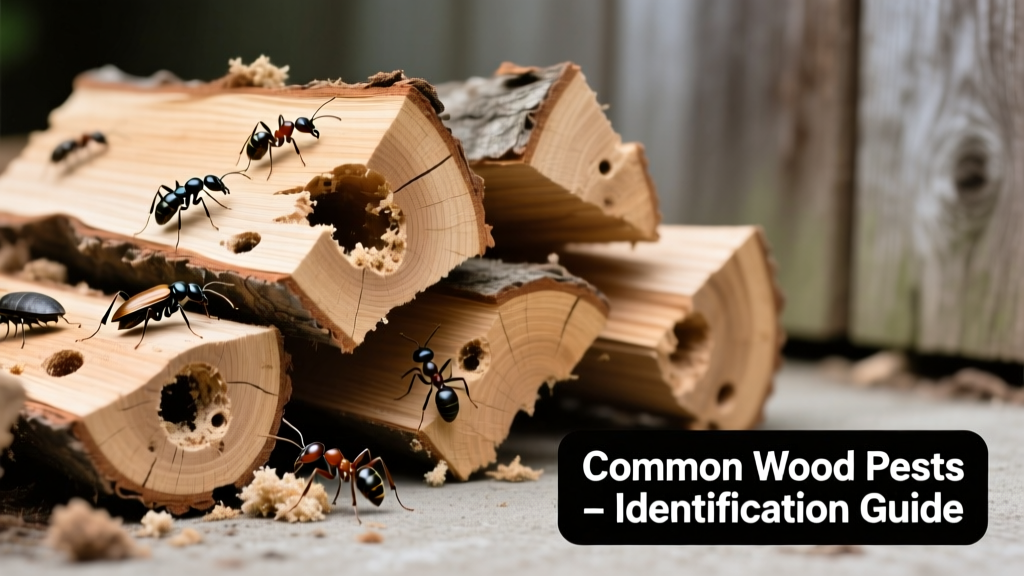
Seeing bugs crawl out of dry firewood stacked in your garage or porch isn’t just unsettling—it’s a red flag. Most aren’t wood-destroying pests *yet*, but some, like powderpost beetles or carpenter ants, can migrate into structural timbers if given the chance. Others, like bark beetles or sowbugs, are harmless hitchhikers—but misidentifying them wastes time and money.
Identification
Not all bugs in firewood are equal. Size, color, behavior, and exit holes tell you everything you need to know. Start by inspecting split ends and bark crevices with a magnifying glass and bright flashlight—especially at dawn or dusk when many are most active.
- Small black or brown beetles (1–4 mm), cylindrical, with antennae bent at right angles: likely powderpost beetles (Lyctidae or Bostrichidae). Look for fine, flour-like frass (insect dust) near tiny round exit holes (0.5–2 mm).
- Reddish-brown ants (6–12 mm), often seen in trails, with a distinct node between thorax and abdomen: likely carpenter ants (Camponotus spp.). They don’t eat wood—but excavate galleries for nesting.
- Gray, oval, slow-moving bugs with seven pairs of legs: sowbugs (Armadillidium vulgare). Harmless scavengers that need moisture—they die within hours indoors.
- Small, dark, fast-running insects with long antennae and flattened bodies: cockroaches (often Surinam or smokybrown), especially if firewood was stored under decks or against damp foundations.
| Pest | Size & Color | Exit Holes or Damage? | Risk to Home Structure? |
|---|---|---|---|
| Powderpost beetle | 1–4 mm; reddish-brown to black | Yes—clean, round holes; fine frass | High—if infested wood is brought indoors |
| Carpenter ant | 6–12 mm; black, red, or bicolored | No holes—but smooth, sandpapered galleries; coarse frass with insect parts | High—if colony migrates to wall voids or beams |
| Sowbug | 8–12 mm; slate gray, armored | No damage—just hides under bark | None |
| Bark beetle | 2–5 mm; dark brown/black, cylindrical | Yes—serpentine galleries under bark; rarely emerge after drying | Low—rarely leave firewood unless recently cut |
What Attracts Them
Firewood is a magnet—not because it’s food, but because it offers shelter, residual moisture, and thermal stability. Beetles lay eggs in freshly cut wood before it fully dries. Ants nest in decaying sections or use cracks as highways. Even ‘dry’ firewood stacked directly on soil or concrete retains surface moisture longer than you think—especially in humid climates like the Southeast or Pacific Northwest.
- Wood stored less than 18 inches off the ground
- Stacked against house siding or under overhangs (blocks airflow)
- Left uncovered during spring rains or high-humidity periods
- Cut within the last 6–12 months (still contains >20% moisture)
Treatment Methods
Natural Methods
Sun exposure is your strongest natural tool. Stack suspect wood in full sun for 3–5 consecutive days with temps above 90°F—this kills larvae and adults alike. Rotate stacks daily to expose all sides. For small batches, place split pieces in clear plastic bags and leave in direct sun for 2–3 days (‘solar bagging’). According to the University of Kentucky Entomology Department’s 2022 Field Guide, solar heating above 120°F for 2+ hours eliminates 97% of powderpost larvae.
"If you see live beetles crawling from firewood in February or March, assume the wood was cut within the past year—and treat before bringing it indoors." — Dr. Ric Bessin, UK Entomology Extension, 2023
Chemical Methods
Residual sprays like borate-based solutions (e.g., Bora-Care) penetrate wood and kill larvae on contact—but only work on unfinished, porous surfaces. Never apply to finished wood or indoor firewood piles. Permethrin aerosols offer quick knockdown for adult beetles or ants on the surface, but provide zero residual protection. The U.S. EPA cautions that permethrin should never be used within 10 feet of water sources or on wood intended for indoor burning.
Prevention
Prevention starts the moment the tree hits the ground—and continues through storage. Season firewood for at least 6 months before moving it near your home. Store it outdoors, elevated on pallets or rails, at least 20 feet from foundations, and cover only the top third to allow airflow. Bring in no more than a 2-week supply at a time—and inspect each piece before stacking indoors.
- Cut and split wood in late winter or early spring to maximize drying time
- Use a moisture meter—firewood is safe to store indoors only below 20% moisture content
- Inspect bark seams and end grain weekly during warm months for frass or tiny holes
- Rotate your stack monthly to expose hidden layers
When to Call an Exterminator
Call a licensed pest control professional if you find live beetles emerging from firewood *and* notice similar exit holes in exposed floor joists, baseboards, or door frames inside your home. Also call if you spot carpenter ant workers indoors during winter—this strongly indicates an established satellite colony in walls or insulation. Don’t wait: according to the National Pest Management Association’s 2023 Structural Pest Report, 68% of carpenter ant infestations go undetected for over 18 months before causing visible damage.
Can powderpost beetles spread from firewood to my hardwood floors?
Yes—but only if the firewood has active larvae and is stored indoors for weeks. Adult beetles fly short distances and seek new egg-laying sites, including unfinished oak, ash, or walnut flooring. Sanding and sealing floors reduces risk significantly. Learn more about powderpost beetle behavior and control.
Why do I only see bugs when I bring firewood inside?
Indoor warmth triggers emergence. Beetles and ants become active at temperatures above 65°F. A cold garage may hold them dormant; your living room wakes them up. This doesn’t mean the wood is newly infested—it means development was paused until conditions improved.
Are termites ever found in dry firewood?
Almost never. Termites require constant moisture and won’t survive in properly seasoned firewood (moisture content <20%). If you find soft, mud-lined tunnels or creamy-white, ant-like insects with straight antennae, get a second opinion—could be mistaken identity or unusually damp wood. See our guide on drywood termite identification.
Do I need to throw away all infested firewood?
No—unless it’s actively swarming indoors. Most infestations are localized to outer layers or bark. Peel off loose bark, split affected pieces, and solar-treat them. Only discard wood with extensive tunneling or visible larval galleries deeper than ½ inch. Burning it immediately is the safest disposal method.
Can I store firewood in my garage safely?
You can—but limit it to 1–2 weeks’ worth, keep it off concrete (use a rack), and inspect every piece before bringing it in. Garages often have higher humidity than outdoors, especially in coastal or northern climates, creating ideal conditions for residual pest activity.
What’s the fastest way to check if firewood is pest-free?
Tap two pieces together sharply over white paper. Look for frass falling like fine dust—or tiny beetles dropping onto the surface. Then examine end grain with a 10× hand lens: clean, solid grain = low risk; pinhole clusters or faint meandering lines = likely infestation. For visual reference, compare your findings to our wood pest damage photo library.
Firewood pests are rarely an emergency—but they’re a reliable early warning system. Treat each sighting as intel: where the wood came from, how long it’s been stacked, and what’s nearby. Stay observant, rotate your stock, and trust your eyes over assumptions. A little inspection today prevents costly surprises tomorrow.