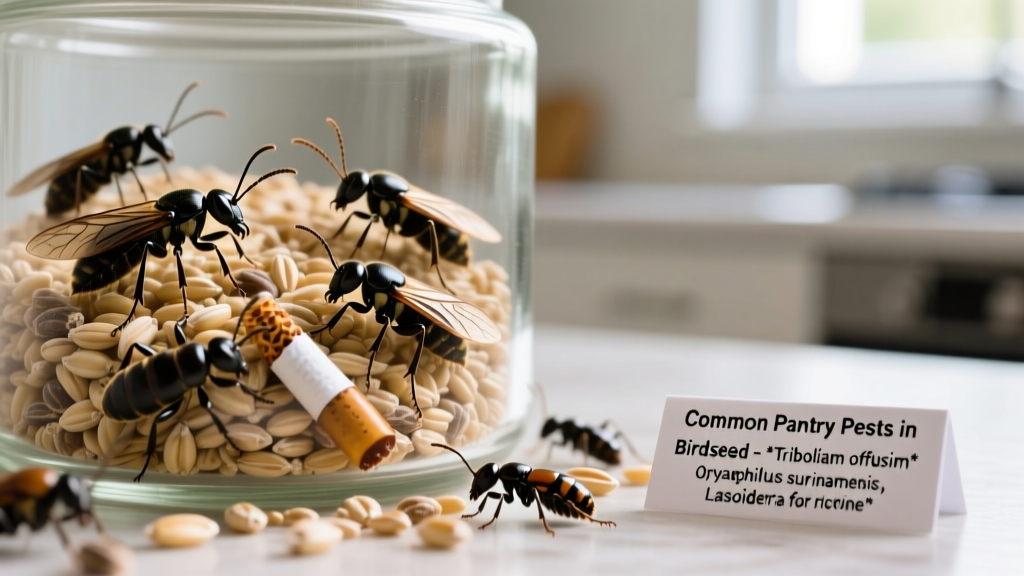
Birdseed stored in garages, sheds, or kitchens often becomes a breeding ground for tiny pests that chew through packaging, leave webbing or frass, and contaminate feed meant for wild birds—or worse, spill into your pantry. These aren’t just nuisance bugs: many reproduce rapidly, with some species laying up to 400 eggs in 3–4 weeks (University of Kentucky Entomology, 2022).
Identification
Three pests dominate birdseed infestations: Indian meal moths, granary weevils, and sawtoothed grain beetles. All thrive in warm, dry storage—but their appearances, behaviors, and damage patterns differ sharply.
| Pest | Size & Color | Distinctive Feature | Signs in Seed |
|---|---|---|---|
| Indian meal moth | ½ inch wingspan; coppery outer wings, gray near body | Flying adult; larvae spin silk webbing | Clumped seeds, silky threads, small white larvae crawling on bag interior |
| Granary weevil | 1/8 inch; dark reddish-brown, snout-like rostrum | Cannot fly; bores into whole grains | Hollowed-out kernels, fine dust (frass), live adults inside sealed bags |
| Sawtoothed grain beetle | 1/10 inch; flat, brown, six saw-toothed projections behind head | Flattened body slips into tiny package seams | No webbing; found in cracked grains, flour, or spilled seed—often first spotted on countertops |
What Attracts Them
Birdseed offers ideal conditions: high carbohydrate content, low moisture, and inconsistent storage. Warmth above 70°F accelerates development—eggs hatch in as little as 3 days at 85°F (USDA APHIS Pest Alert, 2021). Bulk purchases stored in cloth sacks, reused plastic buckets without tight lids, or cardboard boxes in humid garages are top-risk scenarios.
- Unsealed or punctured packaging—even microscopic tears
- Storage near heat sources (water heaters, furnaces, sunny windows)
- Mixing old and new seed batches (infested stock spreads eggs silently)
Treatment Methods
Natural methods
Freezing kills all life stages: seal infested seed in airtight bags and freeze at 0°F for 4 days minimum. For unopened commercial bags, discard immediately—freezing won’t reverse contamination. Clean bins with vinegar-water (1:1) and a stiff brush; rinse, dry fully, then wipe interior with food-grade diatomaceous earth (DE).
Chemical options
Only consider residual insecticides if infestation has spread beyond seed containers. Tempo SC Ultra (cyfluthrin) applied as a crack-and-crevice treatment around shelf edges and bin rims is EPA-registered for stored product beetles—but never spray directly on feed or within 10 feet of bird feeders. Always follow label instructions precisely: overuse risks resistance and non-target harm.
Prevention
Rotate stock using the “first in, first out” rule—even if expiration dates seem distant. Buy smaller quantities more frequently, especially in summer months. Store all seed in rigid, opaque, lidded containers made of glass, thick plastic, or metal with gasket seals—not repurposed coffee cans or zip-top bags.
- Inspect new seed under bright light before pouring: look for movement, webbing, or tiny holes in kernels
- Wipe down exterior of bags with damp cloth before opening—eggs cling to packaging
- Keep storage area below 65°F and relative humidity under 60% (use a hygrometer)
When to Call an Exterminator
If you find larvae or adults in kitchen cabinets, cereal boxes, or pet food more than 10 feet from the birdseed storage zone—or if you spot moths flying indoors at dusk for three consecutive evenings—your infestation has likely expanded beyond DIY control. A licensed pest professional can conduct pheromone trap mapping and targeted thermal treatments.
Can birds get sick from eating infested seed?
Most wild birds tolerate low-level infestation without ill effects—their digestive systems handle grain beetles and weevils naturally. However, mold growth (often triggered by pest activity and moisture) poses real health risks. Discard any seed with musty odor, clumping, or visible fuzz before it reaches the feeder.
Do these pests bite humans?
No. Indian meal moths, granary weevils, and sawtoothed grain beetles lack mouthparts capable of piercing skin. They don’t nest in walls or furniture—they’re strictly food-source dependent. If you’re experiencing bites, investigate bed bugs or fleas instead.
Is freezing enough—or do I need to throw everything away?
Freezing works only on sealed, *unopened* infested packages. Once larvae have emerged and crawled into cracks, baseboards, or adjacent food, discarding is safer. The U.S. FDA recommends immediate disposal of any opened, contaminated birdseed—even after freezing—to avoid cross-infestation.
Why do I keep finding them even after cleaning?
Larvae hide in seams of shelves, behind baseboards, and inside light switch plates. Vacuum thoroughly with a crevice tool, then dispose of the vacuum bag outdoors. One overlooked pupal case can restart the cycle in 7–10 days.
Can I reuse the storage bin after an infestation?
Yes—if you deep-clean it properly. Wash with boiling water + dish soap, scrub with baking soda paste, rinse, then soak 10 minutes in 5% vinegar solution. Air-dry in direct sun for 2 hours minimum. Inspect seams with a magnifier before refilling.
Are organic or no-preservative birdseeds more prone to bugs?
Yes. Seeds without synthetic preservatives like propionic acid rely solely on low moisture and packaging integrity. Organic brands report 23% higher post-harvest insect incidence in third-party audits (National Organic Program Audit Summary, 2023). Prioritize freshness date and batch code over “organic” labeling alone.
"A single female Indian meal moth can lay eggs on up to 12 different food items in your home—birdseed is just her first stop." — Dr. Elena Ruiz, Stored Product Entomologist, Kansas State University Grain Science Department, 2022
Regular inspection beats reaction every time. Keep a dedicated flashlight and magnifying glass near your seed storage area. Check monthly—not just when you see bugs. And remember: if you’re feeding birds year-round, your seed storage habits directly impact what lands on your kitchen counter. Small changes now prevent bigger problems next season.