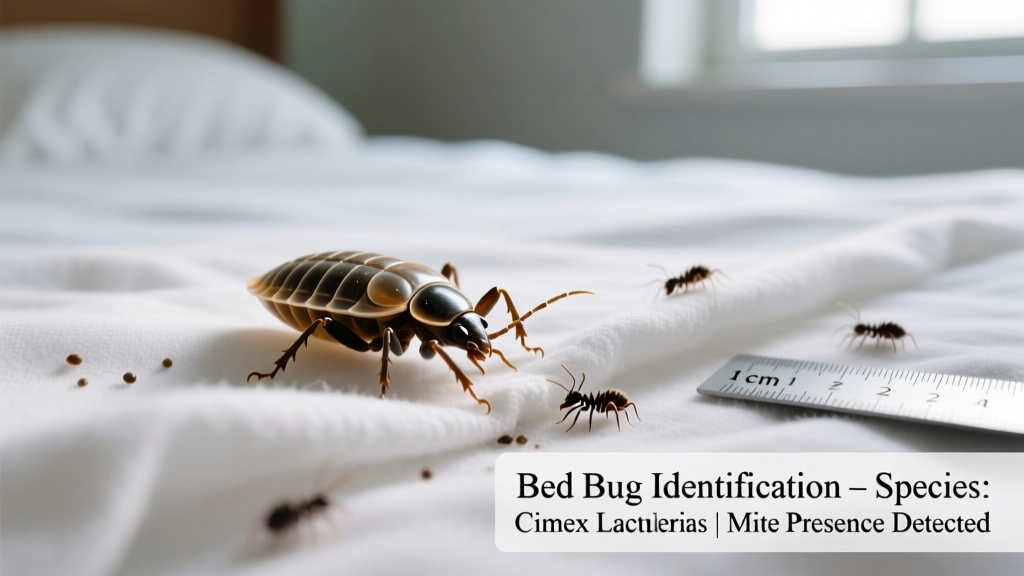
Finding bugs in your bed is alarming—and confusing. Not all tiny, biting, or crawling critters are bed bugs. Some are harmless dust mites; others are fleas from pets or even carpet beetle larvae that wandered onto sheets. Misidentification leads to wasted time, ineffective treatments, and unnecessary stress.
Identification
Start by examining size, color, movement, and bite patterns. Use a magnifying glass and flashlight at night—many pests are most active after dark. Look closely at mattress seams, box spring folds, headboard crevices, and nearby baseboards.
| Pest | Size & Color | Signs in Bed | Bite Pattern |
|---|---|---|---|
| Bed bug (Cimex lectularius) | 4–5 mm, rust-red, flat oval, wingless | Live bugs, dark fecal spots, shed skins, sweet musty odor | Itchy red welts in lines or clusters—often on exposed skin (arms, shoulders, neck) |
| Dust mite (Dermatophagoides spp.) | 0.2–0.3 mm, translucent, invisible without microscope | No visible bugs—but allergy symptoms (sneezing, wheezing, itchy eyes) worsen at night/in bed | No bites—they don’t feed on blood; cause allergic reactions to feces and body fragments |
| Flea (Ctenocephalides felis) | 1–3 mm, reddish-brown, laterally flattened, jumps vigorously | Rarely live in mattresses—but may hitchhike on bedding after pet contact; find flea dirt (black specks that turn red when wet) | Small, itchy red bumps—often around ankles or waistband, sometimes in groups of three (“breakfast, lunch, dinner”) |
| Carpet beetle larva (Anthrenus spp.) | 3–5 mm, oval, hairy, tan/brown with alternating light/dark bands | Found under sheets or in stored blankets—feeds on natural fibers (wool, feathers, dead skin), not blood | No bites—but bristles can cause itchy, bumpy skin rashes (dermatitis), especially on arms or neck |
- If you see live, slow-moving, non-jumping, rust-colored insects clinging to fabric seams—suspect bed bugs.
- If you’re sneezing nightly but see no bugs—dust mites are likely the culprit.
- If bites appear only after napping on the couch with your dog—fleas are probable.
What Attracts Them
Each pest seeks different resources—and your bed provides some of them. Bed bugs need warmth, carbon dioxide, and blood meals—so human occupancy is their main draw. Dust mites thrive in warm, humid environments where dead skin accumulates (a typical adult sheds ~0.5–1 gram of skin cells per day—enough to feed a million mites).
Fleas prefer animal hosts but will bite humans when pets are absent or treated. Carpet beetle larvae aren’t attracted to people—they’re drawn to keratin-rich materials like wool blankets, down pillows, or feather-stuffed comforters left undisturbed for weeks.
- Relative humidity above 50% supports dust mite and bed bug survival.
- Cluttered bedrooms with piles of laundry or stuffed animals give pests hiding spots.
- Secondhand furniture—especially upholstered headboards or used mattresses—is the #1 source of bed bug infestations (U.S. Department of Housing and Urban Development, 2022).
Treatment Methods
Natural options first
For dust mites: Encase mattress and pillows in allergen-proof covers (with pore size <10 microns), wash all bedding weekly in hot water (≥130°F), and use a dehumidifier to keep bedroom humidity below 45%. Vacuum with a HEPA filter twice weekly—standard vacuums blow mite allergens back into the air.
For carpet beetle larvae: Remove and wash affected bedding; steam-clean wool rugs and upholstery; freeze small items (stuffed animals, fabric swatches) at 0°F for 72 hours to kill larvae and eggs.
Chemical interventions
Only consider pesticides if live bed bugs are confirmed—and always pair them with non-chemical methods. The EPA cautions against over-the-counter ‘bug bombs,’ which rarely reach bed bug harborages and can spread infestations. Instead, use residual insecticides labeled for bed bugs (e.g., products containing chlorfenapyr or acetamiprid) applied directly to cracks, seams, and joints—not broad-surface sprays.
According to the National Pest Management Association’s 2023 Bed Bug Report, 76% of professional treatments require ≥2 visits because eggs survive initial applications and hatch 6–10 days later.
“Finding one bed bug isn’t a fluke—it’s evidence of an established population. Even a single pregnant female can produce 500 offspring in her lifetime.” — Dr. Susan Jones, Entomologist, Ohio State University Extension (2022)
Prevention
Prevention hinges on vigilance—not just cleanliness. Bed bugs aren’t caused by poor hygiene; they’re brought in via luggage, clothing, or furniture. Dust mites are unavoidable—but manageable through environmental control.
- Inspect hotel mattresses and headboards before unpacking—check seams and behind picture frames.
- After travel, unpack suitcases in the garage or bathtub—not the bedroom—and wash all clothes on high heat immediately.
- Keep beds away from walls and avoid letting bedding touch the floor—this eliminates easy climbing routes for bed bugs and reduces dust mite accumulation.
Replace pillows every 18–24 months and vacuum your mattress quarterly with a crevice tool. For ongoing dust mite control, consider using benzyl benzoate–treated mattress sprays—shown in a 2021 Journal of Allergy and Clinical Immunology study to reduce allergen load by 82% for up to 3 months.
When to Call an Exterminator
Call a licensed pest professional if you’ve found ≥3 live, adult bed bugs—or if bites persist for more than 10 days despite thorough cleaning and encasements. Also call if you spot fecal staining on multiple pieces of furniture, or if you find nymphs (pale, smaller versions of adults) in wall outlets or electrical switch plates.
Do not wait until bugs appear in nightstands or dressers—bed bugs typically spread room-to-room within 1–3 weeks once established. Delaying treatment increases cost: average bed bug jobs cost $1,200–$2,500 (NPMA, 2023), versus $400–$800 when caught early.
Can bed bugs live in memory foam mattresses?
Yes—but they avoid the dense interior. They nest in seams, zipper areas, and underneath the mattress cover. A high-quality encasement blocks access entirely. Avoid cutting corners: look for Bed Bug Certified™ labels (tested per ASTM E1980-21 standards).
Do bed bugs transmit disease?
No credible evidence links bed bugs to pathogen transmission in humans. The CDC and WHO confirm they’re a nuisance—not a vector. However, chronic itching can lead to secondary infections like impetigo or cellulitis if scratched raw.
Why do only some people react to bed bug bites?
Sensitivity varies widely. Up to 20% of people show no reaction—even with repeated feeding—while others develop intense welts within hours. First bites often go unnoticed; reactions typically appear after sensitization over several weeks.
Are ultrasonic pest repellers effective against bed bugs?
No. Multiple independent studies—including a 2020 University of Florida trial—found zero reduction in bed bug movement or feeding when exposed to ultrasonic devices. Save your money and focus on proven methods: heat, encasements, and targeted insecticides.
Can I treat bed bugs myself with rubbing alcohol?
Alcohol kills on contact—but only if you hit the bug directly. It evaporates too fast to penetrate cracks or kill eggs. Worse, spraying alcohol near electronics or outlets poses fire and shock risks. It’s not a viable control method.
How long can bed bugs survive without feeding?
At room temperature, adults survive 2–3 months without a blood meal. In cooler conditions (under 60°F), they may live 6–12 months. That’s why vacant apartments or guest rooms aren’t safe havens—they can harbor dormant bugs for months.
Don’t assume “no bugs seen = no problem.” Proactive monitoring with interceptors—like the ClimbUp Insect Interceptor—gives early warning before populations explode. Pair that with regular checks of your mattress encasement seals and a seasonal deep-clean routine. If you suspect dust mites, try our allergy-friendly bedding checklist for a targeted upgrade plan.