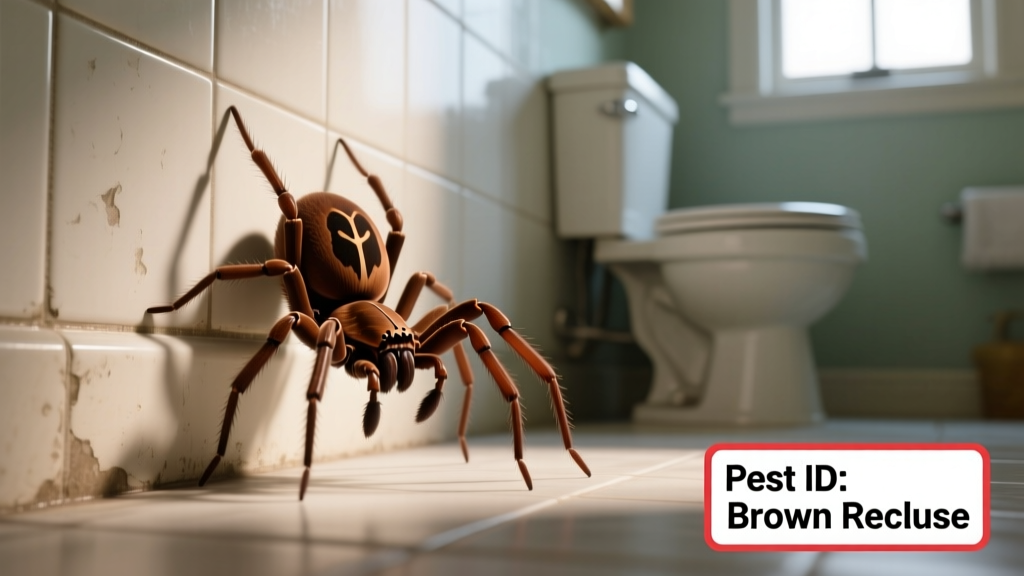
Brown recluse spiders (Loxosceles reclusa) are not common in most U.S. homes—but when they appear in bathrooms, it’s a red flag. They don’t build webs in open areas; instead, they hide in quiet, undisturbed zones like behind toilets, under sinks, or inside towel racks. A single bite can trigger delayed tissue necrosis, and misidentification leads to dangerous delays in medical care.
Identification
Brown recluses are small (¼ to ¾ inch), light-to-dark brown, with a distinctive violin-shaped marking on the cephalothorax—its ‘fiddle’ points toward the abdomen. Unlike most spiders, they have six eyes arranged in three pairs (most have eight). Their legs are uniformly colored—no bands or spines—and their bodies lack obvious hairiness.
Signs of presence include irregular, off-white egg sacs (about ¼ inch wide) tucked into crevices, shed exoskeletons near baseboards, or live spiders scurrying sideways when disturbed—often at night.
| Feature | Brown Recluse | Cellar Spider | Jumping Spider |
|---|---|---|---|
| Eye arrangement | Six eyes, in three pairs | Eight eyes, clustered | Eight eyes, front row large |
| Violin mark | Present, dark, distinct | Absent | Absent |
| Leg texture | Smooth, fine hairs only | Long, thin, often banded | Hairy, stout |
| Web location | No web—hides in clutter | Cobwebby corners, ceilings | No web; hunts actively |
What Attracts Them
Brown recluses don’t seek humans—they seek shelter, prey, and stable microclimates. Bathrooms offer all three: consistent humidity (40–60% RH), minimal foot traffic, and abundant insect prey like silverfish, drain flies, and springtails thriving in damp grout, leaky pipes, or shower drains.
- Cracks in tile grout or caulk around tubs and sinks
- Cluttered cabinets with stacked towels, toiletries, or unused boxes
- Unsealed gaps behind toilets or vanity units
- Old, dusty insulation in wall cavities adjacent to plumbing
According to the University of Arkansas Division of Agriculture’s 2022 spider survey, 73% of confirmed indoor brown recluse finds occurred within 10 feet of plumbing fixtures—especially where moisture and clutter intersect.
Treatment Methods
Natural Methods
Start non-chemical: vacuuming with a HEPA filter removes spiders, egg sacs, and prey insects simultaneously. Use a crevice tool to reach behind toilets and under vanities. Place sticky traps (not glue boards near drains) along baseboards and behind fixtures—check daily for 2 weeks.
- Diatomaceous earth (food-grade) dusted in wall voids and cabinet corners disrupts exoskeletons
- Peppermint oil spray (10 drops per oz water) deters but doesn’t kill—reapply every 3 days
- Reduce humidity below 45% using an exhaust fan that runs 20+ minutes post-shower
Chemical Methods
If trapping confirms 3+ spiders in 7 days, targeted chemical treatment is warranted. Use pyrethroid-based aerosols (e.g., Suspend SC) only as crack-and-crevice sprays—not broadcast applications. Never spray near drains, mirrors, or countertops.
"Over-spraying bathroom surfaces creates resistance and contaminates water runoff—precision matters more than volume." — Dr. Karen R. Vail, Entomologist, UT Extension, 2023
Prevention
Long-term control hinges on eliminating harborages and prey. Seal all gaps >1/16” with silicone caulk—especially where pipes enter walls and behind toilets. Replace torn window screens and install door sweeps on bathroom exterior doors.
- Wipe down sink and shower surfaces weekly with vinegar solution to reduce biofilm that attracts silverfish
- Store towels and linens in sealed plastic bins—not woven baskets
- Inspect and replace cracked grout in shower corners annually
- Fix dripping faucets within 48 hours—leaks increase humidity by up to 12% locally (U.S. EPA WaterSense, 2021)
When to Call an Exterminator
Call a licensed pest management professional if you’ve found more than five spiders in two weeks, discovered egg sacs in multiple locations, or suspect wall void infestation (spiders emerging from outlets or vents). Brown recluses rarely travel far from harborage—so clustered finds indicate breeding sites.
Look for companies certified by the National Pest Management Association (NPMA) with specific spider control experience, not just general pest packages. Ask for a written inspection report identifying entry points and a 90-day warranty on retreatments.
Can brown recluses climb glass or tile?
Yes—they adhere well to smooth vertical surfaces using tiny claw-like setae and silk draglines. That’s why they’re often found on shower doors or mirrored cabinets. Vacuuming these surfaces weekly disrupts their movement routes.
Do they bite while you sleep?
Rarely—but possible if clothing or bedding rests directly on the floor or against baseboards where they hide. Keep bathmats rolled and stored upright; never leave towels on the floor overnight.
Are brown recluses aggressive?
No. They’re reclusive by nature and bite only when pressed against skin—like when reaching into a cluttered cabinet barehanded or putting on shoes left in the bathroom.
Can I flush one down the toilet?
Not reliably. Brown recluses can survive submersion for over 30 minutes and may crawl back up through vent stacks. Use a cup-and-card method instead, then release outdoors away from the foundation.
Will bleach kill them on contact?
Bleach solutions (5% sodium hypochlorite) can kill on direct contact—but it corrodes grout, damages seals, and offers zero residual effect. It’s less effective and more hazardous than targeted diatomaceous earth or vacuuming.
Do ultrasonic devices work?
No. Independent testing by the University of Nebraska-Lincoln (2020) found zero reduction in brown recluse activity when ultrasonic emitters were installed in infested bathrooms over 8 weeks.
Eliminating brown recluses from your bathroom isn’t about eradicating every last spider—it’s about making the space inhospitable enough that they move on. Focus on sealing, drying, and decluttering first; chemicals second. For persistent cases, pair professional treatment with bathroom-specific pest proofing steps to break the cycle. And if you suspect a bite, seek medical attention immediately—even before symptoms appear.