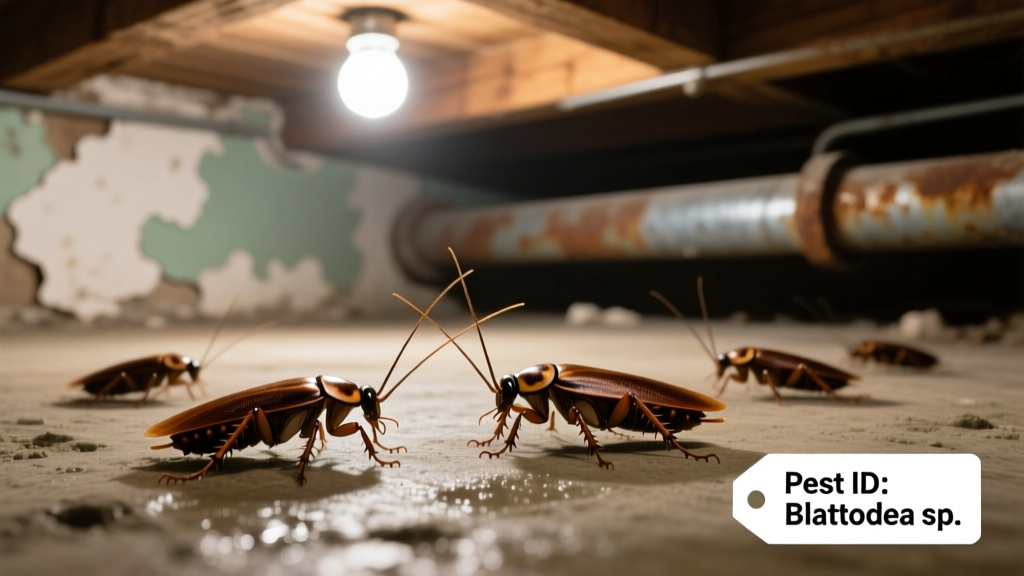
Brown bugs in your basement aren’t just a nuisance—they’re a signal. Moisture, clutter, and entry points invite pests that thrive in cool, damp, undisturbed spaces. Left unchecked, some species damage wood, spread pathogens, or trigger allergies—especially in finished basements used as living areas.
Identification
Not all brown bugs are the same. Carpet beetles, sowbugs, pillbugs, springtails, and even young cockroaches share similar coloring but differ dramatically in behavior, habitat preference, and risk level. Correct ID is essential before treatment.
- Carpet beetles: Oval, 1–3 mm, mottled brown/black; larvae are hairy, tan, and move in jerky motions near baseboards or under rugs.
- Sowbugs & pillbugs: Armored, segmented, ¼-inch, grayish-brown; roll into balls (pillbugs) or stay flat (sowbugs); found under mulch, stones, or cardboard boxes.
- Springtails: Tiny (0.5–2 mm), wingless, brown or black; jump when disturbed using a forked abdominal appendage; swarm on damp concrete after heavy rain.
- German cockroach nymphs: Brownish with two dark parallel stripes behind head; avoid light, hide in cracks near plumbing or appliances—even in unfinished basements with utility sinks.
| Pest | Size | Movement | Preferred Habitat | Risk Level |
|---|---|---|---|---|
| Carpet beetle larva | 1–5 mm | Crawls slowly, avoids light | Under rugs, in stored wool/cotton, HVAC ducts | Low structural, high fabric damage |
| Sowbug | ¼ inch | Slow, scuttling walk | Damp soil, cardboard, insulation debris | None—indicator of moisture |
| Springtail | 0.5–2 mm | Jumping (up to 10 cm) | Wet concrete, sump pits, leaky pipes | None—nuisance only |
| German cockroach nymph | 2–4 mm | Fast, erratic, hides instantly | Cracks near water sources, behind dryers, in wall voids | High—disease vector, allergen source |
What Attracts Them
Basements offer three things pests love: moisture, shelter, and food—or at least organic debris. A relative humidity above 60% supports springtails, sowbugs, and mold that carpet beetle larvae feed on. Cardboard boxes attract sowbugs and silverfish (often misidentified as brown bugs). Leaky sump pumps, cracked foundation walls, and unsealed floor drains create both entry routes and humid microclimates.
- Condensation on cold water pipes (especially in winter)
- Unvented laundry dryers dumping warm, moist air into basement space
- Stored firewood indoors—even for a week—introduces bark beetles and millipedes
- Old carpet padding or pet bedding left in storage bins
Treatment Methods
Natural Solutions
Start here—especially if you suspect springtails or sowbugs. These pests rarely require pesticides. Dehumidify to below 50% RH using a properly sized dehumidifier. Remove cardboard, replace mulch with gravel within 18 inches of foundation, and vacuum adults with a shop vac (dispose bag immediately outside).
For carpet beetles, wash or freeze infested fabrics (−20°F for 72 hours kills eggs/larvae). Diatomaceous earth (food-grade) applied in thin lines along baseboards disrupts exoskeletons—but only works when dry and undisturbed.
Chemical Options
Reserve chemical treatments for confirmed cockroach activity or persistent carpet beetle infestations in wall voids. Use EPA-registered insect growth regulators (IGRs) like pyriproxyfen for cockroaches—it prevents nymphs from maturing. For carpet beetles, residual sprays containing deltamethrin (e.g., Suspend SC) applied to baseboards and under cabinets have proven efficacy when applied by licensed technicians.
According to the National Pest Management Association’s 2022 Cockroach Control Guidelines, over-the-counter aerosol “bug bombs” are ineffective against German cockroaches and can disperse populations deeper into walls—making infestations harder to eliminate.
"If you see more than 5 sowbugs or springtails per square foot near a sump pit or drain, treat the moisture issue—not the bugs. They’re symptoms, not the disease." — Dr. Lena Torres, Entomologist, Purdue Extension (2023)
Prevention
Long-term prevention hinges on environmental control—not just spraying. Seal cracks >1/16 inch with hydraulic cement or expanding foam. Install door sweeps on basement egress doors. Redirect downspouts at least 5 feet from the foundation. Insulate cold water pipes to reduce condensation.
- Inspect and replace torn window screens on basement egress wells
- Store seasonal items in plastic totes—not cardboard or fabric bins
- Run exhaust fans during laundry and showering upstairs to reduce moisture migration downward
- Check sump pump discharge line for clogs or pooling water near foundation
When to Call an Exterminator
Call a licensed pest professional if you find live cockroaches at night, notice fecal spotting (pepper-like specks) on beams or joists, or see shed skins near insulation. Also consult one if brown bugs persist for more than 2 weeks after dehumidification and cleanup—especially if they’re clustering near electrical outlets or behind paneling.
Many reputable companies offer free inspections for cockroach or termite concerns. Ask whether they use integrated pest management (IPM) protocols—this approach prioritizes exclusion and monitoring over blanket spraying.
Are brown bugs in my basement dangerous?
Most aren’t directly harmful—but their presence signals conditions that support hazardous pests. Sowbugs indicate chronic moisture that could lead to mold or wood rot. Carpet beetles damage natural fibers and may trigger allergic dermatitis in sensitive individuals. German cockroach nymphs carry Salmonella, E. coli, and asthma-triggering proteins in their feces and shed skins.
Why do I only see them after it rains?
Springtails and sowbugs migrate indoors en masse when saturated soil forces them upward. Heavy rain raises groundwater levels, flooding their outdoor habitats and pushing them toward drier, cooler basement air. This surge usually lasts 2–3 days post-rain and subsides as soil dries.
Can brown bugs come up through floor drains?
Yes—especially springtails and drain flies (which are often mistaken for brown bugs). Clogged or dry P-traps allow access. Pour ½ cup of white vinegar down unused basement drains weekly to kill organic film where springtails breed. Keep traps filled with water or use rubber stoppers.
Do they bite humans?
No common brown basement pest bites people. Carpet beetle larvae cause itchy welts in rare cases—but that’s an allergic reaction to tiny barbed hairs, not a true bite. Sowbugs, pillbugs, and springtails lack mouthparts capable of piercing skin.
Will cleaning alone get rid of them?
Cleaning helps—but only if paired with moisture control. Vacuuming removes adults, but without lowering humidity or sealing entry points, new generations will appear within days. In one University of Kentucky field study (2021), springtail populations rebounded within 72 hours in basements where dehumidifiers were turned off after cleaning.
How long does it take to eliminate them?
Springtails and sowbugs decline within 3–5 days of sustained humidity control. Carpet beetles may take 3–4 weeks to fully clear if all infested materials aren’t removed or treated. Cockroach infestations typically require 2–3 service visits over 6–8 weeks to break the reproductive cycle.
Basements are the first line of defense against many household pests—not just brown ones. Once you’ve identified and resolved the root cause, consider installing a moisture monitor like those used in crawl space mold prevention setups. Consistent data beats guesswork every time.