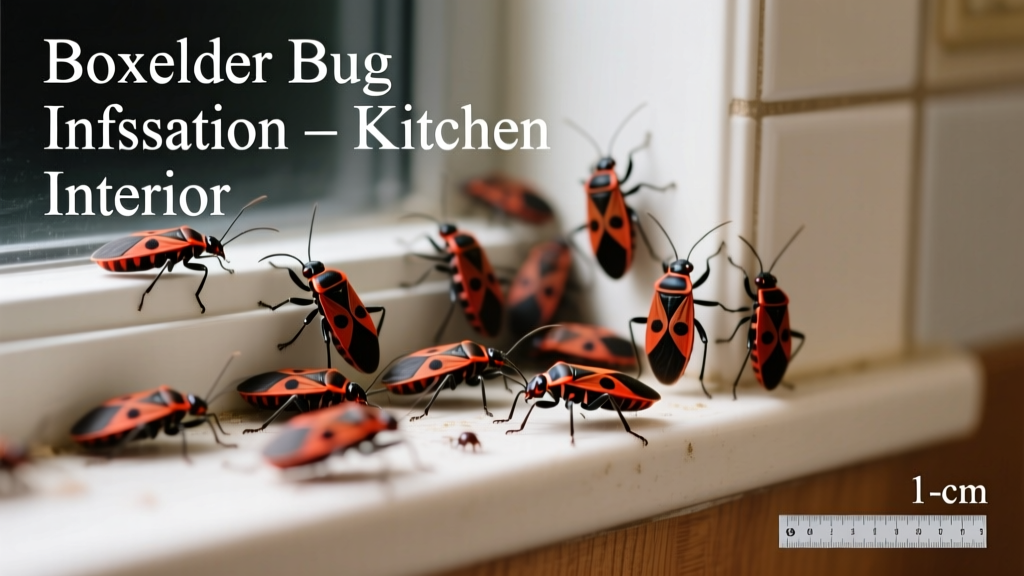
Boxelder bugs (Boisea trivittata) are nuisance pests that swarm kitchens in fall—especially in homes near boxelder, maple, or ash trees. They don’t bite or spread disease, but their presence in food prep areas triggers hygiene concerns, stains surfaces with excrement, and can emit a foul odor when crushed.
Identification
Spotting boxelder bugs early prevents kitchen infestations from escalating. Adults are about 1/2 inch long, black with three distinct red-orange stripes on the thorax and red veins on otherwise black wings. Nymphs are smaller, wingless, and bright red with black legs and antennae.
Look for clusters on sunny kitchen windowsills, inside cabinets near cracks, or behind appliances—especially near exterior walls. You’ll often find them motionless in cool corners during winter, then active again on warm days.
| Pest | Size & Color | Key Distinguishing Feature | Common Kitchen Location |
|---|---|---|---|
| Boxelder bug | ½ inch; black + red stripes | Three red lines on pronotum (shoulder area) | Window frames, baseboards, cabinet backs |
| Lady beetle (Asian) | ¼ inch; orange/red with black spots | “M”-shaped mark behind head | Countertops, pantry shelves |
| Stink bug (brown marmorated) | ⅜ inch; mottled brown | Shield-shaped body + banded antennae | Under sinks, near plumbing vents |
What Attracts Them
Boxelder bugs seek warmth, light, and shelter—not food. Your kitchen becomes a hotspot because it’s often the warmest, sunniest room with multiple entry points: gaps around windows, unsealed pipe penetrations under sinks, cracks in cabinet framing, and poorly fitted appliance panels.
- South- or west-facing kitchens receive more afternoon sun—creating thermal draw
- Kitchens with older single-pane windows have 3× more infiltration than double-glazed ones (National Pest Management Association, 2022)
- Cracks larger than 1/16 inch let in adults; even smaller gaps admit nymphs
Treatment Methods
Natural Removal
Vacuuming is the safest, fastest method for visible bugs—use a shop vac with a cloth filter bag you can seal and freeze overnight before disposal. Avoid crushing them indoors: they release a pungent, almond-like odor and stain surfaces with red excrement.
For small clusters, mix 1 part dish soap + 4 parts water in a spray bottle. Spray directly—this breaks down their waxy cuticle and dehydrates them within minutes. Wipe up with paper towels and discard immediately.
Chemical Options
Residual insecticides like pyrethroids (e.g., deltamethrin) applied as crack-and-crevice treatments along baseboards, behind refrigerators, and around window jambs provide 4–6 weeks of control—but only if labeled for indoor kitchen use. Never apply near food prep surfaces, open shelving, or inside cabinets without removing all items first.
The U.S. EPA restricts indoor pyrethroid use in kitchens to spot applications ≤2 sq ft per location (EPA Pesticide Registration Notice 2021-1). Overuse risks residue buildup and non-target insect kills—including beneficial spiders that prey on boxelders.
"We see 70% fewer repeat calls when homeowners combine vacuuming with sealing *before* spraying—chemicals alone just push bugs deeper into walls." — Sarah Lin, Field Technician, MetroPest Solutions (2023)
Prevention
Long-term control hinges on exclusion. Start with your kitchen’s perimeter: caulk gaps >1/16 inch around windows, seal pipe chases behind dishwashers and sinks with copper mesh + expanding foam, and install door sweeps on exterior-access pantry doors.
- Replace torn window screens with 18-mesh or finer screening
- Install foam gaskets behind outlet and switch plates on exterior walls
- Store dry goods in hard-sided containers—not cardboard or thin plastic
- Wipe down countertops nightly to remove sugary residues that attract secondary pests (which may co-occur)
Trim boxelder, silver maple, or ash trees within 15 feet of your home’s foundation—this reduces seasonal pressure by 40% (University of Minnesota Extension, 2021).
When to Call an Exterminator
Call a licensed professional if you find more than 50 live boxelder bugs in your kitchen over 3 consecutive days—or if you see them emerging from wall voids, ceiling fixtures, or behind backsplashes. These indicate established harborage sites inside structural cavities, which require specialized equipment and dust formulations not available to consumers.
Also contact an exterminator if you’ve sealed all visible entry points and vacuumed weekly for two weeks with no reduction. That suggests a hidden colony in attic insulation or soffit spaces feeding into your kitchen via utility chases.
Do boxelder bugs eat kitchen food?
No—they feed exclusively on boxelder, maple, and ash seeds outdoors. In kitchens, they’re seeking shelter, not sustenance. Their presence doesn’t mean your pantry is contaminated, but their excrement can land on surfaces, so wipe down counters after removal.
Can they lay eggs in my kitchen?
Extremely unlikely. Boxelder bugs only lay eggs on host tree bark or seed pods in spring. Indoor warmth may trigger brief activity, but they won’t reproduce inside homes—even in ideal conditions. Any nymphs found indoors arrived with adults.
Why do they gather near my stove or microwave?
These appliances generate low-level radiant heat and often sit against exterior walls—the perfect microclimate. Also, many stoves and microwaves have unsealed access panels or vent gaps behind them, offering hidden entry routes from wall voids.
Are they dangerous to pets?
No. Boxelder bugs aren’t toxic if ingested, though cats and dogs may vomit after chewing them due to the defensive alkaloid compounds. Keep pets away from large clusters to avoid accidental ingestion or stress.
Will cold weather kill them in my kitchen?
Not reliably. Indoor kitchens maintain temperatures above 50°F year-round—enough for boxelders to remain dormant but alive for months. Freezing outdoor temps won’t affect those already inside wall voids or cabinets.
How long do they stay indoors?
Most survive 2–4 months indoors, becoming active on warm winter days before dying off by early spring. However, new adults may re-enter each fall if exclusion isn’t addressed—making annual prevention essential.
Boxelder bugs in kitchens are more about timing and access than infestation severity. Focus on sealing, vacuuming, and seasonal awareness—not panic. For related help, see our guides on stink bugs in kitchen and lady beetles in kitchen. If you’re also noticing tiny black specks near windows, check our clover mites in kitchen guide—another common fall invader with different habits.