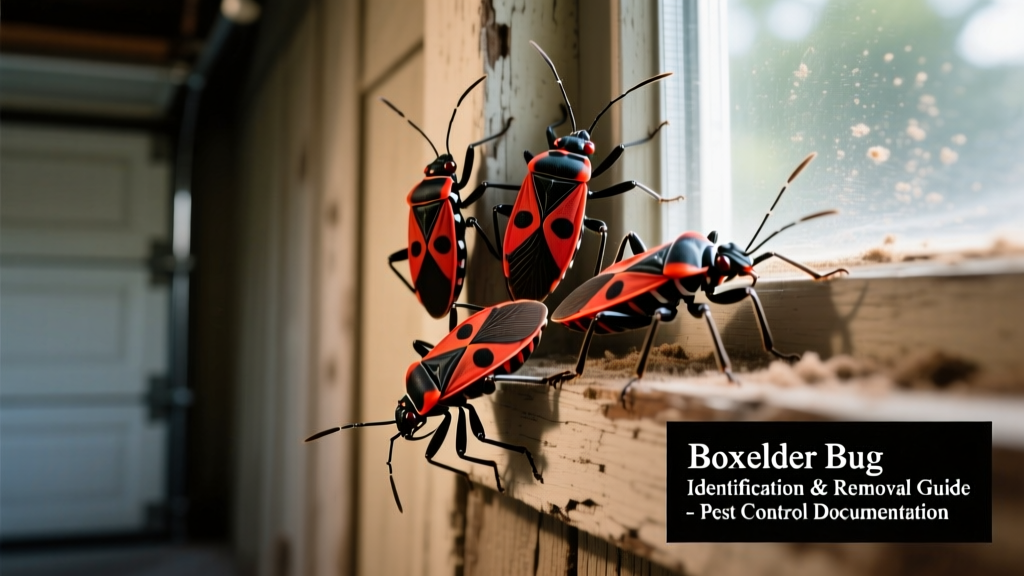
Boxelder bugs (Boisea trivittata) are harmless but nuisance pests that gather in large numbers inside garages—especially during fall when they seek shelter from cooling temperatures. Unlike stinging or biting insects, they don’t damage structures or spread disease, but their presence triggers alarm, stains surfaces with excrement, and can trigger allergic reactions in sensitive individuals.
Identification
Boxelder bugs are about 1/2 inch long, oval-shaped, and black with three distinct red-orange stripes on the thorax and red veins on their wings. Nymphs are smaller, bright red, and lack fully developed wings. They’re often mistaken for squash bugs or assassin bugs—but unlike those, boxelder bugs cluster tightly on sun-warmed garage walls, doors, and windowsills.
| Feature | Boxelder Bug | Squash Bug | Assassin Bug |
|---|---|---|---|
| Size | ½ inch | 5/8 inch | ¾ inch |
| Color Pattern | Black + red thoracic stripes | Mottled brown-gray | Variable; often orange-banded |
| Behavior in Garage | Clusters on warm surfaces; no feeding damage | Rare indoors; feeds on plants outdoors | May bite if handled; solitary |
| Odor When Crushed | Faint, musty scent | Sharp, foul odor | Strong, coriander-like |
Key signs in your garage include:
- Clusters of 20–200+ bugs along south- or west-facing garage walls
- Red stains on concrete floors or drywall from crushed bugs
- Shed nymphal skins near baseboards or behind stored items
- Faint odor resembling coriander or burnt tires on warm days
What Attracts Them
Boxelder bugs aren’t drawn to food or moisture like ants or cockroaches. Instead, they respond to thermal cues and structural access points. Your garage is attractive because it offers:
- South- or west-facing exterior walls that absorb afternoon heat
- Gaps around garage door seals (even ⅛-inch cracks let them in)
- Unsealed utility penetrations (e.g., HVAC lines, electrical conduits)
- Nearby female boxelder, maple, or ash trees—75% of infestations occur within 100 feet of host trees (University of Nebraska-Lincoln Extension, 2022)
They don’t breed indoors, but overwintering adults become active on unseasonably warm winter days—causing sudden, alarming swarms.
Treatment Methods
Natural Removal
Vacuuming is the fastest, safest first response. Use a shop vac with a disposable bag or a vacuum with a HEPA filter—never a household vacuum (they’ll escape or stain the filter). Empty the bag outside immediately. For small clusters, spray a 1:1 water-vinegar solution directly on bugs—it disrupts their waxy cuticle without harming garage surfaces.
Other effective non-chemical tactics:
- Cold-water hose spray on exterior garage walls at dawn (disorients and deters)
- Diatomaceous earth (food-grade) applied as a thin line along baseboards and door gaps
- Sticky traps placed near entry points—use yellow ones, as boxelder bugs are attracted to that color
Chemical Options
Residual insecticides should be used sparingly and only as a last resort. Pyrethroid-based sprays (e.g., deltamethrin or bifenthrin) applied to garage door frames, foundation cracks, and soffit areas provide 4–6 weeks of control. Always follow label instructions—and never spray near vehicle fluids or stored propane tanks.
According to the National Pesticide Information Center (2023), pyrethroids are low-risk to mammals when applied correctly but highly toxic to bees and aquatic life—so avoid outdoor application on windy days or before rain.
"Vacuuming plus sealing entry points eliminates >90% of garage boxelder bug issues—no pesticide needed." — Dr. Sarah Lin, Urban Entomologist, Purdue Extension, 2021
Prevention
Long-term control hinges on exclusion—not killing. Boxelder bugs enter garages through tiny gaps most homeowners overlook. Focus on these high-yield fixes:
- Replace worn garage door bottom seals with vinyl or rubber models rated for <1/16" gap tolerance
- Fill gaps around pipes and wires with copper mesh + silicone caulk (steel wool alone compresses and fails)
- Install fine-mesh (20-mesh or finer) vent covers on gable and soffit vents
- Trim boxelder, silver maple, or ash tree branches to at least 6 feet from garage walls
Timing matters: Seal all entry points in late August through early October—before peak migration begins.
When to Call an Exterminator
Hire a licensed pest management professional if:
- You find more than 500 bugs inside your garage over 3 consecutive days
- Bugs are emerging from wall voids or ceiling joists (indicating nesting in adjacent living space)
- You’ve sealed all visible gaps and still see new bugs weekly after November
- You’re uncomfortable handling pesticides or accessing tight attic/garage ceiling spaces
Most reputable companies offer free inspections—and many include garage-specific exclusion work in their fall service packages. Compare quotes that itemize sealing labor separately from chemical treatment.
Can boxelder bugs damage my garage?
No. They don’t chew wood, wiring, insulation, or drywall. Their only physical impact is staining from crushed bodies or excrement—easily cleaned with diluted vinegar or enzyme-based cleaners. See our guide on garage stain removal for safe cleaning methods.
Do they get into cars parked in the garage?
Yes—especially if vehicles sit unused for >3 days. They crawl into wheel wells, under floor mats, and into dashboard vents. Check your car before starting the engine in fall; use compressed air to clear vents if you spot them.
Why do I only see them in fall and spring?
Boxelder bugs are true overwintering insects. They enter garages in September–October to hibernate, then become active on warm winter days (>60°F). In March–April, they try to exit—often flying toward light sources like garage windows or LED fixtures.
Will removing the boxelder tree solve the problem?
Not necessarily. While eliminating the host tree reduces local pressure, boxelder bugs can travel up to 2 miles to find shelter. Removing one tree may shift activity to nearby properties—or cause bugs to concentrate more heavily on your garage. Better to combine tree pruning with physical exclusion.
Are they dangerous to pets?
No. Boxelder bugs aren’t toxic if ingested, but their defensive secretions can irritate a pet’s mouth or digestive tract. Cats sometimes bat them playfully—leading to mild drooling or gagging. Keep pets away from large clusters, and consult your vet if your dog eats dozens at once.
Can I use foggers or bug bombs?
Avoid them. Foggers don’t penetrate cracks where boxelder bugs hide, and they pose fire risks near vehicle batteries, gasoline containers, or propane tanks. The EPA explicitly warns against using total-release foggers in attached garages (EPA Label Review Manual, Section 4.2, 2022).
Boxelder bugs in the garage are more about timing and access than infestation severity. With consistent sealing, seasonal vacuuming, and smart landscaping, most homeowners reduce sightings by 80–100% within two seasons. For persistent cases, pairing DIY efforts with a targeted garage pest inspection gives lasting results—and saves money over repeated chemical treatments. If you also spot stink bugs in garage, the same exclusion methods apply, though treatment timing differs slightly.