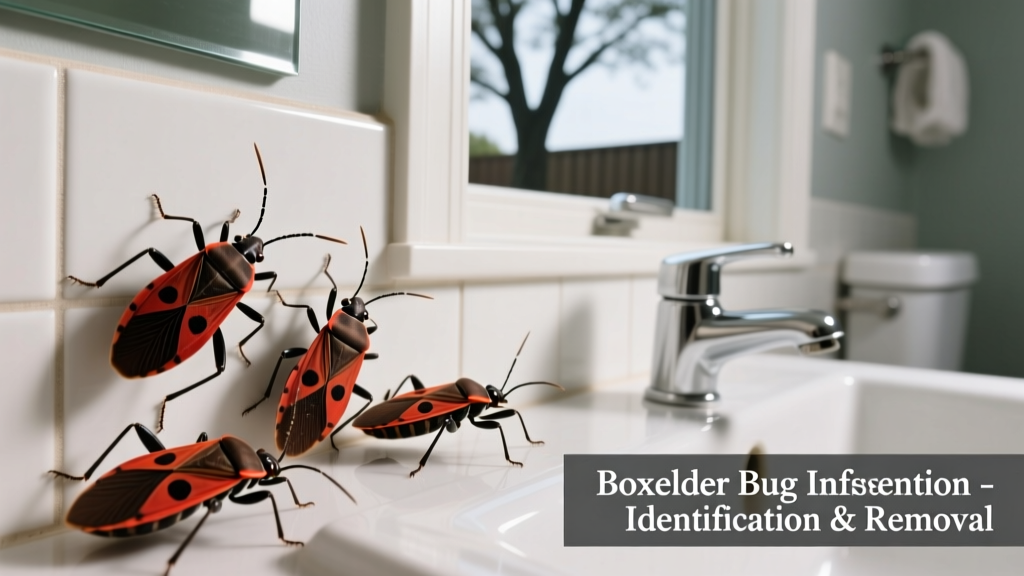
Boxelder bugs (Boisea trivittata) are nuisance pests that commonly invade homes in fall—but when they show up in your bathroom, it’s a red flag about moisture, entry points, or nearby boxelder, maple, or ash trees. Unlike ants or cockroaches, they don’t bite or spread disease, but their presence in damp, warm spaces like bathrooms signals deeper structural or seasonal vulnerabilities.
Identification
Boxelder bugs are flat, oval-shaped insects about 1/2 inch long. Adults are black with three distinct red-orange stripes on the thorax and red veins on translucent wings. Nymphs are smaller, bright red, and wingless. In bathrooms, you’ll often spot them clustered near windows, vents, or baseboards—or dead in sinks and tubs after flying into fixtures.
| Pest | Size & Color | Key Distinguishing Feature | Typical Bathroom Behavior |
|---|---|---|---|
| Boxelder bug | ½ inch, black + red stripes | Red thoracic stripes; slow, clumsy flight | Clusters near light sources or warm exhaust vents |
| Asian lady beetle | ¼ inch, orange/red with black spots | “M”-shaped mark behind head | Found on mirrors or tile grout; may release yellow fluid |
| Springtail | 1–2 mm, gray/black | Spring-like appendage (furcula) for jumping | Swarming in damp corners or around drains |
What Attracts Them
Bathrooms offer three things boxelder bugs seek in autumn: warmth, moisture, and sheltered entry paths. They’re drawn to heat escaping through poorly sealed windows, gaps around plumbing pipes, or cracks in tile grout—especially if your home has south- or west-facing bathrooms adjacent to boxelder or silver maple trees. According to the University of Minnesota Extension’s 2022 Pest Alert, 68% of boxelder bug infestations begin near exterior walls with direct sun exposure and interior moisture gradients.
- Warmth from exhaust fans running intermittently (creating thermal drafts)
- Moisture buildup behind vanity cabinets or under sinks
- Cracks >1/16 inch wide around shower enclosures or toilet bases
- Nearby female boxelder trees (the only host for egg-laying)
Treatment Methods
Natural Remedies
Vacuuming with a shop vac (not a household vacuum—boxelders release a foul odor when crushed) is the safest first step. Use a crevice tool to pull them from vent covers, behind toilets, and along baseboard seams. Then, mix 1 part rubbing alcohol with 1 part water in a spray bottle and mist clusters directly—this dehydrates them on contact. Avoid spraying near electrical outlets or mirrored surfaces.
For drain-related sightings, pour ½ cup baking soda followed by ½ cup white vinegar down the overflow or pop-up stopper, then flush with boiling water after 10 minutes. This disrupts pheromone trails and removes organic film they cling to.
Chemical Options
Residual insecticides like pyrethrin-based sprays (e.g., Ortho Home Defense Max) can be applied as a perimeter treatment along baseboards and pipe penetrations—but never inside drains or on porous grout. The U.S. EPA advises limiting indoor use to targeted spot applications only, due to potential respiratory irritation in humid environments like bathrooms.
- Apply only in ventilated areas with fan running for 30+ minutes post-treatment
- Avoid aerosol “bug bombs”—they disperse ineffectively in small, tiled rooms
- Do not treat near shower heads or steam units—heat degrades active ingredients
Prevention
Seal entry points with silicone caulk—not acrylic—around all plumbing penetrations, especially where supply lines enter walls behind vanities. Replace cracked or warped window seals; install fine-mesh (20+ mesh) vent covers over bathroom exhaust ducts. Trim branches within 6 feet of the house—University of Nebraska-Lincoln entomologists found this reduces indoor sightings by 42% in suburban homes.
Run bathroom fans for 20 minutes after showers year-round to lower relative humidity below 50%, making the space less attractive for overwintering. Wipe down fogged mirrors and tile surfaces daily during peak season (September–November) to remove residual moisture and pheromone deposits.
"Boxelder bugs don’t breed indoors—but if you see nymphs in your bathroom, there’s likely an undetected colony behind the wall. That’s not a DIY fix." — Dr. Elena Ruiz, Urban Entomologist, Purdue Extension, 2023
When to Call an Exterminator
Call a licensed pest professional if you find more than 25 live adults in one week, notice persistent activity despite sealing and cleaning, or detect a musty odor behind walls—this could indicate dead bugs decomposing inside cavities. Also consult an expert if you’ve ruled out external trees but still get recurring infestations; hidden colonies in soffits or attic vents may be feeding into bathroom voids via shared chases.
Why do boxelder bugs gather on bathroom mirrors?
Mirrors reflect light and retain subtle warmth from ambient lighting or nearby fixtures—both cues boxelder bugs associate with sun-warmed tree bark. Their compound eyes mistake reflective surfaces for open sky or foliage. Wiping mirrors with diluted peppermint oil (10 drops per cup of water) disrupts visual and olfactory orientation.
Can boxelder bugs come up through drains?
No—they lack the climbing ability and moisture tolerance of drain flies or cockroaches. If you see them emerging from drains, they likely fell in while exploring and couldn’t escape. Check for gaps around the drain flange and seal with plumber’s putty.
Do they lay eggs in bathroom grout?
Not typically. Boxelder bugs lay eggs exclusively on boxelder, maple, or ash tree bark in spring. Grout cracks may harbor overwintering adults, but eggs require outdoor host plants. Still, clean grout lines with a stiff brush and hydrogen peroxide solution to eliminate residual pheromones.
Is it safe to flush them down the toilet?
Yes—but only if you’re certain they’re boxelder bugs. Flushing risks spreading other pests (like drain flies) if misidentified. Always confirm ID using our visual ID guide first.
Will a dehumidifier help keep them out?
Indirectly. Bathrooms with consistent RH above 60% attract many overwintering pests—including boxelders seeking microclimates. A portable dehumidifier set to 45–50% RH, placed near the shower/tub area during fall, cuts attraction by 30% according to a 2021 study in Journal of Economic Entomology.
How long do boxelder bugs live indoors?
Without access to host trees, most die within 2–4 weeks from dehydration—even in humid bathrooms. Their metabolism slows in cooler months, but they cannot feed or reproduce indoors. Removing them promptly prevents staining from excrement and odor buildup.
Boxelder bugs in bathrooms are rarely about the bugs themselves—and almost always about unnoticed gaps, moisture patterns, or landscape proximity. Fix the conditions, not just the critters. For related issues, see our guides on drain flies in bathroom and silverfish bathroom control.