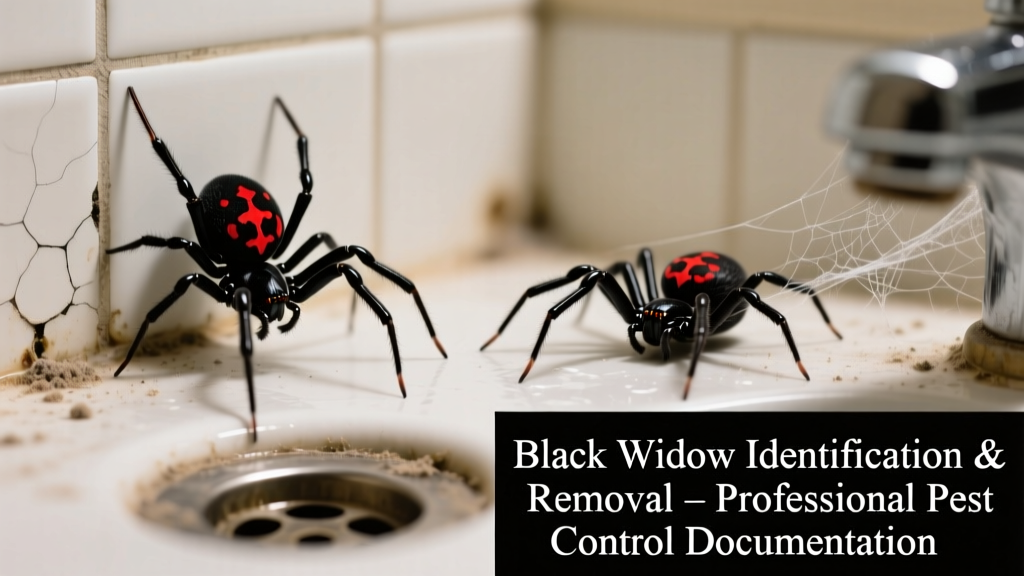
Black widow spiders (Latrodectus spp.) are among the most medically significant spiders in North America—and bathrooms are one of their top indoor hiding spots. Their venomous bite can cause severe muscle pain, nausea, and hypertension, especially in children or elderly adults. Though they rarely bite unless threatened, finding one in a humid, cluttered bathroom raises legitimate safety concerns.
Identification
Black widows are easily mistaken for harmless house spiders—until you spot the telltale red hourglass marking. Adult females are glossy black, about 1.5 inches including legs, with a rounded, bulbous abdomen. Males are smaller (½ inch), brownish, and lack the prominent hourglass. Juveniles have striped or spotted abdomens and may be tan or gray.
Look for irregular, tangled webs in low-traffic, undisturbed corners: behind toilets, under sinks, inside cabinets, or along baseboards. Unlike orb weavers, black widows don’t rebuild daily—they reinforce old webs, often with sticky, silken trip lines extending outward.
| Feature | Black Widow | False Black Widow | House Spider |
|---|---|---|---|
| Color & Shine | Glossy black, smooth abdomen | Dull brown/black, slightly velvety | Light to dark brown, mottled |
| Hourglass Marking | Bright red, complete hourglass (ventral) | Reddish, incomplete or absent | None |
| Web Location | Low, hidden, near floor or pipe gaps | Higher up, near windows or light fixtures | Corners, ceilings, showerheads |
| Bite Risk | Medically significant; neurotoxic venom | Mild, localized reaction only | Negligible |
What Attracts Them
Black widows seek three things: shelter, prey, and moisture. Bathrooms deliver all three—especially older homes with leaky faucets, poor ventilation, and gaps around pipes or baseboards. They’re drawn to dampness because it supports their insect prey: silverfish, cockroaches, and drain flies. Cluttered cabinets, stacked towels, and unused toiletries provide perfect harborage.
- High humidity (above 60% RH) — common in poorly vented bathrooms
- Cracks >1/8 inch wide around plumbing, baseboards, or window frames
- Unsealed gaps behind toilets or under vanities
- Standing water in drains or leaky P-traps (attracts prey)
Treatment Methods
Natural Removal
Start with non-chemical control—especially if children or pets use the space. Vacuuming is highly effective: use a shop vac with a crevice tool to suck up spiders, egg sacs (pearly white, ¼-inch spheres), and webbing. Immediately seal the vacuum bag in a plastic bag and freeze for 48 hours before disposal. Diatomaceous earth (food-grade) applied as a thin line along baseboards and pipe entry points dehydrates spiders on contact—but avoid inhaling dust and reapply after cleaning or moisture exposure.
Chemical Options
If infestation persists, targeted insecticide application is warranted. The U.S. EPA recommends pyrethroid-based sprays (e.g., bifenthrin or cyfluthrin) applied only to cracks, voids, and harborages—not open surfaces. Avoid foggers: they disperse venom-laden hairs and fail to reach hidden nests. According to the National Pesticide Information Center’s 2022 guidance, residual sprays last 4–6 weeks indoors but must be reapplied after steam cleaning or heavy scrubbing.
"Never crush a black widow with bare hands—even dead ones can retain venom in fangs. Use tweezers or a sealed container for specimen ID." — Dr. Elena Ruiz, Urban Entomologist, UC Riverside Extension, 2023
Prevention
Long-term prevention hinges on eliminating access and appeal. Seal all gaps >1/16 inch using silicone caulk or copper mesh (spiders can’t chew through metal). Install door sweeps and repair cracked grout or caulk around tubs and sinks. Run exhaust fans for at least 20 minutes after showers to keep humidity below 50%. Store towels and linens in sealed containers—not draped over radiators or shelves where webs form.
- Inspect and clean behind toilets monthly with a flashlight and extendable duster
- Flush drains weekly with boiling water + ½ cup vinegar to reduce drain fly larvae
- Replace rubber washers in faucets every 18 months to prevent slow leaks
- Use LED motion-sensor lights in guest bathrooms to disrupt nocturnal activity
When to Call an Exterminator
Call a licensed pest professional if you find more than two adult black widows in one week—or if you locate multiple egg sacs (each holds 200–400 spiderlings). Infestations often originate from wall voids or crawl spaces adjacent to bathrooms, requiring thermal imaging or borescope inspection. Certified technicians from licensed pest control companies can apply restricted-use products and provide written IPM reports required by some landlords and insurers.
Can black widows climb glass shower doors?
Yes—they produce dragline silk that adheres to smooth surfaces. You’ll often see them suspended mid-glass or tucked into frame corners. Wipe doors weekly with isopropyl alcohol to disrupt silk anchors.
Do black widows live in showerheads?
Rarely—but they’ll nest in the hollow space behind wall-mounted shower arms or inside unsealed access panels. Check for webbing near the escutcheon plate and listen for faint rustling when water isn’t running.
Are baby black widows dangerous?
Spiderlings have venom from day one, but their tiny fangs rarely penetrate human skin. Still, treat all life stages with caution—especially in homes with toddlers who explore baseboards on hands and knees.
How long do black widows live indoors?
Females survive 1–3 years indoors with consistent prey and shelter. Males live only 3–4 months. A single female can produce up to 9 egg sacs per season—making early intervention critical.
Will bleach kill black widow eggs?
No. Bleach breaks down silk but doesn’t penetrate the tough chorion layer of egg sacs. Heat (120°F+ for 30 minutes) or freezing (-4°F for 72 hours) are the only reliable methods.
Is there a seasonal peak for bathroom sightings?
Yes—late summer through early fall (August–October) in most U.S. regions. That’s when mature females seek warm, stable microclimates to lay eggs before winter. Monitor closely during this window.
Black widows aren’t aggressive—but their presence in a high-use room like a bathroom demands prompt, informed action. Pair physical removal with structural fixes, and monitor for 30 days post-treatment. For persistent issues, consult our guide on spider-proofing bathrooms or review other bathroom pests that mimic spider activity.