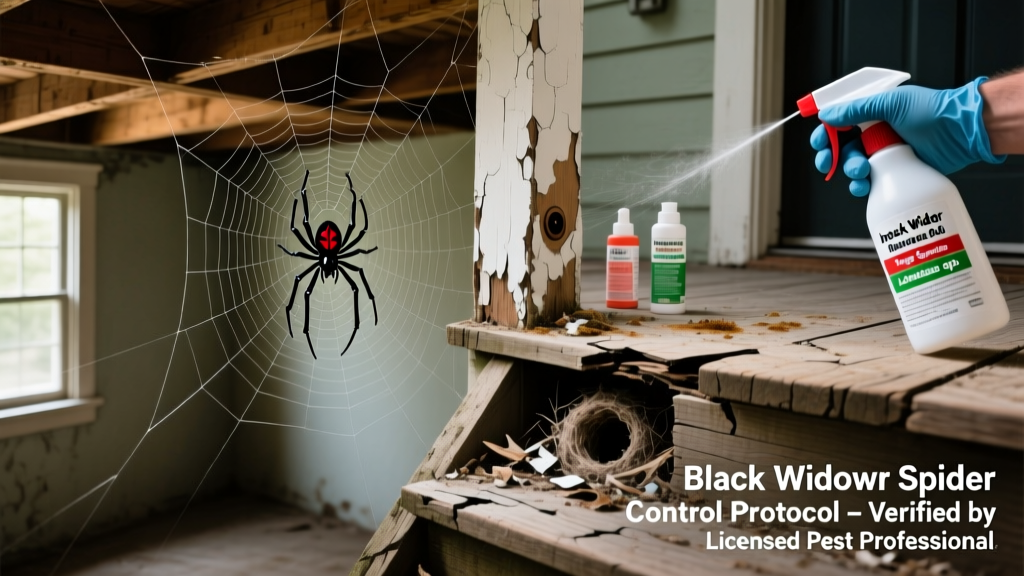
Black widow spiders (Latrodectus spp.) are among the most medically significant spiders in North America. Though shy and non-aggressive, their neurotoxic venom can cause severe muscle pain, nausea, and hypertension—especially in children, the elderly, or those with compromised immunity. According to the American Association of Poison Control Centers’ 2023 annual report, black widow bites accounted for 1,842 human exposures—and 37% required medical treatment.
Identification
Correct identification is critical: mistaking a harmless spider for a black widow—or vice versa—can lead to unnecessary panic or dangerous delay in response. Adult female black widows are glossy black with a distinctive red hourglass marking on the underside of their abdomen. They range from 1.5 to 1.75 inches including legs. Males are smaller (about half the size), lighter in color, and often have red or pink spots—not an hourglass.
| Feature | Black Widow | False Widow (Steatoda) | Jumping Spider |
|---|---|---|---|
| Abdomen shape | Globular, smooth, shiny | Rounded but duller sheen | Compact, often hairy |
| Hourglass marking | Bright red, complete hourglass (ventral) | Orange-brown, incomplete or absent | None |
| Web type | Irregular, tangled, sticky, low to ground | Similar but less robust; often near windows | No web for hunting |
| Bite symptoms | Intense pain, cramping, sweating, hypertension | Mild local pain, no systemic effects | Minor sting, no venom concern |
Look for signs beyond the spider itself: irregular, messy webs in undisturbed corners, crawl spaces, garages, or woodpiles; small white egg sacs (½ inch, silken, peppered with tiny bumps); and shed exoskeletons near webbing.
What Attracts Them
Black widows don’t seek out humans—they seek shelter, prey, and stable microclimates. They thrive where insects are abundant and hiding spots plentiful. Key attractants include:
- Cluttered garages, sheds, or basements with cardboard boxes, old furniture, or stacked firewood
- Outdoor debris piles (brick, lumber, leaf litter) within 10 feet of your home’s foundation
- Cracks in foundations, gaps under doors, or broken window screens—entry points as narrow as ⅛ inch
- Moisture sources like leaky faucets, clogged gutters, or damp crawl spaces (they prefer 60–80% humidity)
The U.S. Department of Agriculture notes that black widow populations spike 30–40% in homes adjacent to undeveloped land or vineyards—habitats rich in crickets, cockroaches, and beetles, their primary prey.
Treatment Methods
Natural Removal
Start with physical removal and habitat disruption—especially if you’ve confirmed only a few spiders. Wear thick gloves and use a wide-mouthed glass jar + stiff index card to trap and relocate spiders outdoors, at least 100 feet from your home. Vacuum webs, egg sacs, and crevices thoroughly—immediately seal and freeze the vacuum bag for 48 hours before disposal.
- Diatomaceous earth (food-grade) applied as a thin line along baseboards and foundation cracks dehydrates spiders on contact
- Cedar oil spray (0.5% solution) deters spiders without harming pets—reapply every 7–10 days in high-traffic zones
- Reduce outdoor lighting near entrances; sodium-vapor or yellow LED bulbs cut insect attraction by up to 65%, per a 2022 University of Florida Entomology study
Chemical Options
When infestations exceed 5–7 spiders in one area—or egg sacs are found repeatedly—targeted chemical treatment becomes necessary. Always follow label instructions and prioritize low-risk formulations.
- Pyrethroid-based aerosols (e.g., cyfluthrin or deltamethrin) offer fast knockdown in cracks and voids—but avoid spraying near HVAC intakes or pet bedding
- Residual dusts (like boric acid mixed with silica gel) last 3–6 months in dry voids like wall interiors or attic beams
- Do NOT use foggers. The National Pesticide Information Center warns they’re ineffective against web-building spiders and disperse chemicals unnecessarily
"Black widows rarely wander into living areas unless disturbed. If you’re seeing more than two adults indoors per month, assume there’s an active colony breeding in your garage or crawlspace—and treat the source, not just the symptom." — Dr. Lena Torres, Urban Arachnologist, UC Riverside Extension (2023)
Prevention
Long-term prevention hinges on eliminating access and appeal—not just killing individuals. Seal all entry points with copper mesh and silicone caulk (spiders cannot chew through metal). Maintain a 12-inch gravel or stone barrier between soil and your home’s siding to discourage ground-level nesting. Store firewood at least 20 feet from the house and elevate it 6 inches off the ground.
Inside, reduce clutter systematically: rotate storage bins quarterly, discard unused cardboard, and install LED motion-sensor lights in dark zones—spiders avoid consistent light exposure. Also, control cockroach populations, since they’re the top food source for black widows in urban settings.
When to Call an Exterminator
Contact a licensed pest management professional if:
- You find 10+ live spiders or 5+ intact egg sacs in one week
- Spiders appear in bedrooms, kitchens, or bathrooms—indicating deep interior colonization
- Someone in your household has been bitten and shows systemic symptoms (muscle rigidity, vomiting, elevated blood pressure)
- You suspect colonies behind walls or under concrete slabs—areas requiring specialized inspection tools
Reputable providers will conduct a full perimeter inspection, provide a written treatment plan, and offer a 90-day retreatment guarantee. Avoid companies that push blanket pesticide applications—black widows require precise, targeted work.
Can black widow spiders bite through clothing?
No. Their fangs are only 1–2 mm long and cannot penetrate denim, canvas, or even most knit fabrics. Bites occur almost exclusively when the spider is pressed against bare skin—like when reaching into a shoe, glove, or folded towel. Always shake out footwear and gloves stored outdoors.
Are black widows aggressive toward people?
No. They do not chase or stalk. Over 95% of bites happen when a spider is accidentally squeezed or trapped—such as when putting on a jacket left on the floor or moving a rock in the garden. Their instinct is to flee, not fight.
Do black widow spiders live in groups?
They are solitary and territorial. Multiple spiders in one area signal abundant food and shelter—not social behavior. If you see several, it means conditions are ideal for reproduction, and egg sacs are likely nearby.
How long do black widow egg sacs take to hatch?
Under typical indoor temperatures (70–80°F), sacs hatch in 14–30 days. Each sac holds 200–900 spiderlings. Most die quickly due to cannibalism or lack of food—but even 5% survival equals dozens of new spiders.
Can I use vinegar to repel black widows?
Vinegar’s acidity may temporarily disrupt scent trails, but it has zero residual repellency and evaporates in under 2 hours. It won’t deter egg-laying or kill hidden spiders. Skip it—focus instead on sealing entry points and reducing prey insects.
Is it safe to keep a black widow as a pet?
No. Even experienced hobbyists face risk: a single bite requires immediate antivenom administration. The CDC prohibits interstate transport of black widows without federal permits. Leave them in the wild—and call wildlife services if you need relocation assistance.
Black widows aren’t invincible—and they’re far less common indoors than myths suggest. With vigilant inspection, smart sealing, and prompt response to early signs, most infestations are resolved in under two weeks. Prioritize safety over speed: wear protection, confirm ID, and never ignore recurring sightings. For persistent issues, schedule a professional inspection before the next warm season begins.