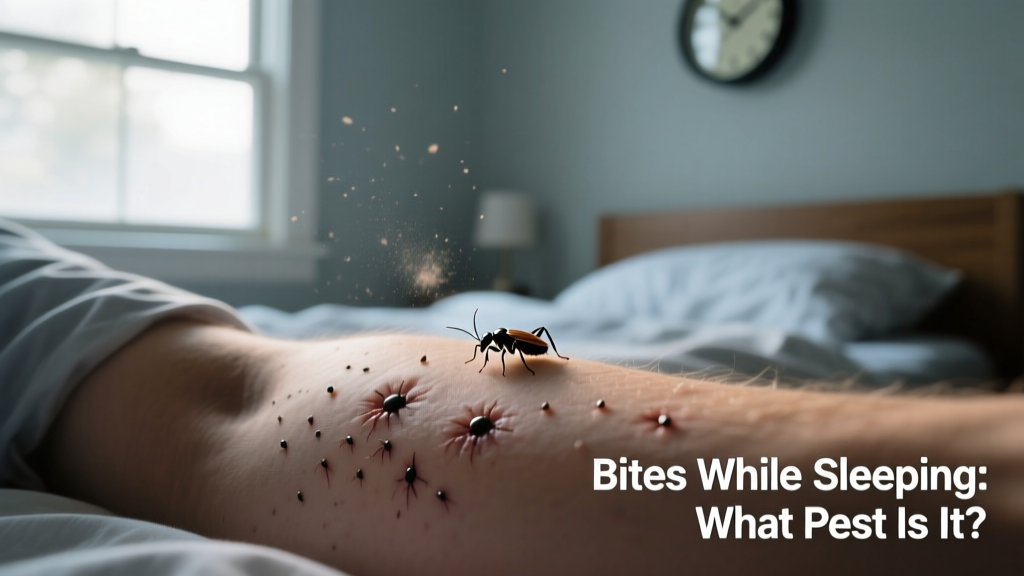
Waking up with itchy, red bites—especially in lines or clusters on exposed skin—is rarely random. It’s a sign something is feeding on you while you sleep. Most commonly, it’s bed bugs, but fleas, bird mites, or even mosquitoes hiding in bedroom crevices can mimic the pattern. Left unchecked, infestations grow fast—and some pests (like bird mites) won’t go away without removing their host source.
Identification
Not all nighttime biters look or behave the same. Bed bugs are flat, oval, rust-colored, and about the size of an apple seed. They don’t jump or fly, but they hide in mattress seams, headboard cracks, and baseboard gaps. Fleas are smaller (1–2 mm), dark brown, and jump when disturbed—they usually hitchhike in on pets or used furniture. Bird mites are nearly microscopic (0.3–1 mm), translucent, and appear after birds abandon nests near windows or soffits. Mosquitoes are larger, winged, and often leave single, swollen bites—but may bite repeatedly if trapped indoors overnight.
| Pest | Size & Appearance | Bite Pattern | Primary Hiding Spots |
|---|---|---|---|
| Bed bug | 4–5 mm, flat, reddish-brown, no wings | Linear or clustered ("breakfast, lunch, dinner") on arms, shoulders, neck | Seams of mattresses, box springs, behind outlet plates |
| Flea | 1–2 mm, dark, laterally compressed, jumps readily | Groups on ankles, legs, waistband line; often intensely itchy | Pet bedding, carpets, upholstered furniture |
| Bird mite | 0.3–1 mm, pale yellow/gray, barely visible to naked eye | Random, widespread, intensely itchy—often on face, scalp, ears | Window sills, ceiling corners, HVAC vents near old nests |
| Mosquito | 3–6 mm, slender, long legs, wings present | Isolated, puffy, slow-to-appear bites; often near windows or fans | Standing water nearby, window screens with holes, closets with damp laundry |
What Attracts Them
Nighttime biters aren’t drawn to dirt—but they *are* drawn to warmth, carbon dioxide, and shelter. Bed bugs track human breath and body heat, thriving where people sleep consistently. Fleas latch onto pets or rodents and multiply fastest in humid, carpeted homes with poor vacuuming habits. Bird mites enter homes when starlings or pigeons vacate nests in late spring—especially under eaves or in attic vents. Mosquitoes breed in stagnant water as close as clogged gutters or plant saucers just outside your bedroom window.
- Bed bugs: Cluttered rooms, secondhand furniture, frequent travel
- Fleas: Unprotected pets, lack of regular flea treatment, rodent activity in walls
- Bird mites: Active bird nests within 10 feet of exterior walls or rooflines
- Mosquitoes: Outdoor standing water within 200 feet, torn window screens, humid indoor air
Treatment Methods
Natural First Steps
Start non-chemical: wash all bedding, curtains, and soft toys in hot water (130°F+) and dry on high heat for 30+ minutes. Vacuum mattresses, box springs, and baseboards daily for 7–10 days—empty the vacuum bag or canister into a sealed plastic bag and freeze it for 48 hours. Encase mattresses and box springs in certified bed bug-proof encasements. For fleas, comb pets with a fine-tooth flea comb over white paper—look for black specks (flea dirt) that turn red when wet.
Chemical Options
Use EPA-registered insecticides only after confirming the pest. Pyrethroid sprays (e.g., deltamethrin) work on bed bugs and fleas—but resistance is widespread. According to the University of Kentucky Entomology Department’s 2022 bed bug resistance survey, over 88% of field-collected bed bug populations showed moderate-to-high resistance to common pyrethroids. For bird mites, residual dusts like silica gel (applied in wall voids and vents by a licensed pro) are more effective than sprays. Never apply pesticides directly to mattresses or bedding—use only label-approved contact sprays on baseboards and cracks.
"If you see live mites crawling on walls or windows in daylight—or find bites worsening despite clean sheets and no pets—it’s almost certainly not bed bugs. That’s the first red flag pointing to bird or rodent mites." — Dr. Susan Jones, OSU Extension Entomologist, 2023
Prevention
Prevent recurrence by breaking the pest’s life cycle and access points. Seal cracks around windows, doors, and electrical outlets with caulk. Install door sweeps and repair all window screens—mosquitoes and some mites can squeeze through holes as small as 0.5 mm. Keep bedrooms clutter-free: store clothes off floors, remove fabric piles, and avoid upholstered headboards. After travel, unpack suitcases in the garage or laundry room—not the bedroom—and inspect luggage seams with a flashlight.
- Inspect secondhand furniture thoroughly before bringing it inside
- Trim tree branches touching your roofline to deter nesting birds
- Empty plant saucers and clean gutters every 10 days during warm months
- Use a dehumidifier to keep bedroom humidity below 50%—fleas and mites struggle to survive
When to Call an Exterminator
Call a licensed pest professional if you’ve confirmed bites for 14+ days with no improvement after thorough cleaning and encasement, or if you spot live pests in more than one room. Also call immediately if you find evidence of nesting birds or rodents in your attic, soffits, or walls—the source must be removed first. DIY treatments rarely eliminate bird mites because they reproduce in hidden nest material, not on humans. According to the National Pest Management Association’s 2023 industry data, 92% of verified bird mite cases required structural inspection and nest removal—not just spraying.
Why do I only get bitten at night?
Most nocturnal biters—including bed bugs and many mosquitoes—are photophobic and most active in darkness. Their feeding peaks between 2 a.m. and 5 a.m., aligning with human REM sleep cycles when CO₂ output increases and movement decreases. Fleas and mites don’t have strict circadian rhythms, but they’re more likely to feed when hosts are still for long periods.
Can bed bugs bite through clothing?
Rarely. Bed bugs prefer exposed skin, but they *can* crawl under loose pajamas or thin cotton sheets to reach skin. Tight-fitting synthetic fabrics (like nylon athletic wear) act as a mild deterrent—but aren’t reliable protection. That’s why bites often appear on necks, wrists, and ankles, even when covered.
Are the bites dangerous?
Most nighttime bites cause only itching and minor swelling—but secondary infections from scratching are common. Bed bugs aren’t known to transmit disease, though the CDC classifies them as a public health nuisance due to sleep disruption and anxiety. Fleas can transmit tapeworms to pets and, rarely, murine typhus. Bird mites don’t transmit human disease but can trigger allergic dermatitis in sensitive individuals.
How long do bites last?
Individual reactions vary, but most resolve in 3–10 days with antihistamines and cold compresses. Bed bug bites may persist up to two weeks in people with heightened sensitivity. If new bites appear weekly—even after cleaning—it means the source is still active. Track bite dates and locations using a simple journal: this helps distinguish recurring infestation from delayed allergic reactions.
Do I need to throw away my mattress?
No—unless it’s severely damaged or infested with live bugs deep in the core. Modern bed bug encasements trap existing bugs inside and prevent new ones from entering. Replace only if the encasement fails after 12 months of consistent use—or if you find live bugs escaping from zippers or seams.
Can pets bring in bed bugs?
Pets don’t carry bed bugs like fleas—they don’t live on hosts. But bed bugs *can* hitchhike in pet carriers, leashes, or collars after traveling or visiting infested places. Inspect those items carefully if bites begin after a vet visit or boarding stay.
Identifying the right pest isn’t just about relief—it’s about targeting the real source. Misdiagnosis leads to wasted time, money, and stress. Use this guide to match bite timing, location, and environmental clues—then act decisively. And remember: if bites continue past three weeks despite your efforts, it’s time to call in a specialist who can inspect beyond the bedroom.