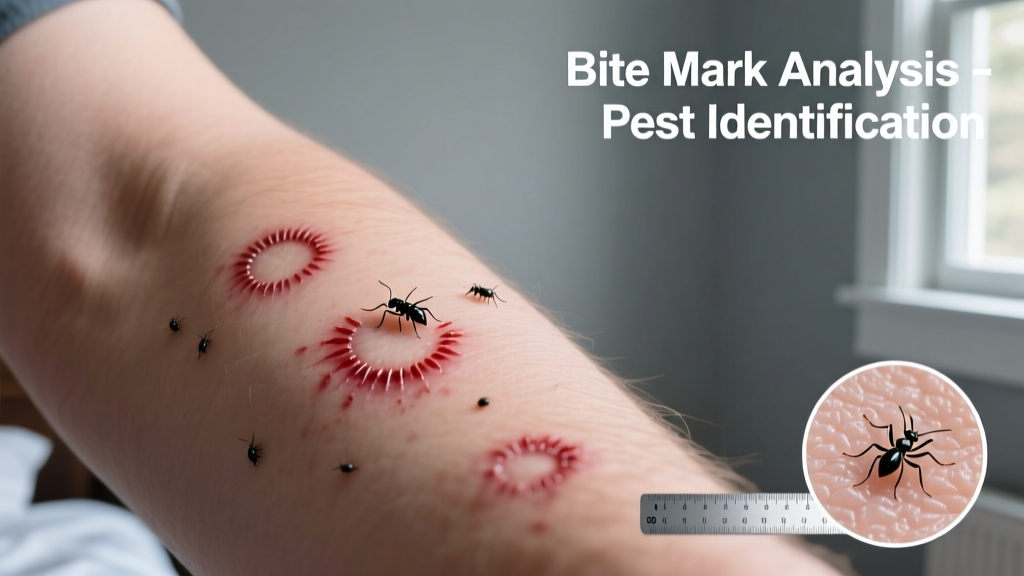
Bite marks on skin—especially if they appear in clusters, lines, or overnight—aren’t just annoying; they’re a diagnostic clue. Unlike random scratches or allergic reactions, many pests leave distinct patterns tied to their feeding behavior, habitat, and biology. Misidentifying the source leads to wasted time, ineffective treatments, and recurring bites.
Identification
Not all bites look alike—and not all biting pests even live on your body full-time. Bed bugs feed at night and retreat to cracks; fleas jump and prefer pets but bite humans; chiggers latch on for hours before dropping off; and scabies mites burrow and reproduce under the skin. Visual inspection of bites alone isn’t enough—you need context: timing, location on the body, household pets, recent travel, and signs in your environment.
| Pest | Bite Pattern | Timing | Telltale Signs Beyond Bites |
|---|---|---|---|
| Bed bug | Linear or clustered (often 3–5 in a row, "breakfast, lunch, dinner") | Nighttime; bites may not appear for 1–2 days | Small dark fecal spots on mattress seams, shed skins, rusty stains on sheets |
| Flea | Small, red, itchy bumps—often around ankles, waist, or bends of elbows/knees | Any time, but especially after pet contact or yard exposure | Flea dirt (black specks that turn red when wet), pets scratching excessively |
| Chigger | Intensely itchy red welts, often where clothing fits tightly (waistband, sock line) | Within hours of outdoor exposure in grassy/wooded areas | No visible pest—chiggers detach after feeding; bites worsen over 24–48 hrs |
| Scabies mite | Thin, grayish burrow tracks + pimple-like rash, especially between fingers, wrists, armpits, genitals | Worsens over days to weeks; intense itching at night | Contagious via skin-to-skin contact; household members show similar symptoms |
What Attracts Them
Biting pests don’t wander in randomly—they follow cues. Bed bugs hitchhike on luggage, used furniture, or clothing and thrive in cluttered, warm spaces with easy human access. Fleas multiply fastest in humid, shaded yards and pet bedding where eggs and larvae survive in carpet fibers and baseboards. Chiggers seek moist, vegetated areas with tall grass or brush—and latch onto passing hosts. Scabies spreads almost exclusively through prolonged skin contact, not environmental contamination.
- Cluttered bedrooms with upholstered furniture and unvacuumed carpets = prime bed bug real estate
- Unwashed pet bedding, indoor/outdoor pet access, and untreated yard perimeters = flea hotspots
- Overgrown lawns, unmowed edges near patios, and leaf litter = chigger breeding zones
Treatment Methods
Natural Options
Start here if bites are mild and infestation appears limited. Diatomaceous earth (food-grade) applied as a fine dust along baseboards, mattress seams, and pet bedding dehydrates bed bugs and fleas—but only works when dry and undisturbed. Cold treatment (48+ hours at 0°F) kills bed bug eggs in small items like shoes or stuffed animals. For chigger exposure, shower immediately with soap and water—removing them before they inject saliva reduces reaction severity. Tea tree oil (diluted 1:10 with carrier oil) shows moderate repellent effect against mites in lab trials (Journal of Medical Entomology, 2021), but never apply undiluted or to broken skin.
Chemical Solutions
When natural methods stall or bites escalate, targeted insecticides become necessary. Pyrethroid sprays (e.g., bifenthrin or deltamethrin) kill adult bed bugs and fleas on contact—but resistance is widespread. According to the University of Kentucky’s Entomology Department (2022), over 90% of U.S. bed bug populations tested showed reduced susceptibility to common pyrethroids. That’s why professional-grade products like chlorfenapyr (a non-repellent metabolic disruptor) are now standard for severe infestations. For scabies, prescription permethrin 5% cream applied head-to-toe (excluding face) and left on for 8–14 hours remains first-line treatment—over-the-counter versions are too weak.
Prevention
Preventing recurrence means disrupting the pest’s life cycle—not just killing adults. Wash all bedding, curtains, and clothing in hot water (120°F+) and dry on high heat for 30+ minutes. Vacuum mattresses, box springs, and upholstery thoroughly—then immediately seal and discard the vacuum bag outdoors. Install tight-fitting mattress and box spring encasements labeled “bed bug proof” (tested to ASTM E1594 standards). Keep indoor humidity below 50% using dehumidifiers—mites and fleas desiccate faster in dry air. Mow lawns weekly and trim shrubs away from foundations to reduce chigger habitat.
- Inspect secondhand furniture thoroughly before bringing it inside—check seams, crevices, and undersides
- Treat pets monthly with vet-approved flea/tick preventatives—even indoor-only cats can carry hitchhikers
- Use door sweeps and seal gaps around windows/doors to block entry points for crawling pests
When to Call an Exterminator
Call a licensed pest control professional if bites persist for more than two weeks despite thorough cleaning and DIY treatment—or if you find live pests in multiple rooms. Bed bug infestations rarely stay isolated: a 2023 National Pest Management Association survey found that 72% of confirmed bed bug cases involved at least three adjacent units in multi-family housing. Scabies requires medical diagnosis and prescription treatment—so consult a dermatologist, not an exterminator—but if household members keep reinfesting each other, environmental cleaning (linens, towels, brushes) must be coordinated simultaneously.
Why do bed bug bites sometimes appear days after exposure?
Bed bug saliva contains anticoagulants and anesthetics that suppress immediate immune response. Reactions vary widely: some people show no marks at all, while others develop delayed hypersensitivity—meaning redness, swelling, and itching peak 48–72 hours post-bite. This delay often confuses timelines and leads people to blame laundry detergent or stress instead of the actual pest.
Can fleas live in my home without pets?
Yes—especially if previous tenants had pets, or if wildlife (raccoons, opossums, or stray cats) frequent your attic, crawlspace, or yard. Flea pupae can remain dormant in carpet for up to 5 months, waiting for vibration, CO₂, or warmth to trigger emergence. A single female flea can lay 40–50 eggs per day, so even a brief pet visit can seed a persistent infestation.
Are chigger bites contagious?
No—chiggers don’t burrow or transmit disease in North America. They feed on liquefied skin cells (not blood), detach within 1–3 hours, and die shortly after. The intense itching and rash result from your body’s reaction to their digestive enzymes—not infection or transmission. You cannot “catch” chigger bites from another person.
How do I know if it’s scabies and not eczema?
Scabies burrows appear as tiny, wavy, grayish lines (3–10 mm long), often ending in a pinprick-sized blister or pimple. They’re most common in warm, thin-skinned areas: finger webs, wrists, elbows, beltline, nipples, and genitalia. Eczema tends to flare symmetrically on extensor surfaces (knees, elbows) and lacks burrows. A dermatologist can confirm with skin scraping and microscopic exam—don’t self-treat with steroid creams, which mask scabies and worsen spread.
Do ultrasonic pest repellers work on biting insects?
No credible evidence supports their effectiveness. The Federal Trade Commission issued warnings in 2020 about companies making unsubstantiated claims for ultrasonic devices against bed bugs, fleas, or mites. In controlled studies (University of Arizona, 2019), these devices showed zero impact on pest behavior or population growth. Save your money and focus on proven mechanical and chemical controls.
What’s the fastest way to relieve bite itching?
Cold compresses reduce inflammation fast. Over-the-counter hydrocortisone 1% cream applied twice daily for 3–5 days helps calm localized reactions. Oral antihistamines like cetirizine (Zyrtec) or loratadine (Claritin) reduce systemic histamine response—especially helpful for widespread bites. Avoid scratching: broken skin invites bacterial infection, which accounts for nearly 30% of bite-related ER visits (CDC Emergency Department Surveillance, 2022).
"If you’re seeing bites but can’t find the pest, check your mattress seams with a flashlight at night—and inspect your pet’s sleeping area with a white towel rub test. Most biting pests leave trace evidence long before they’re visible to the naked eye." — Dr. Elena Ruiz, Board-Certified Entomologist, Pest Control Today, 2023
Accurate identification changes everything. A single mislabeled bite can send you down a rabbit hole of ineffective sprays, expensive gadgets, or unnecessary doctor visits. Use this guide alongside visual checks and timeline tracking—and remember: if bites cluster near seams, appear after travel, or follow pet contact, the answer is rarely ‘just stress.’ For more help diagnosing specific pests, see our bed bug identification guide, flea control checklist, or scabies vs. bed bugs comparison.