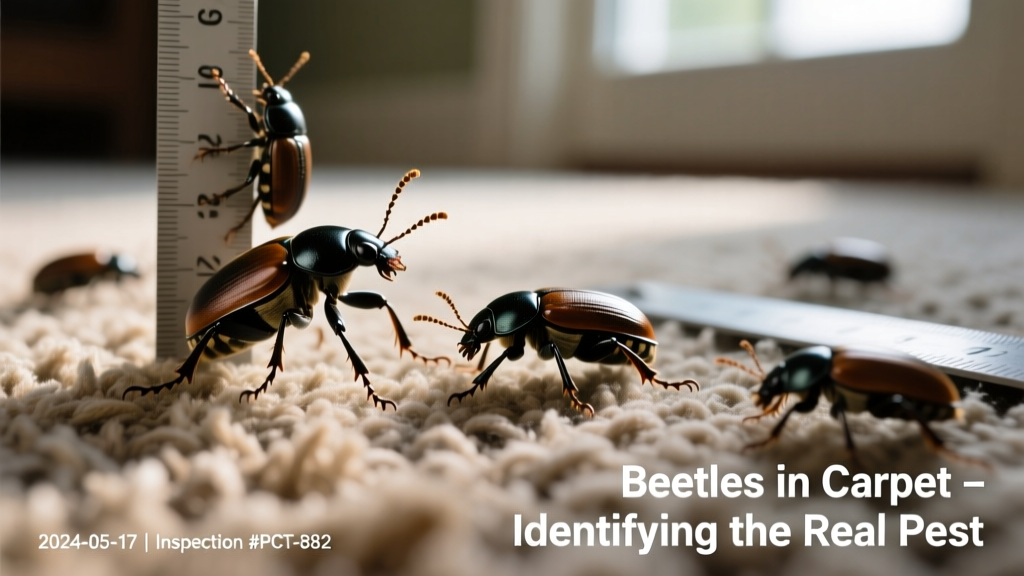
Carpet beetles aren’t just a nuisance—they’re silent destroyers. Adult beetles don’t eat fabric, but their larvae chew through wool, silk, feathers, and pet hair embedded in carpet fibers, leaving bare patches, holes, and frayed edges. Left unchecked, infestations spread from baseboards into upholstery, closets, and even stored clothing.
Identification
Carpet beetles (family Dermestidae) are often mistaken for bed bugs or moths—but key physical traits set them apart. Adults are oval, 1–3 mm long, with mottled patterns of brown, white, and orange scales. Larvae are hairy, reddish-brown, and about 4–5 mm long, with bristly tufts at the rear. You’ll find shed larval skins near baseboards, under furniture, or along carpet edges—not on your skin or bedding.
| Pest | Size & Shape | Key Clues | Damage Location |
|---|---|---|---|
| Carpet beetle larva | 4–5 mm, elongated, hairy | Shed skins, tiny black fecal pellets, no blood stains | Carpet backing, under rugs, in pet bedding |
| Bed bug | 4–5 mm, flat, oval, reddish-brown | Blood spots, bites in lines, live adults near mattress seams | Bed frames, headboards, nightstands |
| Clothes moth larva | 10 mm, creamy, legless, web-spinning | Silky tunnels, no bristles, prefers pure wool over blends | Hanging garments, wool sweaters, stored blankets |
Confirm presence by vacuuming carpet edges with a crevice tool, then inspecting the debris under bright light. Larvae and cast skins are unmistakable under magnification.
What Attracts Them
Carpet beetles don’t seek out clean homes—they follow food. Their larvae feed on keratin-rich organic matter: pet dander, dead insects trapped in carpet, lint from wool rugs, and even dried flower arrangements indoors. Homes with pets, older wool carpets, or high humidity (above 60%) see faster development cycles.
- Open windows without screens—adults fly in spring to lay eggs near nests or lint piles
- Unused rooms with undisturbed rugs or seasonal clothing storage
- Attics or basements with bird or rodent nests nearby (a major source of larval food)
Treatment Methods
Natural Methods
Vacuuming is your first and most effective step—use a HEPA-filter vacuum weekly, focusing on seams, under furniture, and along baseboards. Dispose of the bag or canister contents outside immediately. Steam cleaning at 120°F+ kills larvae and eggs on contact; target high-traffic zones and pet sleeping areas.
- Freeze infested small items (e.g., throw pillows, pet beds) for 72 hours at 0°F
- Diatomaceous earth (food-grade) applied lightly along baseboards disrupts larval exoskeletons—reapply after vacuuming
- Wash wool or silk rugs in hot water (130°F+) if manufacturer-approved
Chemical Options
Insect growth regulators (IGRs) like methoprene prevent larvae from maturing. Apply as a perimeter spray along baseboards and under furniture using a product labeled for indoor carpet beetles—never use outdoor-only formulations indoors. Permethrin-based sprays kill on contact but require reapplication every 2–3 weeks during active infestation.
According to the National Pesticide Information Center’s 2022 review, IGRs reduced viable carpet beetle larvae by 92% after three applications spaced 10 days apart when combined with thorough vacuuming.
"Most homeowners treat the symptom—the larvae—but miss the source. Check window sills for adult beetles in April, then trace back to where they’re laying eggs: bird nests in soffits, dead mice in walls, or attic insulation full of insect carcasses." — Dr. Lena Cho, Entomologist, UC Riverside IPM Program, 2023
Prevention
Stop new generations before they hatch. Seal gaps around windows and doors with caulk or weatherstripping—adults enter through cracks as small as 1/16 inch. Replace wool rugs with synthetic blends in high-pet-traffic areas. Store off-season woolens in airtight plastic bins (not cedar chests—beetles ignore cedar oil unless it’s highly concentrated).
- Brush pet bedding weekly and wash in hot water
- Install fine-mesh (18-mesh) screens on attic vents and soffits
- Inspect and clean HVAC return vents quarterly—dust bunnies here feed larvae
When to Call an Exterminator
Call a licensed pest professional if you find larvae in more than three separate rooms, see adults flying indoors regularly in May–June, or discover evidence of nesting wildlife (bird nests, rodent droppings) in walls or attics. DIY methods rarely reach hidden egg clusters behind baseboards or inside wall voids.
Do carpet beetles bite humans?
No—carpet beetle larvae lack mouthparts capable of piercing skin. What people mistake for bites are often allergic reactions to larval hairs or coincidental insect bites from other pests. If you’re experiencing welts or itching, check for bed bugs in carpet or fleas instead.
Can carpet beetles live in hardwood floors?
Not permanently—but larvae will crawl across hardwoods to reach food sources like pet hair trapped in expansion gaps or dust bunnies under baseboards. They won’t burrow into solid wood, unlike powderpost beetles.
How long do carpet beetles live?
Larvae develop for 2–12 months depending on temperature and food availability. Adults live only 2–6 weeks but lay 50–100 eggs each. A single female can seed multiple rooms before dying.
Will washing my carpet get rid of them?
Standard shampooing won’t eliminate eggs or larvae deep in backing fibers. Hot-water extraction (steam cleaning) at ≥120°F helps, but must be paired with vacuuming and IGR application to break the life cycle.
Are carpet beetles attracted to light?
Yes—adults are phototactic and gather near windows, lamps, and light fixtures in spring. That’s why you’ll often spot them on sills or blinds, not in dark closets. Use this behavior to monitor activity peaks and time treatments.
Do carpet beetles come from outside?
Almost always. According to the Entomological Society of America’s 2021 Urban Pest Survey, 87% of confirmed carpet beetle infestations originated from external sources—most commonly bird nests in gutters, wasp nests in eaves, or rodent carcasses in wall voids. Indoor breeding is rare without an established food source.
Carpet beetles thrive where organic debris accumulates—and that means your home’s smallest oversights become their biggest opportunity. Stay ahead by vacuuming twice weekly, sealing entry points, and checking window sills each April. For persistent cases, pair treatment with a structural inspection—you may be dealing with more than beetles. See our guide on signs of rodent infestation to rule out deeper issues.