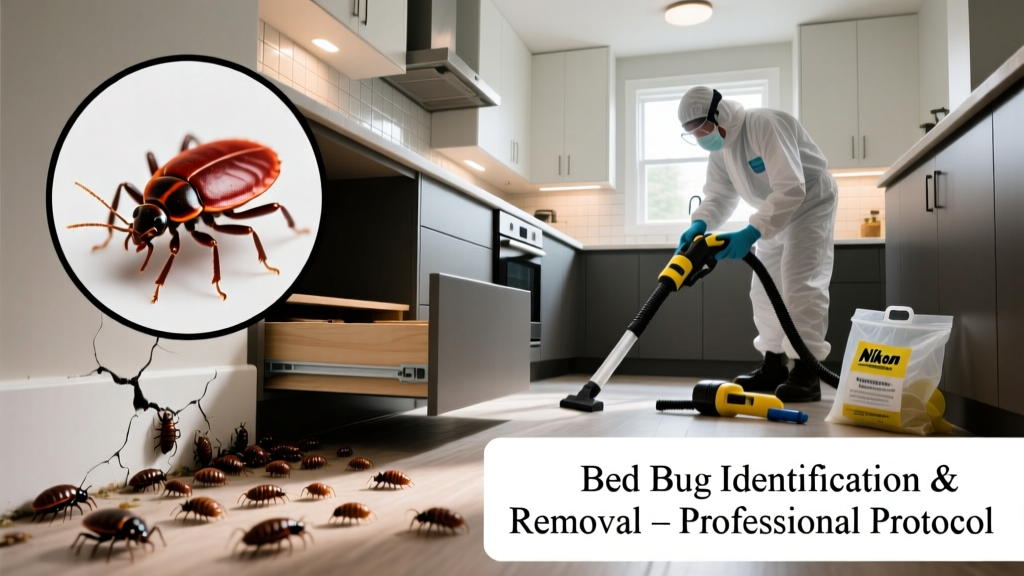
Bed bugs (Cimex lectularius) don’t belong in kitchens—but they show up anyway. Though they prefer bedrooms, these hitchhiking pests exploit clutter, cracks near baseboards, and even shared walls in apartments to invade food prep areas. Unlike cockroaches or ants, bed bugs don’t eat crumbs—but they’ll hide in drawer rails, behind refrigerators, and inside toaster ovens while feeding on nearby humans at night.
Identification
Spotting bed bugs in the kitchen requires sharp eyes and a flashlight. They’re reddish-brown, flat, oval-shaped, and about the size of an apple seed (4–5 mm) before feeding—swelling to a darker, balloon-like shape after a blood meal. You won’t see them scurrying across counters like ants; instead, look for evidence: rust-colored fecal spots (digested blood), translucent shed skins, tiny white eggs (1 mm), or live nymphs in crevices.
| Clue | Bed Bug | Misidentification Risk |
|---|---|---|
| Fecal spotting | Small, clustered rust-brown dots on cabinet hinges or appliance backs | Often mistaken for mold, pepper dust, or dried sauce splatter |
| Eggs | White, barrel-shaped, ~1 mm, glued to seams or under drawer slides | Confused with flour mites or grain weevil eggs (which are smaller and often in dry goods) |
| Shed skins | Translucent, full-body exoskeletons with visible legs and antennae | Resembles dried yeast flakes or rice starch residue |
| Live insects | Non-flying, slow-moving, avoid light; crawl along edges—not flying or jumping | May be misidentified as carpet beetles or immature cockroaches (but those have wings or longer antennae) |
What Attracts Them
Bed bugs aren’t drawn to food or moisture—they’re drawn to warmth, carbon dioxide, and human proximity. Kitchens become secondary habitats when bedrooms are treated or overcrowded, or when infestations spread through wall voids. Shared apartment walls, used furniture brought into laundry rooms adjacent to kitchens, or overnight guests sleeping on pull-out sofas near dining areas all create pathways.
- Cracks in baseboards or behind kick plates where plumbing lines enter cabinetry
- Loose drawer pulls and gaps between cabinet doors and frames
- Upholstered barstools or breakfast nook seating stored against kitchen walls
- Cluttered pantry shelves that provide daytime harborages near sleeping zones
Treatment Methods
Natural Methods
Start with non-chemical interventions—especially critical in food-handling spaces. Vacuum every seam, drawer track, and appliance gap using a crevice tool and immediately dispose of the bag outdoors in a sealed trash bag. Steam clean cabinet interiors at ≥120°F for 30+ seconds per surface (the U.S. EPA confirms this kills all life stages). Encase barstool cushions in tightly woven zippered covers rated for bed bugs (bed bug proof furniture covers).
Chemical Methods
Only use EPA-registered products labeled for indoor crack-and-crevice use in kitchens—and never spray directly on food prep surfaces. Pyrethroid-based aerosols (e.g., Bedlam Plus) can target harborages behind microwaves or under stoves, but resistance is widespread: insecticide resistance in bed bugs affects over 90% of U.S. field populations (University of Kentucky Entomology, 2022). Dust formulations like CimeXa (silica gel) work well in inaccessible voids behind cabinets—but require professional application near electrical components.
"We’ve pulled live bed bugs from inside microwave vents and refrigerator door gaskets—places people assume are too hot or cold for them. Temperature alone doesn’t deter hiding; it’s access to hosts that matters." — Dr. Susan Jones, OSU Extension Entomologist, 2023
Prevention
Seal entry points and disrupt harborages. Use acrylic-latex caulk (not silicone) on gaps >1/16″ around pipes, outlets, and cabinet backs. Replace loose drawer glides and tighten cabinet door hinges to eliminate 2–3 mm gaps. Store rarely used cookware in sealed plastic bins—not cardboard boxes. Inspect secondhand chairs, stools, and small appliances with a magnifying glass before bringing them indoors.
- Wipe down cabinet exteriors weekly with 70% isopropyl alcohol—kills eggs on contact
- Rotate pantry items monthly to expose hidden harborages during cleaning
- Install interceptors under table legs and appliance feet (bed bug interceptors) to monitor movement
When to Call an Exterminator
Call a licensed pest management professional if you find live bugs in more than two separate kitchen zones (e.g., pantry + behind fridge + under island), if bites persist after 10 days of DIY treatment, or if you spot eggs in wall voids (visible via outlet plate removal). Most general pest companies lack bed bug-specific training—verify they follow the NPMA Bed Bug Best Practices (2023) and offer a minimum 90-day warranty with retreatment clauses.
Can bed bugs live inside my refrigerator?
No—they can’t survive long-term below 45°F, but they’ll hide in the insulated door gasket, behind the drip pan, or inside the compressor housing where ambient heat builds. Don’t unplug the unit; instead, vacuum gaskets thoroughly and steam-clean accessible seams.
Do bed bugs contaminate food?
They don’t feed on food, so contamination risk is low—but finding them near open cereal boxes or spice jars means your home has a broader infestation. Discard any unpackaged food exposed to confirmed harborage zones; sealed cans and jars are safe after wiping down.
Why are bed bugs in my kitchen but not my bedroom?
This usually signals either recent bedroom treatment (bugs displaced), a neighboring unit infestation migrating through shared walls, or a sleeper regularly using a kitchen-area sofa or fold-out table. Check adjoining rooms and conduct CO₂ trap monitoring for 72 hours.
Can I use diatomaceous earth in kitchen cabinets?
Only food-grade DE—and only in completely dry, inaccessible voids (e.g., behind toe-kick panels). It loses effectiveness when humid or dusty, and inhalation poses respiratory risk. Never apply near sinks, dishwashers, or food prep zones.
How long do bed bugs live without feeding in a kitchen?
Up to 6 months under cool, low-activity conditions—longer than most homeowners realize. That’s why passive monitoring and consistent vacuuming matter more than one-time sprays.
Will washing dishes kill bed bugs on utensils?
Yes—if items go through a full dishwasher cycle (≥140°F water for ≥10 minutes). Hand-washing won’t reliably kill eggs or adults. For wooden spoons or non-dishwasher-safe items, soak in boiling water for 10 minutes or seal in a plastic bag for 2 weeks at 100°F+ (e.g., in a closed car on a 90°F day).
Kitchens shouldn’t be bug territory—but bed bugs don’t read labels. Vigilance, precision sealing, and knowing when to bring in trained eyes make all the difference. Focus on harborages, not just sightings, and remember: if you’re seeing them here, they’re likely elsewhere too.