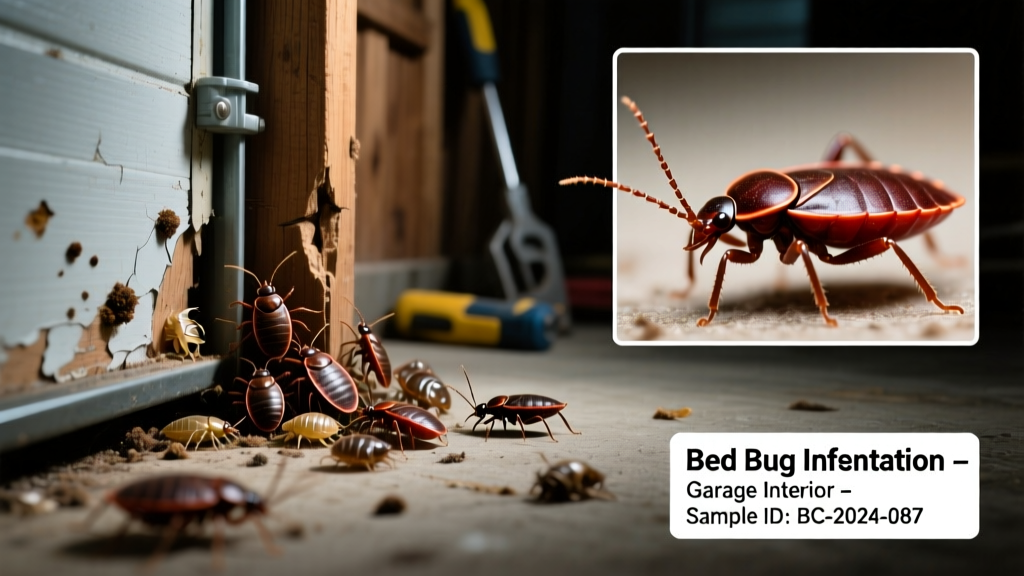
Bed bugs don’t just live in bedrooms—they’re opportunistic hitchhikers that thrive in cluttered, low-traffic spaces like garages. A single infested cardboard box, used furniture, or even a stored suitcase can seed an entire garage population. Left unchecked, they’ll migrate into living areas within days.
Identification
Garage bed bugs look identical to those found indoors: reddish-brown, oval, flat, and about the size of an apple seed (4–5 mm). They don’t fly or jump but crawl rapidly across surfaces—including concrete floors, drywall seams, and stored items.
Key signs include:
- Dark rust-colored spots (digested blood) on cardboard boxes, tool handles, or insulation backing
- Shed exoskeletons near baseboards, behind wall-mounted shelves, or inside hollow metal shelving legs
- Faint, sweet, musty odor—especially in heavily infested storage bins or under parked vehicles
- Live nymphs (translucent tan) hiding in crevices of garden tool handles or folded tarp edges
| Pest | Size & Color | Common Garage Locations | Telltale Sign |
|---|---|---|---|
| Bed bug | 4–5 mm, rusty brown | Cardboard boxes, upholstered lawn chairs, car interiors | Blood spots + molted skins in tight seams |
| Carpet beetle | 2–3 mm, mottled black/white | Old rugs, pet bedding, wool insulation | Larvae leave tiny holes in fabric—not blood stains |
| Spider beetle | 2–4 mm, shiny red-brown | Grain bags, birdseed containers, attic joists | Found near food sources; no blood residue |
What Attracts Them
Garages attract bed bugs for three main reasons: storage density, temperature stability, and human traffic patterns. Unlike attics or basements, garages often host seasonal items—camping gear, holiday decorations, secondhand furniture—that sit undisturbed for months, giving bugs time to multiply unseen.
According to the National Pest Management Association’s 2022 Bed Bug Incident Report, 27% of garage-linked infestations started with reused patio furniture brought in after summer storage.
- Cluttered floor space—especially stacked boxes, plastic totes with loose lids, or piles of tarps
- Garage doors left open during warm months, allowing entry via clothing or pets
- Shared walls with attached homes (e.g., laundry rooms or mudrooms)
- Used mattresses, sofas, or upholstered chairs stored “just for now”
Treatment Methods
Natural Methods
Start with non-chemical tactics—especially if the garage is attached or shares ventilation with living space. Diatomaceous earth (food-grade) works best when applied as a thin, even layer along baseboards, behind shelves, and inside wheel wells of parked cars. It dehydrates bugs on contact but requires 7–10 days to kill all life stages.
Steam cleaning at 120°F+ kills eggs and adults instantly. Focus on seams of outdoor cushions, garage door tracks, and the underside of workbenches. Avoid saturating electrical outlets or insulation.
Chemical Methods
For active infestations, use EPA-registered residual insecticides labeled specifically for bed bugs in non-living structures. Pyrethroid-based aerosols like Bedlam Plus are effective for crack-and-crevice treatment—but avoid spraying on vehicle interiors or near HVAC intakes.
The U.S. EPA notes that overuse of pyrethroids has led to widespread resistance; rotate with products containing chlorfenapyr (e.g., Phantom) every 6 weeks for sustained control.
“In garage settings, 80% of bed bug activity occurs within 3 feet of the floor—focus treatments there first.” — Dr. Susan Jones, Ohio State University Entomology Extension, 2023
Prevention
Preventing reinfestation means breaking the hitchhiking cycle. Inspect all incoming items—especially yard sale finds, moving boxes, or camping gear—under bright light before bringing them into the garage.
- Store seasonal items in hard-sided, latching plastic bins—not cardboard or fabric sacks
- Install weatherstripping on garage doors and seal gaps around utility lines entering the home
- Vacuum garage floors weekly with a HEPA-filter vacuum, emptying the canister outside immediately
- Keep parked cars clean—vacuum floor mats and check under seats monthly
Pair these habits with regular monitoring: place interceptor traps under garage door thresholds and near storage racks to catch early movement.
When to Call an Exterminator
Hire a licensed pest professional if you find live bugs in more than three separate locations (e.g., tool chest + car trunk + storage shed), or if bites appear on household members after garage exposure. Licensed technicians can apply restricted-use products and conduct thermal treatments—critical for insulated garages where heat retention helps eliminate hidden clusters.
Also consider professional help if your garage shares walls or ductwork with bedrooms or nurseries. According to the bed bugs in walls guide, shared cavities allow rapid migration through electrical outlets and plumbing chases.
Can bed bugs survive winter in an unheated garage?
Yes—but only if sheltered. Adult bed bugs die after 15 minutes at 0°F, yet they’ll hibernate in insulated wall voids, car trunks, or bundled blankets. In a typical Midwest garage averaging 25°F in January, survival rates drop to ~12% after 30 days without feeding (University of Kentucky Entomology, 2021).
Do bed bugs live in car engines?
No—they avoid extreme heat and oil residue. But they do hide in cabin areas: under floor mats, in seat seams, and behind sun visors. Always inspect the interior before parking in the garage.
Will washing garage-stored clothes eliminate bed bugs?
Only if washed in hot water (140°F+) and dried on high heat for 30+ minutes. Cold washes spread bugs; dryers alone (no wash) kill most adults but not all eggs. For bulk items like sleeping bags, use a commercial laundromat dryer on timed high-heat cycles.
Are bed bugs attracted to gasoline or oil smells?
No evidence supports this. Bed bugs track CO₂, body heat, and skin odors—not hydrocarbons. However, oily rags or fuel-soaked shop towels may provide hiding spots due to texture and warmth retention.
Can I treat garage bed bugs while storing tools and equipment?
Absolutely—but remove or cover sensitive electronics, power tools, and flammable materials before applying sprays or steam. Wipe down metal tool handles with 70% isopropyl alcohol after treatment to kill residual nymphs.
Do bed bugs nest in garage insulation?
Rarely in fiberglass batts, but yes in loose-fill cellulose or spray foam with air gaps. They prefer surface-level harborage, so check behind insulation rather than inside it—especially near outlets, light fixtures, and door frames.
Garage bed bugs won’t vanish on their own—and waiting gives them time to move into your home’s walls or HVAC system. Act fast, focus on high-risk zones, and treat storage items as suspect until proven clear. For long-term success, pair physical removal with consistent monitoring using bed bug interceptors and quarterly inspections.