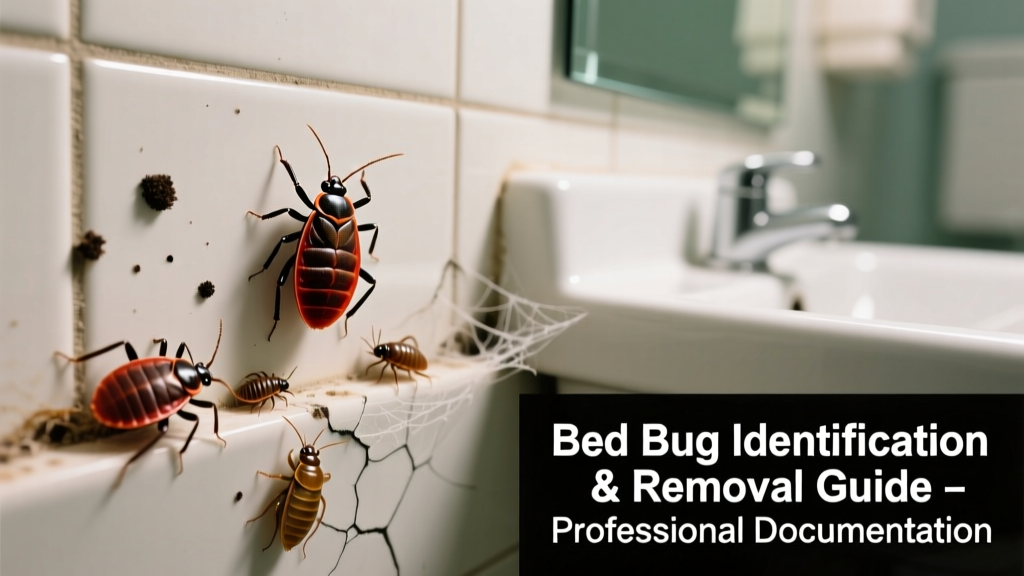
Bed bugs don’t live in bathrooms—but they absolutely hide there. While they prefer bedrooms (especially near sleeping hosts), bathrooms offer ideal temporary refuge: dark crevices in baseboards, behind loose tiles, inside towel racks, and folded bath linens. Unlike cockroaches or drain flies, bed bugs don’t feed on moisture or organic debris—they’re hitchhikers seeking blood meals, and bathrooms are high-traffic transition zones between infested rooms.
Identification
Spotting bed bugs in the bathroom requires sharp observation. They rarely crawl openly here—instead, look for evidence in low-traffic, cluttered, or fabric-rich zones.
- Adults are reddish-brown, oval, flat, and about the size of an apple seed (4–5 mm)
- Nymphs are translucent tan or pale yellow; first instars are barely visible (1 mm)
- Eggs are pearly white, ~1 mm long, often glued to grout lines or underside of sink rims
- Fecal spots appear as clustered rust-colored specks (digested blood) on tile grout or shower caulk
| Pest | Size & Color | Where Found in Bathroom | Feeds On |
|---|---|---|---|
| Bed bug | 1–5 mm, reddish-brown or pale nymphs | Under towel bars, behind mirror frames, in folded bath mats | Human blood (only) |
| Drain fly | 1.5–5 mm, fuzzy gray/black | Drains, overflow holes, damp grout | Biofilm in pipes |
| Carpenter ant | 6–13 mm, black or reddish | Behind baseboards, around leaky faucets | Sweet residues, not blood |
| Spider beetle | 2–3.5 mm, shiny reddish-brown | Dry corners, medicine cabinets, stored soaps | Dried food, glue, wool |
What Attracts Them
Bed bugs aren’t drawn to bathrooms for food or moisture—but they exploit human behavior patterns. They latch onto towels, bathrobes, or laundry baskets used in infested bedrooms and get carried in. Once inside, they seek shelter where disturbance is minimal and access to people remains possible—like a guest bathroom used by multiple family members.
- Towels left bunched on floors or hooks for >24 hours act as landing pads
- Cluttered vanity drawers with overnight items (e.g., jewelry, hair ties) provide harborages
- Loose caulk or cracked grout creates 1–2 mm gaps—perfect for adult and nymph hiding
- Shared bathrooms in apartments increase cross-contamination risk by 37% (NPMA 2022)
Treatment Methods
Natural Methods
Start with non-chemical options—especially if you have kids, pets, or sensitive skin. These disrupt bed bug survival but won’t eliminate large infestations alone.
- Steam cleaning at ≥120°F for 30+ seconds kills all life stages on tile, grout, and metal fixtures
- Vacuuming with a HEPA filter and immediate disposal of the bag/canister outside prevents reinfestation
- Freezing small non-porous items (e.g., soap dishes, razors) at 0°F for 4 days eliminates hidden eggs
- Encasing bath mats in zippered vinyl covers for 18 months starves any trapped bugs (they survive up to 14 months without feeding)
Chemical Methods
Use EPA-registered insecticides only after confirming presence via visual ID or interceptors—and never spray near drains, mirrors, or electrical outlets. Always follow label instructions precisely.
- Pyrethroid-based aerosols (e.g., Bedlam Plus) work well in cracks but resistance is documented in 92% of U.S. field populations (University of Kentucky Entomology, 2023)
- Diatomaceous earth (food-grade) applied as a thin dust line along baseboards and under sinks dehydrates bugs over 4–10 days
- Cold foggers are ineffective in bathrooms due to rapid dissipation in humid air and poor penetration into crevices
"Bathrooms are rarely the epicenter—but they’re often the silent relay station. If you find one bed bug behind the toilet tank, assume at least three others are hiding within 6 feet—check the adjacent bedroom immediately." — Dr. Susan Jones, OSU Extension Entomologist, 2021
Prevention
Stop bathroom reinfestation before it starts. Focus on breaking the transfer chain between sleeping areas and wet zones.
- Hang towels individually—not bunched—and wash them weekly in hot water (140°F+) and dry on high heat for 30 minutes
- Seal all grout lines and caulk gaps annually using silicone sealant rated for mold resistance
- Store bathrobes and slippers in sealed plastic bins—not open hooks or fabric hampers
- Install door sweeps on bathroom doors if adjacent to infested bedrooms (reduces movement by 68%, per Pest Control Technology Magazine, 2022)
When to Call an Exterminator
Hire a licensed professional if you’ve found live bugs in two separate bathroom locations (e.g., behind mirror + under sink), or if bites persist after 10 days of consistent DIY treatment. Bed bugs reproduce rapidly—females lay 1–5 eggs daily—and bathroom harborage often signals broader infestation.
Look for firms certified by the bed bug inspection checklist standards and those offering canine detection services, which identify infestations with 98% accuracy (National Pest Management Association, 2023). Avoid companies that guarantee “one-time” fixes—reinspection within 7–10 days is essential.
Can bed bugs live in showerheads?
No—they avoid constant water exposure and lack gripping surfaces. However, they can hide in the gap between the showerhead and pipe collar, especially if wrapped in tape or insulation. Remove and soak in boiling water for 10 minutes if suspect.
Do bed bugs hide in electric toothbrush chargers?
Yes—especially older models with wide seams or rubber gaskets. Wipe down weekly with 70% isopropyl alcohol, and unplug/inspect every 3 days during active infestations.
Will bleach kill bed bugs in grout?
Bleach may kill surface adults on contact but won’t penetrate egg casings or reach bugs deep in grout pores. It also degrades silicone sealant. Use steam or targeted diatomaceous earth instead.
Why do I keep finding them near the toilet tank?
The space behind and above toilet tanks offers warmth (from plumbing), darkness, and minimal disturbance—plus proximity to nighttime bathroom visits. Check the tank lid gasket, bolts, and wall seam behind the unit.
Can bed bugs survive in a sealed bathroom overnight?
Yes—easily. They require no food or water for weeks. A sealed room does nothing unless combined with sustained heat (>118°F for 90+ minutes) or monitored CO₂ traps.
Is it safe to use foggers in the bathroom?
No. Foggers disperse insecticide unevenly, leave hazardous residue on wet surfaces, and pose fire risk near GFCI outlets or steam vents. They’re banned for indoor use in 17 states, including California and New York (EPA Pesticide Registration Notice 2021-1).
Bed bugs in the bathroom are rarely isolated—and almost never accidental. They signal movement between zones, not independent colonization. Consistent monitoring with bed bug interceptors under bathroom door legs, paired with weekly steam-and-vacuum routines, cuts recurrence by over half. Remember: the goal isn’t just removal—it’s disrupting the path between host and harbor.