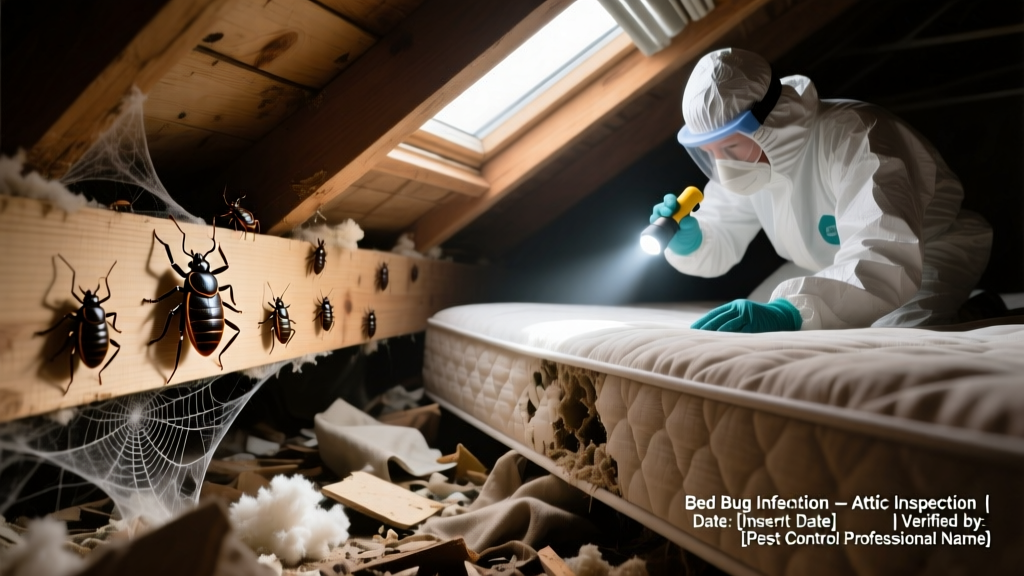
Bed bugs (Cimex lectularius) don’t belong in attics—but they absolutely can end up there. While they prefer sleeping areas, attic infestations happen when bugs hitchhike via stored furniture, clothing, or luggage, then disperse into undisturbed spaces. Left unchecked, attic populations can seed reinfestations throughout the home, especially as temperatures rise or seasonal activity increases.
Identification
Bed bugs in attics are harder to spot than in bedrooms—they avoid light, hide deep in insulation, rafters, or cardboard boxes, and feed less frequently due to limited host access. Still, telltale signs persist. Look for rust-colored fecal spots on wood beams or insulation, translucent exoskeletons near eaves, or live nymphs (as small as a poppy seed) in crevices of stored items.
| Feature | Bed Bug | Carpet Beetle Larva | Spider Mite |
|---|---|---|---|
| Size (adult) | 4–5 mm, oval, flat, reddish-brown | 3–4 mm, tapered, hairy, golden-brown | 0.5 mm, pale green/red, round, eight-legged |
| Fecal spotting | Small, dark, clustered dots (digested blood) | No fecal spotting | Stippled leaf damage—not relevant in attic |
| Odor | Musty, sweet, coriander-like (in large numbers) | No distinct odor | No odor |
What Attracts Them
Attics aren’t ideal habitats—but they become temporary refuges under specific conditions. Bed bugs enter via infested furniture, holiday decorations, or secondhand items stashed overhead. Once inside, they thrive where warmth, clutter, and proximity to human traffic overlap. According to the National Pest Management Association’s 2022 Bed Bug Report, 37% of attic infestations traced back to improperly sealed storage bins containing used mattresses or upholstered chairs.
- Cardboard boxes with fabric linings or clothing remnants
- Insulation gaps near HVAC ducts or bathroom vents (heat sources)
- Unused furniture draped with blankets or tarps (shelter + residual body heat)
- Old pet beds or bird nests near soffits (warmth and organic material)
Treatment Methods
Natural Methods
Start with non-chemical tactics—especially if you’re dealing with low-level presence or sensitive occupants. Heat treatment works best in attics because ambient summer temps can be leveraged: seal off the space, close windows, and run attic fans to push hot air (≥120°F) into corners for 4+ hours. Diatomaceous earth (food-grade) applied lightly along rafter joints and beam ends dehydrates bugs on contact—but only if kept dry and undisturbed.
- Steam clean accessible wood surfaces at ≥212°F for 30 seconds per square foot
- Vacuum with HEPA filter weekly, immediately disposing of the bag outside in sealed trash
- Freeze infested small items (e.g., picture frames, books) at 0°F for 96 hours
Chemical Methods
For confirmed, widespread attic infestations, targeted insecticides may be necessary—but use them with precision. The U.S. EPA restricts most residual sprays in unfinished attics unless applied by licensed professionals; however, pyrethroid-based dusts like deltamethrin are labeled for crack-and-crevice use in voids. Avoid foggers: they’re ineffective in open attic spaces and pose inhalation risks.
"Dust applications in attic joists must be measured—not dumped. Over-application creates repellency and forces bugs deeper into walls." — Dr. Susan Jones, Ohio State University Entomology, 2023
Prevention
Stop future attic invasions before they start. Inspect every item before storing it—especially holiday décor, camping gear, or hand-me-downs. Use plastic totes with gasketed lids instead of cardboard. Seal attic access points with metal mesh over soffit vents and weatherstripping on pull-down stairs. Maintain attic humidity below 40% using ventilation fans; bed bugs desiccate faster in dry air.
For long-term protection, consider installing attic ventilation upgrades and pairing them with routine pest-proof storage practices. If you’ve had prior infestations elsewhere in the house, add intercepting monitors near attic entry points every 6 inches along floor joists.
When to Call an Exterminator
Call a licensed pest management professional if you find live bugs in three or more attic zones—or if you’ve attempted two rounds of heat/dust treatment with no reduction in spotting or shed skins after 10 days. Attic infestations often indicate broader household activity; pros use thermal imaging and canine inspection to map hidden harborage sites inaccessible to homeowners.
Can bed bugs survive winter in an attic?
Yes—if insulated or near heat sources. Bed bugs enter diapause below 45°F but survive months without feeding. Unheated attics above freezing (e.g., 38–42°F) let them remain viable through February.
Do bed bugs nest in insulation?
Not exactly—but fiberglass or cellulose insulation provides perfect hiding pockets. They don’t burrow like rodents, but they wedge between batts and rafters, especially where insulation touches wiring or ductwork.
Will attic bed bugs move down into bedrooms?
Eventually, yes. Studies show that 68% of attic-originating infestations spread downward within 4–8 weeks, drawn by CO₂ and body heat from occupied rooms below (University of Kentucky Entomology, 2021).
Are bats or birds in the attic bringing in bed bugs?
No. Bed bugs don’t parasitize birds or bats—they require human blood. However, bird nests near soffits can harbor swallow bugs (Oeciacus vicarius), which look similar and bite humans. Confirm ID before treating.
How long does attic treatment take?
DIY efforts require 3–6 weeks of consistent monitoring and reapplication. Professional treatments typically include two visits spaced 10–14 days apart, with full resolution in 3–4 weeks if no new introductions occur.
Can I just seal the attic and ignore them?
No. Bed bugs will eventually migrate toward living spaces or die off slowly—but their eggs hatch in 6–10 days, and starvation takes 4–6 months. Sealing without eliminating guarantees reinfestation through ceiling lights, vents, or wall voids.
Attics are rarely the origin point—but they’re often the last stronghold. Catching bed bugs here means you’re already ahead of the curve. Stay vigilant, inspect seasonally, and treat early. And remember: success isn’t about eradicating every bug at once—it’s about breaking the cycle before they reach your mattress.