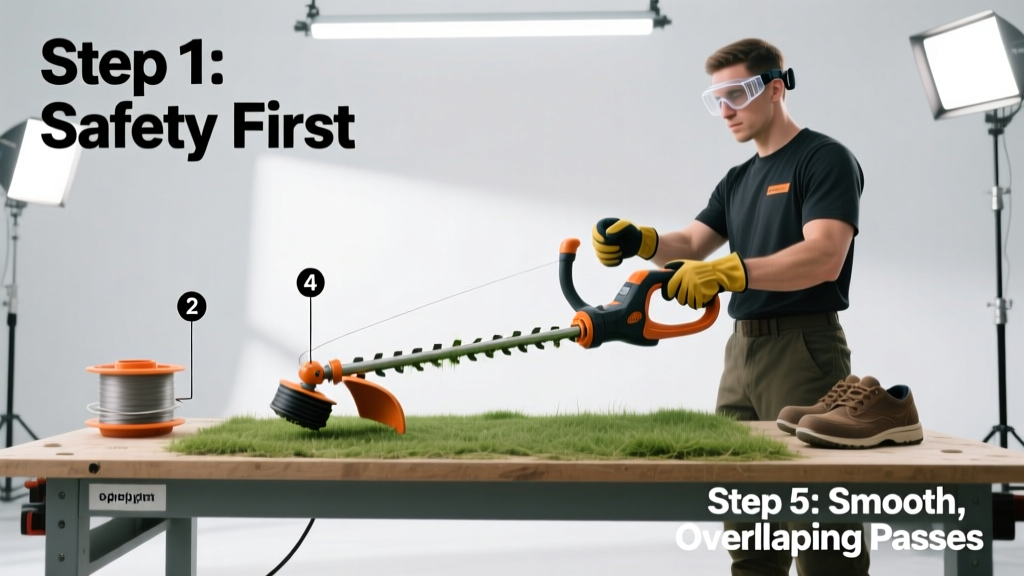
Using a string trimmer is a fundamental lawn care skill—especially for edging along driveways, sidewalks, and flower beds—but it’s not intuitive without guidance. This tutorial walks you through safe, effective operation whether you’re using a gas, electric, or battery-powered model. Difficulty is low to moderate; most people master the basics in under 20 minutes of practice.
Overview
| Skill Level | Time Required | Tools Needed | Estimated Cost |
|---|---|---|---|
| Beginner | 15–30 minutes (first use); 5–10 minutes per session thereafter | Trimmer, safety gear, fuel/battery charger (if applicable) | $60–$350 (entry-level cordless to pro-grade gas) |
Tools & Materials
| Item | Details | Notes |
|---|---|---|
| String trimmer | Gas (e.g., Echo SRM-225), corded electric (e.g., Greenworks 10-Amp), or battery-powered (e.g., EGO Power+ ST1623) | Gas models offer longest runtime; corded units require GFCI outlet; batteries last 20–45 min depending on load |
| Safety glasses | ANSI Z87.1-rated impact-resistant lenses | Required—debris can fly at 200+ mph off the line |
| Hearing protection | Ear muffs or foam plugs rated NRR 25+ dB | Gas trimmers average 105 dB; OSHA requires hearing protection above 85 dB |
| Work gloves | Padded, cut-resistant fabric (e.g., Mechanix Wear FastFit) | Prevents blisters and improves grip on vibrating handles |
| Fresh trimmer line | .065"–.095" diameter nylon, round or serrated, matched to your model’s specs | Check your manual—using oversized line strains the motor and risks breakage |
Step-by-Step Instructions
1. Inspect and prepare your trimmer
Check for loose screws, cracked housing, or frayed cords. For gas models, verify oil-to-fuel ratio (typically 50:1 for Echo and Stihl) and fill the tank outdoors—not while hot. Charge or plug in electric units. Install fresh line using your model’s spooling method—most require winding counterclockwise into the head’s grooves, leaving 4–6 inches protruding.
2. Gear up and clear the area
Put on ANSI-rated safety glasses, hearing protection, long sleeves, closed-toe shoes, and work gloves. Remove rocks, toys, garden stakes, and low-hanging branches from the work zone. The U.S. Consumer Product Safety Commission reports over 6,400 string trimmer-related injuries annually—nearly half involve flying debris striking unprotected eyes or skin.
3. Start the trimmer safely
For gas units: set choke to “on,” prime bulb 5–6 times, then pull starter cord firmly until engine fires. Let it warm 15 seconds, then move choke to “run.” Electric models: press safety lock button and trigger simultaneously. Never start near dry grass or mulch—sparks or heat can ignite material.
4. Trim with proper technique
Hold the trimmer at a 15° angle—tip tilted slightly downward so only the line’s lower third contacts grass. Move left to right for right-handed users (opposite for lefties). Keep the head rotating freely—don’t force it into thick weeds or roots. Pause every 2–3 minutes to let the motor cool and check line length; bump-feed heads auto-advance when tapped, but many battery models require manual line extension.
- Keep wrists relaxed—tight grips increase vibration fatigue
- Never trim above knee height; loss of control rises sharply above that level
- Use the “bump feed” motion deliberately: tap the head lightly on hard ground—not concrete—to release 1/4" of new line
Pro Tips
Seasoned landscapers emphasize consistency over speed. A steady, overlapping pass yields cleaner edges than rushing. And always cut when grass is dry—wet clippings clog the head and reduce line life by up to 40% (Toro Technical Bulletin, 2022).
“The biggest mistake I see? People holding the trimmer like a broom—vertical and stiff. It’s a precision tool, not a shovel. Your elbow should be bent at 90°, forearm parallel to the ground, and the head floating just above turf.” — Maria Chen, 12-year commercial grounds manager, LawnPro Contractors Association, 2023
- Replace trimmer line every 2–3 uses if cutting tall fescue or Bermuda grass
- Store gas trimmers with empty tanks to prevent carburetor gumming
- Clean air filters after every 5 hours of runtime—clogged filters drop power by 25%
Why does my string trimmer stall when I tilt it?
Most gas models rely on gravity-fed fuel systems. Tilting beyond 30° interrupts flow to the carburetor. Switch to a model with a diaphragm carburetor (e.g., Husqvarna 128LD) or use short, controlled tilts—never hold at extreme angles for more than 3 seconds.
Can I use a string trimmer to edge pavers or concrete?
Yes—but only with a dedicated edger attachment or by using the guard’s flat edge as a guide. Hold the trimmer vertically and walk backward slowly. Avoid forcing the line sideways; instead, let centrifugal force do the work. For crisp lines, pair with a how to edge a lawn technique using a half-moon edger afterward.
How often should I replace the trimmer line?
Every 1–2 hours of active use for standard .080" line. Thicker lines (.095") last longer but demand more torque—check your owner’s manual. If line snaps repeatedly, inspect the spool for cracks or misalignment. A worn clutch or damaged drive shaft may also cause premature breakage.
Is it safe to use a string trimmer near trees or shrubs?
Yes—with caution. Keep the head at least 6 inches from bark and avoid circling trunks. Repeated contact strips cambium tissue, inviting disease and girdling. For tight spots around ornamentals, switch to hand pruners or a how to prune shrubs method instead.
Why won’t my electric trimmer turn on?
First, verify the outlet is live and GFCI hasn’t tripped. Check cord integrity—look for kinks or exposed wires. For battery models, ensure terminals are clean and seated fully; try a second charged battery if available. If the unit hums but doesn’t spin, the line may be jammed inside the guard—power off, unplug, and gently rotate the head by hand to free it.
Can I use a string trimmer on weeds in gravel or mulch?
You can—but expect rapid line wear. Gravel chips nylon in seconds; mulch tangles and overheats the head. For gravel paths, use a flat-edged hoe first, then touch up with trimmer held high and moving fast. In mulch beds, keep the head elevated and avoid prolonged contact—consider switching to a how to weed a garden bed strategy with a stirrup hoe for efficiency.
With these steps, you’ll move from hesitant beginner to confident operator in one afternoon. Focus on posture, pacing, and prep—not power—and your lawn edges will look sharp season after season. Remember: the best trimmer isn’t the loudest or fastest—it’s the one you use safely, consistently, and with intention.