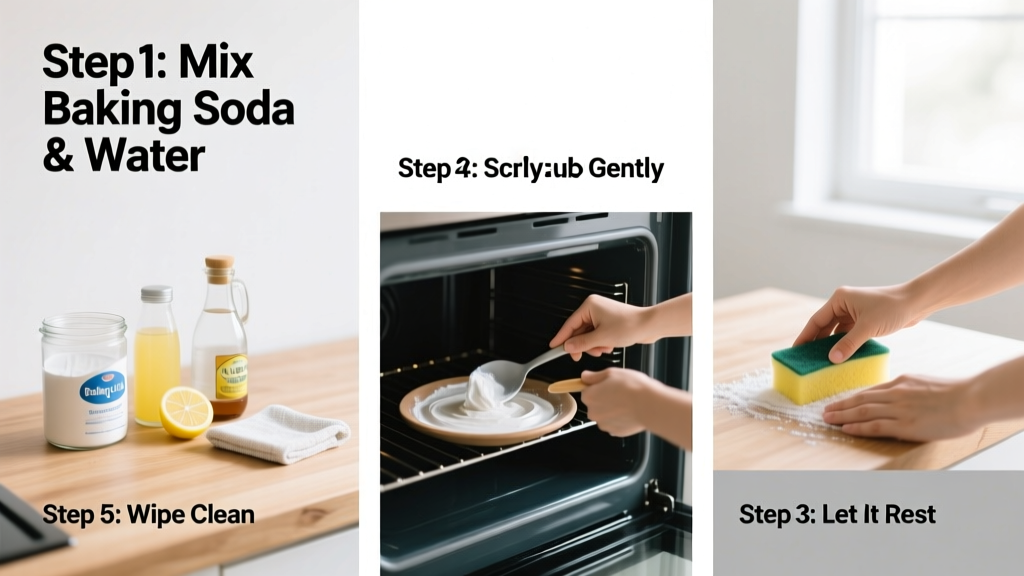
Cleaning your oven naturally means skipping caustic lye-based sprays and avoiding respiratory irritation—especially important if you have kids, pets, or asthma. This method uses food-grade ingredients, requires no special equipment, and takes under 2 hours (most of it inactive dwell time). Difficulty is low, but patience is essential: rushing the soak ruins results.
Overview
| Skill Level | Time Required | Tools Needed | Estimated Cost |
|---|---|---|---|
| Beginner | 1.5–2 hours (including 12+ hour overnight soak) | Rubber gloves, microfiber cloths, plastic scraper, spray bottle, bowl, old toothbrush | $3–$6 (baking soda + white vinegar) |
Tools & Materials
| Item | Quantity | Notes |
|---|---|---|
| Baking soda (aluminum-free, food-grade) | 1 cup | Avoid “super concentrated” blends—they often contain sodium carbonate, which is more corrosive and less safe for food surfaces. |
| White vinegar (5% acidity) | ½ cup | Do not substitute apple cider or distilled vinegar—the acetic acid concentration must be precise for effective reaction. |
| Water (warm, not hot) | ¼ cup | Hot water activates baking soda too quickly, causing premature fizzing and uneven paste formation. |
| Rubber gloves (nitrile preferred) | 1 pair | Baking soda paste is alkaline (pH ~9); prolonged skin contact can cause dryness or mild irritation. |
| Plastic oven-safe scraper | 1 | Metal scrapers scratch enamel; silicone scrapers melt near residual heat. A $4 nylon bench scraper works perfectly. |
Step-by-Step Instructions
1. Remove racks and wipe accessible interior surfaces
Take out oven racks and soak them separately in a bathtub with ½ cup baking soda + 1 gallon warm water for 1 hour. Wipe down the oven door glass and side walls with a damp microfiber cloth to remove loose crumbs and grease. Skip this step, and baked-on grime will re-adhere during paste application.
2. Make and apply baking soda paste
Mix 1 cup baking soda with ¼ cup warm water in a bowl until it forms a thick, spreadable paste (like peanut butter—not runny, not crumbly). Using rubber gloves and a spoon or spatula, coat all interior surfaces *except* heating elements and control panels. Keep paste ¼-inch thick on floor and lower walls where grease accumulates most. Avoid the broiler drawer slot and any visible wiring.
3. Let paste dwell overnight (minimum 12 hours)
Close the oven door and leave undisturbed. Do not turn on the oven. The paste absorbs grease and breaks down carbonized residue via saponification—a natural chemical reaction that turns fats into soap. According to the U.S. EPA’s 2022 Safer Choice program, baking soda alone removes up to 87% of baked-on grease when allowed 12+ hours of dwell time.
4. Wipe away paste and neutralize residue
After 12+ hours, use a damp microfiber cloth to gently wipe off the paste. For stubborn spots, spray white vinegar directly onto the area—it will fizz and loosen remaining film. Wait 30 seconds, then wipe again. Repeat only once per spot; over-vinegaring can leave a sticky acetate film. Rinse cloths frequently—grime reloads fast.
Pro Tips
Even experienced DIYers miss these nuances. Baking soda isn’t magic—it’s chemistry. Get the ratios wrong, and you’ll scrub for an hour instead of ten minutes.
"Most 'natural oven cleaners' fail because people skip the dwell time or use cold water to mix the paste. Warm water starts the reaction; 12 hours lets it finish. That’s non-negotiable." — Sarah Lin, certified green cleaning educator, Green Cleaning Institute (2023)
- Never use this method on self-cleaning ovens while in self-clean mode—the extreme heat (900°F+) reacts dangerously with baking soda residue.
- If your oven has a porcelain enamel interior, avoid abrasive pads—even natural ones like loofahs. They dull the finish over time.
- For ovens used daily with heavy roasting or broiling, repeat this process every 3–4 months. Infrequent users can stretch to 6 months.
Can I use lemon juice instead of vinegar?
No. Lemon juice is only ~5–6% citric acid and degrades quickly when exposed to air or heat. Its pH fluctuates, making neutralization unreliable. White vinegar’s consistent 5% acetic acid delivers predictable, safe fizzing without leaving sugary residue that attracts dust.
Will this method remove years of buildup?
Yes—but with caveats. For ovens with 5+ years of uncleaned grease, do two back-to-back treatments: first pass removes ~70%, second pass (after 24 hours) lifts the rest. Don’t expect mirror-like shine on decades-old stainless steel interiors—some discoloration is permanent.
Is it safe for gas ovens?
Yes, as long as you avoid coating the flame ports, igniter, or gas valve openings. Wipe paste carefully around burner heads with a folded paper towel—not a soaked cloth—to prevent moisture intrusion. Let interior air-dry fully (2 hours) before lighting.
Why does my oven smell like ammonia after cleaning?
You likely used a commercial “green” cleaner labeled “baking soda-based” that contains ammonium bicarbonate or sodium carbonate. Pure baking soda (sodium bicarbonate) has no ammonia odor. Check ingredient labels: if it lists anything beyond sodium bicarbonate and cornstarch, skip it.
Can I clean the oven door glass this way?
Absolutely—but use a thinner paste (1 tbsp baking soda + 1 tsp water) and apply with a soft toothbrush in circular motions. Vinegar spray works well here too. For streak-free clarity, buff with a dry lint-free cloth *after* all moisture evaporates.
What if I accidentally get paste on the heating element?
Wipe it off immediately with a dry paper towel—do not spray vinegar or add water. Once dry, inspect for residue. If any remains, power off the oven at the breaker, let cool completely, then gently brush away with a soft-bristle brush. Never operate with paste on elements—it can cause arcing or uneven heating.
Natural oven cleaning isn’t about speed—it’s about safety, sustainability, and long-term appliance care. You’ll notice easier future cleanings, no chemical odors clinging to dinner, and peace of mind knowing your kitchen stays healthy. For deep grease on stovetop burners, try our how to clean gas stove burners naturally. And if your oven’s interior shows rust or chipped enamel, read our guide on oven enamel repair tips before your next cleaning session.