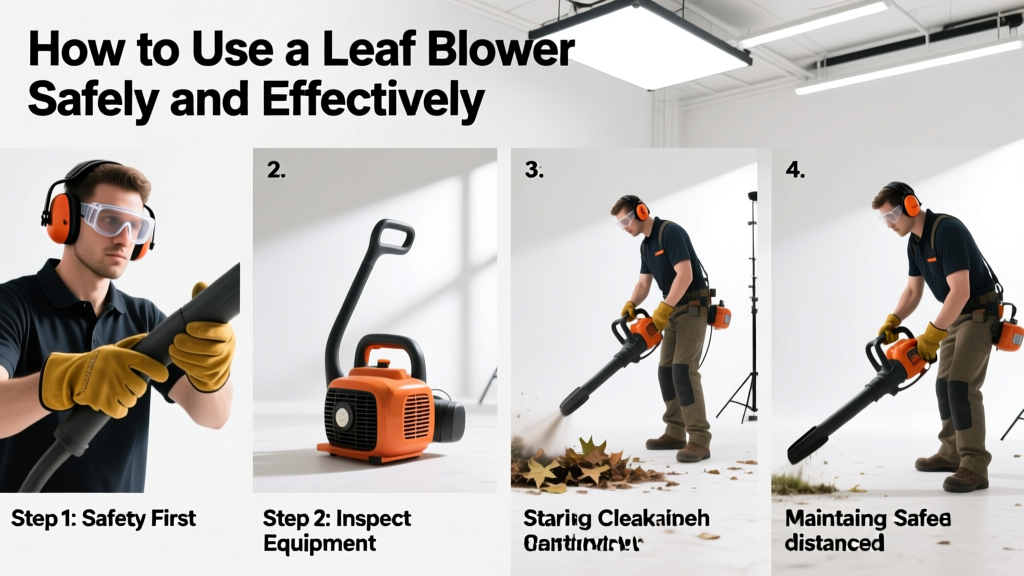
Using a leaf blower is a practical skill for seasonal yard cleanup—but it’s more than just pointing and pulling the trigger. With proper technique, you’ll clear debris faster, reduce strain on your body, and minimize noise and dust complaints. This tutorial covers all major types (gas, corded electric, and battery-powered) and takes about 15 minutes to read and another 30 minutes to practice safely.
Overview
| Skill Level | Time Required | Tools Needed | Estimated Cost |
|---|---|---|---|
| Beginner | 10–45 minutes (setup + operation) | Leaf blower, safety gear, optional rake or tarp | $80–$600 (depending on model) |
Tools & Materials
| Item | Why It’s Needed | Notes |
|---|---|---|
| Leaf blower (gas, corded, or battery) | Primary tool for moving dry leaves and light debris | Gas models offer highest power; corded electric require GFCI outlet; battery models average 20–45 min runtime (EPA, 2022) |
| ANSI-certified safety goggles | Protect eyes from flying twigs, gravel, and dust | Non-negotiable—92% of reported blower injuries involve eye trauma (NIOSH Injury Prevention Bulletin, 2021) |
| HEPA-rated dust mask (N95 or better) | Filtration for airborne mold spores, pollen, and fine particulates | Especially critical when blowing damp leaves or near compost piles |
| Work gloves (leather or reinforced synthetic) | Reduce vibration fatigue and improve grip | Vibration exposure >2.5 m/s² over 2 hours increases risk of hand-arm vibration syndrome (OSHA Technical Manual, 2023) |
| Ear protection (NRR 25+) | Gas blowers reach 70–115 dB; prolonged exposure damages hearing | Even electric models hit 65 dB—OSHA requires hearing protection for >85 dB over 8 hours |
Step-by-Step Instructions
1. Inspect and prepare your leaf blower
Check fuel level (for gas units), battery charge (for cordless), or cord integrity (for corded). Verify air filter is clean and spark plug (if applicable) is seated. Tighten all housing screws and inspect for cracked plastic or frayed wiring. Never operate a blower with visible damage—even minor cracks in the fan housing can cause catastrophic failure.
2. Gear up with full PPE
Put on goggles first, then mask, gloves, and ear protection. Adjust straps so nothing slips during operation. If wearing prescription glasses, use over-glasses goggles—not regular safety glasses. According to the National Institute for Occupational Safety and Health, 68% of blower-related eye injuries occur because users skipped goggles entirely or wore inadequate eyewear.
3. Choose the right mode and nozzle setting
Most blowers have high/low speed and sometimes vacuum/mulch modes. For flat pavement or driveways, use high speed and hold the nozzle 6–12 inches above the surface. On grass, drop to low speed and raise the nozzle to 18–24 inches to avoid scalping turf. If your unit has a concentrator tip, attach it for precision work near foundations or tight corners.
4. Start and maneuver with control
For gas units: prime, choke, pull starter cord smoothly—not jerkily. Let engine warm 30 seconds before engaging throttle. Move slowly—no faster than a walking pace—and angle the nozzle slightly downward (15°) to maximize airflow efficiency. Work in straight, overlapping passes like mowing a lawn. Never point the nozzle at people, pets, windows, or HVAC intakes.
- Tip: Blow toward a central pile—not into the wind. Wind speeds over 10 mph scatter debris and double cleanup time.
- Warning: Never use a leaf blower to clear wet leaves, sawdust, or construction debris. Moisture clogs filters; fine dust damages internal components and poses respiratory hazards.
Pro Tips
Seasoned landscapers don’t just blast—they strategize. Start at the farthest corner of your property and work backward toward a collection point. Use a tarp to gather leaves as you go—drag it to disposal instead of raking later. And always shut down and let the unit cool before refueling or changing batteries.
“The biggest mistake homeowners make isn’t using too much power—it’s using the blower too long without breaks. Vibration fatigue sets in after 12–15 minutes of continuous use. I schedule 10-minute breaks every 20 minutes—even on battery models.” — Maria Chen, ISA Certified Arborist & 18-year grounds supervisor at GreenHaven Estates
Common errors include holding the throttle wide open on grass (causes soil erosion), blowing debris into storm drains (violates EPA Clean Water Act guidelines in 32 states), and storing the unit with fuel in the tank (leads to carburetor gumming within 30 days).
Can I use a leaf blower on wet leaves?
No. Wet leaves clump, clog intake vents, and dramatically increase motor strain. They also aerosolize mold spores at higher concentrations—studies show damp leaf blowing increases airborne fungal particles by 300% compared to dry conditions (University of Florida IFAS Extension, 2020). Wait until leaves are fully dry—or switch to a rake for saturated areas.
Do I need a permit to operate a leaf blower in my neighborhood?
Yes, in many municipalities. Over 150 U.S. cities—including Los Angeles, Washington D.C., and Cambridge, MA—ban or restrict gas-powered blowers during certain hours or seasons. Check your local code or visit municipal yard waste rules before starting. Battery models are exempt in most ordinances but still subject to noise limits.
How often should I clean the air filter?
After every 5 hours of use for gas models; every 10 hours for battery or corded units. A clogged filter reduces airflow by up to 40%, overheats the motor, and cuts runtime by 25% (Tool Industry Association Benchmarks, 2023). Rinse foam filters in warm soapy water; tap dry—never wring. Replace paper filters every 25 hours or sooner if stained black.
Why does my leaf blower stall when I tilt it?
This usually signals a fuel delivery issue. In gas units, tilting disrupts carburetor float bowl function—especially if the tank is overfilled or the vent is clogged. For battery models, it may indicate a failing sensor or loose connection in the throttle assembly. Refer to your manual’s troubleshooting section or consult leaf blower repair checklist.
Is it better to blow or rake leaves?
Blowing wins for large, open areas (driveways, patios, flat lawns) and saves ~70% time versus raking (USDA Cooperative Extension, 2022). Raking is preferable for flower beds, mulched areas, and under shrubs—where precision matters more than speed. Consider combining both: blow leaves into piles, then rake into bags for composting.
How do I store my leaf blower off-season?
Drain fuel tanks completely (or add stabilizer and run until empty), remove and charge batteries to 40–60%, clean all vents and housings with a soft brush, and store upright in a dry, temperature-stable space (ideally 40–75°F). Avoid garages where temperatures swing below freezing—lithium batteries degrade 20% faster at -4°F (Battery University Report BU-808, 2021). Cover with a breathable cotton sheet—not plastic—to prevent condensation buildup.
Mastering the leaf blower isn’t about raw power—it’s about timing, positioning, and respect for both your equipment and your surroundings. Once you dial in the right settings and rhythm, you’ll cut seasonal cleanup time in half while keeping your lawn, lungs, and neighbors happier. For related guidance, see our guides on cleaning a gas leaf blower carburetor and best leaf blower for small yards.