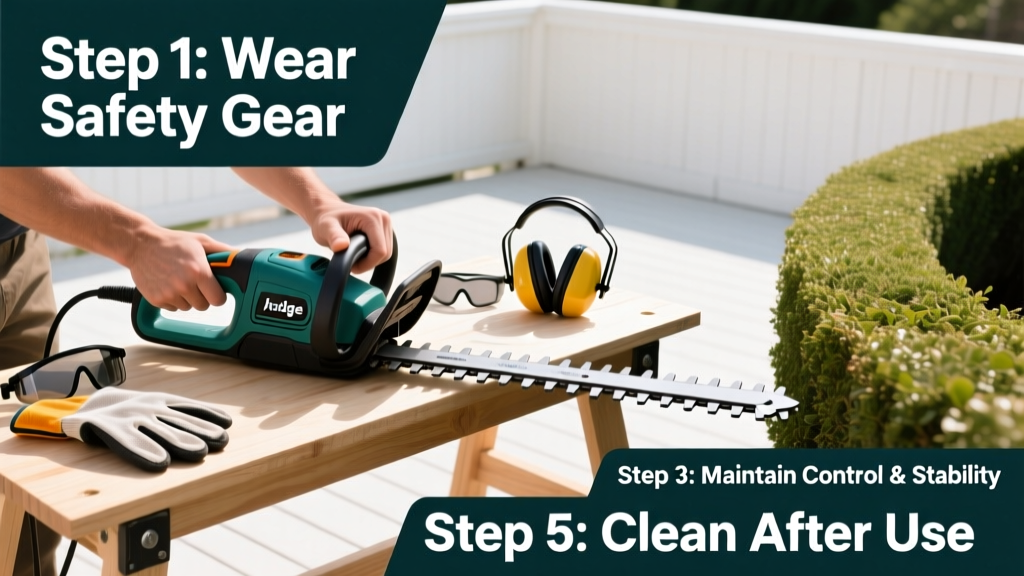
Using a hedge trimmer is a foundational landscaping skill that lets you shape shrubs, define property lines, and maintain clean garden edges. It’s rated beginner-friendly but demands attention to safety and technique—most first-timers spend 30–90 minutes on a medium-sized boxwood or privet hedge.
Overview
| Skill Level | Time Required | Tools Needed | Estimated Cost |
|---|---|---|---|
| Beginner | 30–120 minutes (per 15 linear feet) | Hedge trimmer, gloves, goggles, ear protection, ladder (if needed) | $45–$280 (corded, cordless, or gas models) |
Tools & Materials
| Item | Details | Notes |
|---|---|---|
| Corded or cordless hedge trimmer (18–24 in blade) | 20V–40V battery or 7–10A motor; 18–24 in blade length ideal for residential use | Avoid blades over 26 in unless trimming large yews or hedges over 6 ft tall |
| ANSI-certified safety goggles | Polycarbonate lenses with side shields | Required—debris travels up to 120 mph during trimming (OSHA, 2022) |
| Puncture-resistant leather or Kevlar gloves | Full-finger coverage with reinforced palms | Reduces vibration fatigue and prevents cuts from stray branches |
| Sturdy step ladder (3–5 ft) | Aluminum or fiberglass, with level feet and weight rating ≥250 lbs | Never stand above the second-highest rung; use only for brief access to upper sections |
Step-by-Step Instructions
1. Inspect and prep your trimmer
Check blade sharpness: run a fingernail lightly along the edge—if it catches slightly, it’s serviceable. If it glides, sharpen or replace the blade. Verify cord integrity (for corded models) or battery charge (≥80% for cordless). Clear debris from air vents and blade guards. Wipe down handles with a damp cloth to improve grip.
- Tip: Spray blades with light machine oil before first use to prevent rust and reduce friction.
- Warning: Never bypass safety switches or remove blade guards—even for “quick” cuts.
2. Dress for safety—and double-check surroundings
Wear ANSI Z87.1 goggles, hearing protection (NRR 22+), gloves, and closed-toe shoes. Remove loose jewelry and tie back long hair. Walk the perimeter: locate overhead power lines (minimum 10-ft clearance), identify low-hanging branches, and confirm pets and children are indoors or at least 25 ft away.
3. Establish your cutting pattern
Start at the base and work upward. For formal hedges (e.g., boxwood), use the “triangle method”: cut sides first at a slight inward angle (so top is narrower than base), then level the top. For informal hedges (e.g., lilac), thin interior growth first using selective cuts—not shearing—to encourage airflow and reduce disease.
- Tip: Mark guide strings between stakes at top and bottom to maintain consistent height and slope.
- Warning: Avoid cutting wet hedges—slippery branches increase kickback risk and clog blades faster.
4. Trim with steady, overlapping strokes
Hold the trimmer with both hands—one on the rear handle, one on the front. Keep arms slightly bent, elbows at waist height. Move the blade horizontally across the surface in smooth 12–18 inch passes, overlapping each stroke by 30%. Pause every 90 seconds to let the motor cool and check blade alignment. Never force the tool—let the teeth do the work.
Pro Tips
Seasonal timing matters more than frequency. According to the University of Minnesota Extension’s 2023 pruning guide, most broadleaf evergreens (like yew and holly) respond best to light trimming in late spring and early fall—avoid midsummer heat stress and late-fall cuts that invite winter dieback. Conifers like arborvitae tolerate heavier shaping but only between April and July.
"Hedge trimmers aren’t hedge *removers*. If you’re removing more than ⅓ of green growth in one session, you’re stressing the plant—and risking irreversible decline." — Dr. Linda Chalker-Scott, Washington State University Extension, 2022
Common mistakes include trimming too often (causing dense outer foliage and bare interiors), holding the trimmer vertically while moving sideways (increasing wrist strain), and neglecting post-cut cleanup (diseased clippings left on soil can reinfect plants).
Why does my hedge trimmer vibrate excessively?
Excessive vibration usually signals dull or misaligned blades, worn blade bushings, or an unbalanced motor mount. Test by running the unit idle—if vibration drops, the issue is likely blade-related. Replace or sharpen blades every 8–12 hours of use. If vibration persists after blade service, consult the manufacturer—internal bearing wear may require professional repair.
Can I use a hedge trimmer on small shrubs like lavender or rosemary?
Yes—but only with caution. Use a smaller 14–16 in cordless model and switch to selective hand-pruning for fine stems under ¼ in diameter. Lavender stems become woody quickly; cutting into old wood rarely produces new growth. For rosemary, limit trimming to the current season’s green tips—never cut into brown, leafless stems.
How often should I sharpen hedge trimmer blades?
Sharpen every 8–12 hours of active use—or whenever you notice ragged cuts, increased motor strain, or blade chattering. A quick field touch-up takes 5 minutes with a 6-in flat file (maintain original 30° bevel). For full resharpening, remove blades and use a bench grinder with a 60-grit wheel—followed by honing with a diamond stone.
My cordless trimmer dies mid-cut—what’s wrong?
Most often, it’s thermal shutdown due to overheating from prolonged high-load use (e.g., thick, woody stems) or low battery voltage. Let the unit rest 10 minutes, then test with a fully charged, matched battery. If the problem repeats, inspect for blocked air vents or damaged battery contacts. Note: Lithium-ion batteries lose ~20% capacity after 300–500 charge cycles (Battery University, 2021).
Do I need different techniques for flowering hedges like forsythia?
Absolutely. Forsythia blooms on year-old wood, so prune immediately after flowering ends—not in late winter. Remove up to ⅓ of oldest stems at ground level to stimulate vigorous new shoots. Avoid shearing; instead, use loppers for selective removal. This preserves next season’s flower buds and maintains natural form.
What’s the safest way to trim hedges near fences or walls?
Use a shorter 18-in trimmer and position yourself on the open side—never straddle a fence or lean over masonry. Set up a stable work platform (not a wobbly chair) and keep the blade angled slightly away from the structure to avoid nicks or gouges. For tight corners, rotate the trimmer 45° and use the tip—not the full blade—for precision control.
With practice, hedge trimming becomes rhythmic and efficient—not just about neat edges, but supporting plant health and seasonal resilience. Pair your new skill with proper rose pruning techniques for full-spectrum garden care, or explore top-rated cordless models if yours is aging out. And remember: a well-trimmed hedge grows stronger, not just prettier.