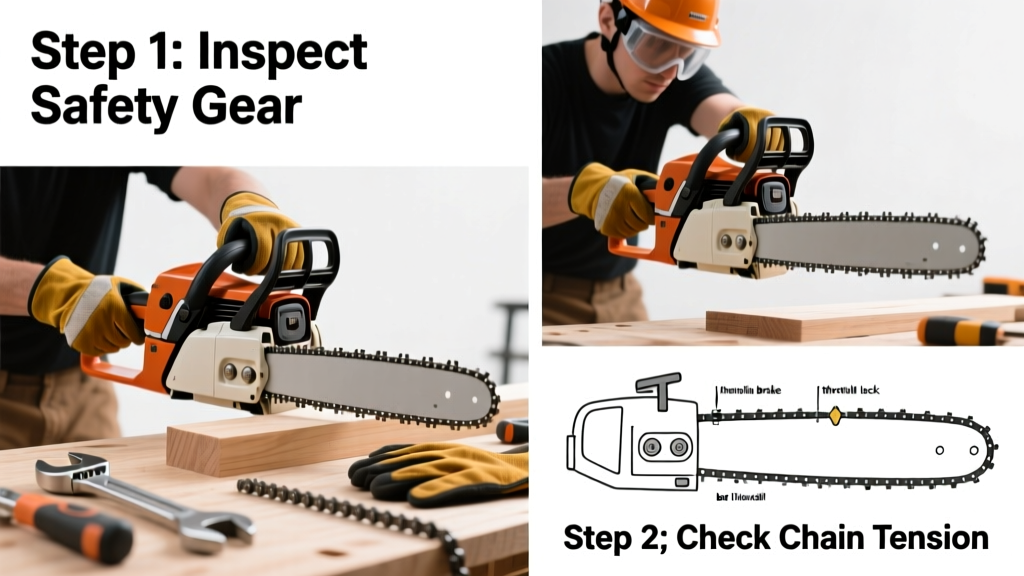
Using a chainsaw is a practical skill for property maintenance—whether you're cutting firewood, clearing storm-damaged limbs, or managing overgrown brush. It’s rated intermediate difficulty: not beginner-friendly due to inherent risks, but entirely manageable with proper training, gear, and respect for the tool. Expect to spend 2–3 hours for your first supervised session, including safety briefing and hands-on practice.
Overview
| Category | Details |
|---|---|
| Skill Level | Intermediate (requires physical coordination and risk awareness) |
| Time Required | 2–3 hours for first safe operation; 15–45 minutes per typical task (e.g., bucking a 12" log) |
| Tools Needed | Gas or electric chainsaw, sharp chain, fuel/oil mix (if gas), bar oil, file kit, wrench set |
| Estimated Cost | $120–$650 (entry-level electric) to $800+ (professional-grade gas) |
Tools & Materials
| Item | Notes |
|---|---|
| Chainsaw | Choose 14–18" bar for residential use; avoid bars over 20" unless trained and experienced |
| Personal Protective Equipment (PPE) | ANSI-certified helmet with face shield & ear protection, cut-resistant chaps (Class A or C), steel-toe boots, gloves |
| Fuel & Lubricants | For gas saws: 50:1 premix fuel (or as manufacturer specifies); bar-and-chain oil (never motor oil) |
| Maintenance Kit | Round file (5/32" for .325 pitch), depth gauge tool, spark plug wrench, air filter cleaner |
Step-by-Step Instructions
1. Conduct Pre-Operation Safety Checks
Inspect the chain tension: it should snap back when pulled away from the bar but not sag. Verify throttle lockout functions, chain brake engages smoothly, and all nuts/bolts are tight. Check fuel and bar oil levels—top off if below ¼ full. Ensure the chain is sharp: dull chains cause kickback and require excessive force.
- ⚠️ Warning: Never bypass the chain brake or disable safety features—even temporarily.
- 💡 Tip: Keep a logbook of fuel mixes, sharpening dates, and repairs. The U.S. Consumer Product Safety Commission reports that 36% of chainsaw injuries occur during routine maintenance (CPSC Injury Data, 2022).
2. Start the Saw Safely
Place the saw on level ground. Engage the chain brake. Set choke to “full” for cold starts. Pull the starter cord firmly until the engine sputters, then move choke to “half” and pull again. Once running, squeeze throttle briefly to warm up. Let idle stabilize for 15 seconds before engaging the chain.
- ⚠️ Warning: Never start a chainsaw while holding it in the air or between your legs.
- 💡 Tip: If it floods, hold throttle wide open and pull cord 5–6 times to clear excess fuel.
3. Cut with Proper Stance and Technique
Stand with feet shoulder-width apart, knees slightly bent, weight balanced over both feet. Hold the saw with right hand on rear handle (thumb wrapped under), left hand on front handle (thumb over top). Keep arms slightly bent—not locked—and elbows close to your sides. Begin cuts with the bar tip clear of wood; never let the tip contact material (kickback zone).
- ⚠️ Warning: Avoid overhead cutting unless trained and using a harness system. Overhead work accounts for 22% of serious chainsaw injuries (NIOSH Alert #2021-123).
- 💡 Tip: For bucking logs, make an undercut first (1/3 deep) on the underside, then finish from the top to prevent pinching the bar.
4. Shut Down and Store Correctly
Release throttle, engage chain brake, and let engine idle for 10 seconds. Turn ignition switch to “off.” Drain fuel tank if storing longer than 30 days (stale fuel gums carburetors). Wipe bar and chain with a rag soaked in bar oil. Store upright in a dry, ventilated area—never on concrete floor where moisture can corrode metal parts.
- ⚠️ Warning: Never walk with a running chainsaw—even short distances. Always stop the engine and engage brake first.
- 💡 Tip: After each use, clean the air filter with compressed air or soapy water (let dry fully before reinstalling).
Pro Tips
Seasoned arborists emphasize that most accidents stem from fatigue, distraction, or rushing—not lack of strength. According to the Insurance Institute for Business & Home Safety's 2023 report, 71% of non-professional chainsaw incidents occurred during weekend cleanup after storms—often when users skipped PPE or worked alone.
“A sharp chain cuts easier, safer, and with less vibration. If you’re pushing the saw or hearing a grinding sound instead of a clean ‘shush,’ stop and file it—don’t power through.” — Dave R., ISA Certified Arborist since 1998
Common mistakes include ignoring chain tension changes (heat expands metal), using incorrect file size (causes poor bite), and cutting above waist height without support. Always plan escape routes before felling—never assume a tree will fall exactly where intended. For more on safe felling techniques, see our how to fell a tree safely guide.
Can I use a chainsaw in the rain?
No. Wet wood increases kickback risk, and moisture compromises electrical components (even on gas models with electronic ignitions). Rain also reduces grip and visibility. Wait until surfaces are dry—or use a battery-powered saw rated IPX4 or higher only if absolutely necessary and with full PPE.
How often should I sharpen the chain?
Sharpen after every 2–3 tanks of fuel for regular use, or immediately if you notice sawdust turning to powder instead of coarse chips. A well-maintained chain lasts 5–10 hours of active cutting. Use a depth gauge tool to check cutter height—over-filed depth gauges cause dangerous vibration and poor performance.
Why does my chainsaw stall under load?
Most often, it’s a clogged air filter, old fuel, or incorrect carburetor settings. Check the spark arrestor screen (behind muffler) for carbon buildup—it’s a frequent culprit on older saws. Also verify bar oil flow: no visible oil trail on the bar edge means the pump or line is blocked. See our chainsaw won’t start troubleshooting guide for diagnostics.
Is it safe to use a chainsaw one-handed?
No. One-handed operation eliminates control and stability, dramatically increasing kickback risk. Even small electric saws require two hands for safe handling. If you need maneuverability in tight spaces, consider a pole saw or pruning saw instead.
Do I need a license to operate a chainsaw?
Not for personal residential use in the U.S., but many states require certification for commercial logging or tree work (e.g., Oregon OSHA Rule 437-004-0115). Some homeowner associations restrict chainsaw use during certain hours—check local ordinances. For volunteer storm response, organizations like Team Rubicon require chainsaw certification before deployment.
What’s the safest way to cut a fallen log?
Use the “open-face notch” method: cut a downward V-notch (about 30°) on the side facing the desired fall direction, then a horizontal cut just above the bottom of the notch. This creates a hinge that guides the log’s movement. Always cut from the high side first, and keep the bar parallel to the ground—never angled upward. For more detail, refer to our how to buck firewood tutorial.
Mastering chainsaw use isn’t about speed or power—it’s about rhythm, awareness, and consistency. Start small: practice on dry, seasoned hardwood scraps before tackling live trees or large diameters. Revisit your PPE checklist every time. And remember: the safest chainsaw is the one you’ve turned off and walked away from when conditions change. With deliberate practice, this demanding tool becomes a reliable extension of your hands—not a hazard waiting to happen.