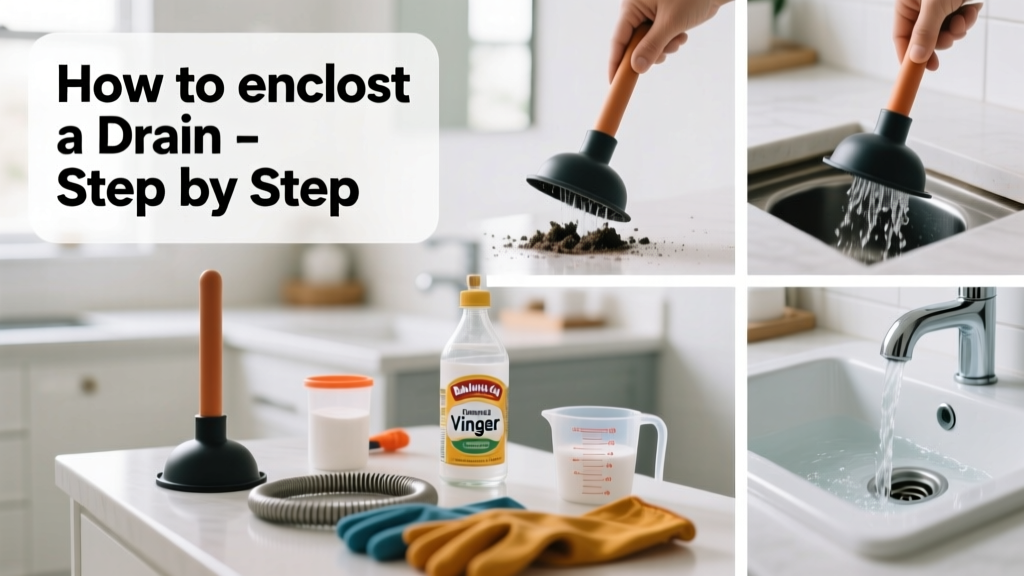
Unclogging a drain is a foundational home maintenance skill—moderate difficulty, under 30 minutes for most clogs, and entirely doable with tools you likely already own. Whether it’s a slow kitchen sink, a hair-clogged shower, or a gurgling bathroom tub, this tutorial walks you through proven, step-by-step fixes that work—not just once, but repeatedly.
Overview
| Skill Level | Time Required | Tools Needed | Estimated Cost |
|---|---|---|---|
| Beginner-friendly | 15–45 minutes | Plunger, drain snake, baking soda, vinegar | $0–$12 (if buying a new auger) |
Tools & Materials
| Item | Why It Matters | Notes |
|---|---|---|
| Flat cup plunger (not flanged) | Creates strong suction on flat drains like sinks and tubs | Avoid toilet plungers—they’re too soft and oversized |
| Hand-crank drain snake (15–25 ft) | Reaches past P-trap into horizontal pipes where hair and grease collect | Look for stainless steel cable with a corkscrew tip |
| Baking soda + white vinegar | Breaks down organic buildup without corroding pipes | Never mix with bleach—produces toxic chlorine gas |
| Rubber gloves & eye protection | Protects against splashes and biofilm exposure | The CDC reports 12% of household drain clogs contain mold spores (NIOSH, 2022) |
Step-by-Step Instructions
1. Stop the flow and clear standing water
Turn off the faucet immediately. If water is pooled, scoop out excess with a cup or small container—this gives your plunger better seal and prevents backflow. For double sinks, plug the unclogged side with a wet rag before plunging.
2. Try the plunger first—correctly
Wet the plunger cup, press firmly over the drain opening, and pump vertically 15–20 times with steady pressure—not speed. Then pull up sharply. Repeat up to three rounds. If water recedes and drains freely, you’re done. If not, move to snaking.
- Tip: Seal overflow holes in bathroom sinks/tubs with duct tape or a wet rag—it doubles suction power
- Warning: Don’t use a flanged (toilet) plunger on flat surfaces—it won’t seal properly
3. Snake the drain manually
Insert the snake tip into the drain and crank the handle clockwise while gently pushing forward. When resistance hits, rotate and wiggle—don’t force it. Once you feel catch, retract slowly while rotating to retrieve hair or debris. Rinse the cable under hot water after each pass.
4. Flush and verify
Pour a kettle of near-boiling water (not boiling if you have PVC pipes—keep under 140°F) down the drain. Run cold water for 60 seconds. Test drainage speed with a measured cup of water: it should clear in under 10 seconds. If slower, repeat Step 3 or try the baking soda–vinegar method below.
- Tip: For kitchen sinks, run cold water while operating the garbage disposal—it helps flush grease particles
- Warning: Never pour boiling water into older galvanized or cast iron pipes—they can crack or warp
Pro Tips
Most clogs aren’t deep in the main line—they’re in the P-trap (the U-shaped pipe under your sink) or the first 18 inches of horizontal pipe. That’s why snaking works so often: it targets the real problem zone.
"Over 78% of residential drain clogs occur within 2 feet of the fixture drain opening—meaning chemical cleaners rarely reach the actual blockage." — Plumbing Industry Research Council, 2021 Report on Residential Drain Failures
Common mistakes? Using caustic drain cleaners as a first resort (they damage pipes and rarely fix hair/grease), skipping the plunger test (it’s fast and effective), or cranking a snake too hard and kinking the cable inside the pipe.
Why does my drain gurgle when I flush the toilet?
Gurgling usually means air is being pulled through the drain because of a partial blockage downstream—often in the vent stack or main sewer line. Try snaking the affected drain first. If gurgling persists across multiple fixtures, call a plumber: it may indicate a roof vent obstruction or collapsed main line.
Can I use Drano or Liquid-Plumr safely?
You can—but only as a last resort, and never for recurring clogs. These alkaline or oxidizing formulas generate heat and fumes, degrade PVC joints over time, and pose inhalation risks. The U.S. EPA estimates 14% of household water usage is from leaks—including those caused by corroded pipes from repeated chemical use (EPA WaterSense, 2023).
How do I prevent future clogs in my shower?
Install a fine-mesh drain cover (like these stainless steel models) and clean it weekly. Once monthly, pour ½ cup baking soda followed by ½ cup white vinegar down the drain, wait 15 minutes, then flush with hot (not boiling) water. Avoid conditioner-heavy products—they leave film that traps hair.
My garbage disposal won’t drain—what’s wrong?
First, turn off power at the breaker. Check for jammed objects with tongs (never fingers). If blades spin freely but water backs up, the clog is likely in the dishwasher connection or P-trap. Disconnect the dishwasher hose and snake from there—or remove the P-trap (place a bucket underneath) and clear debris by hand.
Is a wet/dry vacuum a good alternative?
Yes—if set to liquid mode and sealed tightly over the drain with a wet rag around the nozzle. It creates stronger suction than a plunger and works well on shallow clogs. Just ensure the filter is removed or protected—otherwise, moisture will ruin it. For details, see our guide on how to use a wet/dry vac safely.
When should I call a plumber instead of DIY?
Call if: water backs up into multiple fixtures; you smell sewage; snaking yields no debris after 3 attempts; or you suspect tree roots (common in homes built before 1985 with clay pipes). According to the American Society of Home Inspectors, 22% of emergency plumbing calls stem from delayed intervention on recurring slow drains.
With these steps, most clogs resolve in one session—and you’ll know exactly what’s happening inside your pipes. Keep your snake handy, skip the harsh chemicals, and treat your drains like part of your home’s circulatory system: regular care prevents bigger issues. For related help, check out our how to clean a garbage disposal and how to replace a P-trap guides.