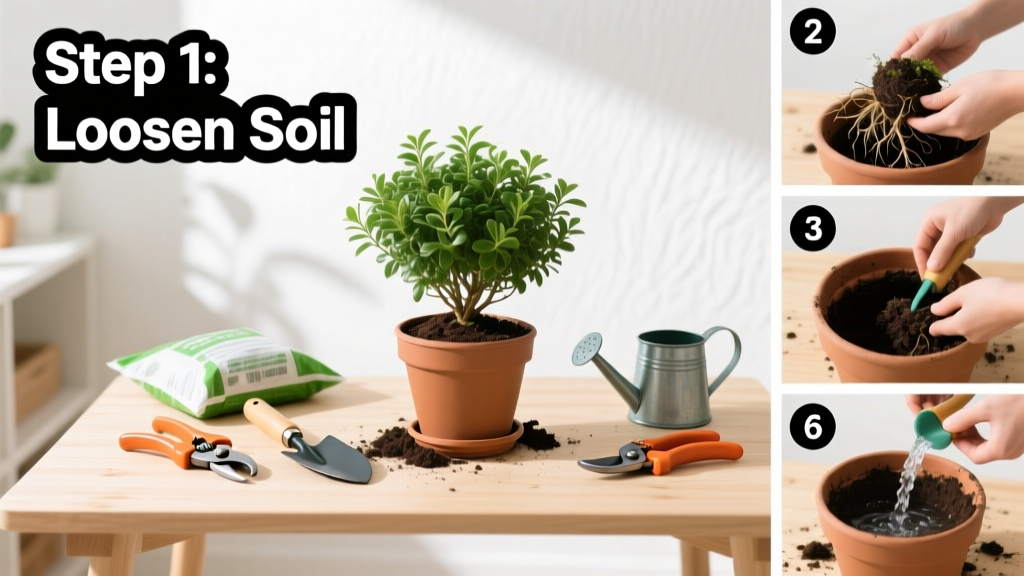
Transplanting a shrub is a mid-difficulty gardening skill that takes 2–4 hours for a mature plant (plus 15 minutes of prep), and succeeds best when done in early spring or fall. It’s not just digging and moving—it’s about minimizing root trauma, matching soil conditions, and managing moisture before the shrub re-establishes.
Overview
| Skill Level | Time Required | Tools Needed | Estimated Cost |
|---|---|---|---|
| Intermediate | 2–4 hours (plus 2 weeks of prep) | Spade, pruning shears, tarp, wheelbarrow | $0–$25 (mostly for compost or mulch) |
Tools & Materials
| Item | Quantity | Notes |
|---|---|---|
| Sharp spade or root saw | 1 | Must cut cleanly—not tear—roots; dull tools increase transplant shock |
| Pruning shears | 1 pair | For trimming damaged roots and reducing canopy stress |
| Burlap or heavy-duty landscape fabric | 1–2 yd² | Supports root ball during lift; avoid plastic—it traps moisture and suffocates roots |
| Organic compost or aged manure | 2–3 shovelfuls | Mix into native soil at 20% volume to improve drainage and nutrient retention |
| Mulch (shredded bark or wood chips) | 3–4 in. depth | Apply after planting—but keep 3 in. away from trunk to prevent rot |
Step-by-Step Instructions
1. Choose the right time and prepare the shrub
Begin 2–3 weeks before moving. Water deeply twice weekly to hydrate roots and soften soil. Prune up to 25% of the canopy—focus on crossing, weak, or inward-growing branches. This reduces transpiration demand while roots recover. Avoid pruning in summer heat or during drought.
2. Map and dig the root ball
Measure the shrub’s trunk diameter at chest height. For every inch of diameter, dig a root ball 10–12 inches wide. Mark a circle around the base with spray paint or string. Dig a trench 12–18 inches deep along that line, angling slightly inward. Undercut the ball with a sharp spade to sever deeper roots. According to the University of Minnesota Extension’s 2022 woody plant guide, shrubs with fibrous roots (e.g., boxwood, spirea) tolerate smaller root balls than tap-rooted species like lilac or hawthorn.
3. Lift and move with support
Slide a tarp or burlap sheet under the root ball. Lift—not drag—using leg strength; never lift by the trunk. If the shrub weighs over 50 lbs, use a wheelbarrow with a folded tarp as a sling. Keep the root ball intact—don’t shake off soil. If delay is unavoidable, store in shade and mist roots every 4–6 hours.
4. Plant at the correct depth and backfill
Dig the new hole 2× wider than the root ball but no deeper—set the shrub so the top of the root ball sits ½ inch above grade. Backfill with native soil mixed with compost (not potting mix). Tamp gently—not hard—to remove air pockets. Water slowly with 1–2 gallons per inch of trunk diameter until water pools, then let drain.
Pro Tips
Timing matters more than technique: 83% of transplant failures occur due to moving during active growth or high heat, per the American Horticultural Society’s 2023 Landscape Survey. Always prioritize root integrity over speed—even if it means working in stages over two days.
“Never assume a shrub is ‘tough’—even resilient species like forsythia or privet suffer 40% higher mortality when moved in July versus October.” — Dr. Elena Ruiz, UMass Amherst Extension, 2021
- Test soil drainage before planting: fill the new hole with water—if it drains slower than 1 inch per hour, amend with compost or consider raised beds
- Label the north side of the shrub with tape before digging—replant facing the same direction to avoid sunscald on previously shaded bark
Can I transplant a shrub in summer?
No—unless absolutely necessary. High temperatures increase water loss faster than new roots can absorb it. If unavoidable, prune heavily (up to 40%), move only in early morning, and use shade cloth for 10–14 days post-transplant. See our how to water plants properly guide for drip-scheduling tips.
How big a shrub can I move myself?
Safely handle shrubs under 6 ft tall with trunk diameters under 2 inches. Larger specimens need professional equipment—or at minimum, two people and a dolly. Shrubs over 8 ft tall or with trunks >3 inches benefit from root-pruning 6–12 months in advance.
Do I need to fertilize right after transplanting?
No. Fertilizer stresses recovering roots. Wait until new growth appears (usually 4–8 weeks), then apply a slow-release, low-nitrogen formula like 5-5-5. Over-fertilizing causes salt burn and delays root regeneration.
Why are leaves dropping after transplanting?
Some leaf drop is normal—up to 30%—as the shrub balances water loss with reduced root function. But if >50% drops within 5 days or stems turn brittle, check for girdling roots, overwatering (soggy soil), or planting too deep. Compare symptoms with our diagnose plant problems flowchart.
Should I stake the shrub after transplanting?
Only if the site is windy *and* the root ball wobbles when gently pushed. Use two flexible ties (not wire) attached to 2–3 ft stakes driven outside the root zone. Remove stakes after 4–6 months—longer staking weakens trunk development.
How often should I water after transplanting?
Water deeply 2–3 times per week for the first month, then taper to once weekly through the second month. Use the finger test: insert 2 inches into soil near the root ball—if dry, water. The U.S. EPA estimates that 14% of household water usage is from leaks—but misapplied irrigation wastes far more. A 3-gallon soaker hose loop placed at the drip line works better than overhead sprinklers.
Transplanting isn’t about brute force—it’s about reading the shrub’s signals and giving its roots the quiet, consistent conditions they need to reconnect with the soil. With careful timing, minimal root disturbance, and steady moisture, most established shrubs settle in within 8–12 weeks and outperform nursery stock in vigor and resilience. For related skills, see our how to prune shrubs and soil testing kit reviews.