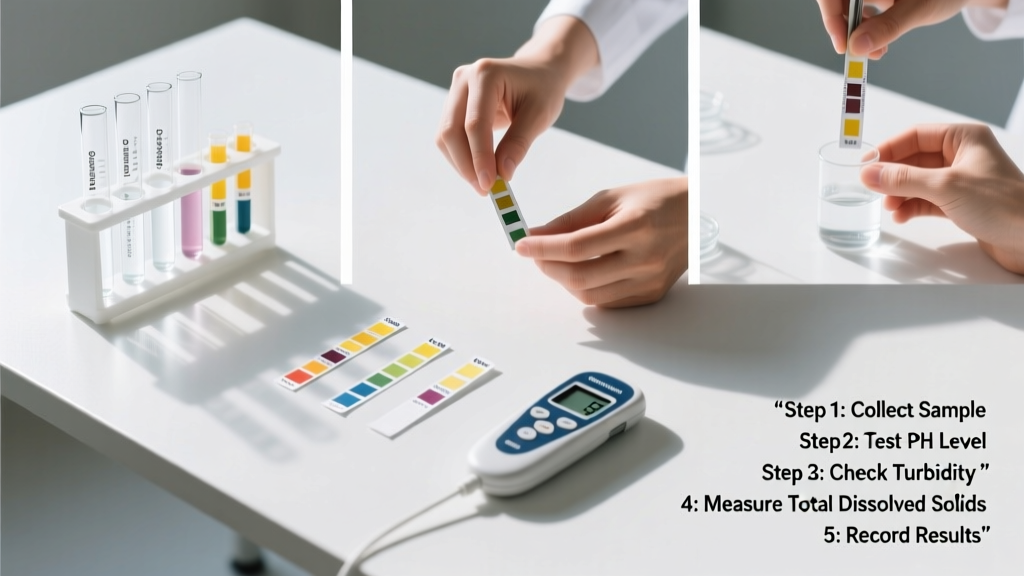
Testing your home’s water quality is a practical skill that takes 15–45 minutes, depending on method—and it’s beginner-friendly with the right tools. Whether you’re concerned about well water, old plumbing, or recent flooding, this guide walks you through reliable, actionable testing—no chemistry degree required.
Overview
| Skill Level | Time Required | Tools Needed | Estimated Cost |
|---|---|---|---|
| Beginner | 15–45 min (kit) or 3–10 days (lab) | Test kit or sample bottle + shipping | $15–$120 |
Tools & Materials
| Item | Kit Method | Lab Method | Notes |
|---|---|---|---|
| Test strips or digital meter | ✓ | ✗ | Strips test pH, chlorine, hardness; meters add accuracy for TDS or nitrate |
| Clean, sterile sample bottle | ✗ | ✓ | Must be provided by lab (e.g., National Testing Labs); never reuse food or beverage containers |
| Cooler + ice pack | ✗ | ✓ | Required for bacteria and volatile organic compound (VOC) tests—samples must stay ≤6°C during transit (EPA Standard Methods, 2022) |
| Timer & notebook | ✓ | ✓ | Record time, temperature, faucet run duration, and visual observations (cloudiness, odor, color) |
Step-by-Step Instructions
1. Choose your test scope based on risk factors
Select tests aligned with your water source and concerns. For municipal tap water, prioritize free chlorine, pH, and lead (especially if home was built before 1986). For private wells, test annually for coliform bacteria, nitrates, arsenic, and fluoride—per the CDC’s 2023 Well Water Guidance.
- If you smell rotten eggs: add hydrogen sulfide test
- If laundry has grayish stains: test for iron and manganese
- If infants under 6 months use the water: mandatory nitrate test (levels >10 mg/L pose methemoglobinemia risk)
2. Collect the sample properly
For tap water: Run cold water for 5 minutes straight (to flush stagnant pipe water), then fill container directly—no aerator contact. For well water: Pump until water clears (often 3–5 minutes), then collect mid-stream. Never touch the inside of the cap or bottle opening.
"Over 70% of inaccurate home test results stem from improper sampling—not faulty kits." — Dr. Lena Cho, Environmental Health Specialist, NSF International, 2021
3. Perform the test immediately (for kits) or ship same-day (for labs)
With test strips: Dip 1 second, shake once, wait exactly 30 seconds, compare to chart under natural light. With digital meters: Calibrate per manual first, rinse probe between readings, and stir gently—not shake—while measuring. For lab kits: Fill form completely, seal bottle in provided bag, place in cooler with ice pack, and ship via overnight courier before 3 p.m. local time.
- Warning: Don’t test within 48 hours of shock-chlorinating a well
- Warning: Avoid testing after heavy rain if sampling from surface-influenced wells
4. Interpret results against EPA and state standards
Compare numbers to federal benchmarks: Lead ≤0.015 mg/L (action level), nitrate ≤10 mg/L, total coliform = 0 MPN/100mL. Note that “safe” doesn’t mean “zero”—some minerals like calcium are harmless or even beneficial. If results exceed limits, retest before assuming contamination.
Pro Tips
Seasonal variation matters: Test well water in spring (post-thaw runoff) and fall (pre-freeze). Municipal users should test after main breaks or construction near pipes. Always keep a log—track pH, hardness, and chlorine monthly for three months to spot trends. And remember: no home kit reliably detects PFAS, radon, or pesticides; those require certified labs.
Common mistakes include using expired strips (most lose accuracy after 12–18 months), skipping calibration on meters, and testing hot water (which alters chemistry and can scald skin). If your kit includes a “total dissolved solids” (TDS) reading above 500 ppm, don’t panic—it often reflects harmless minerals, not contamination. For context, learn how to read water test results to avoid misinterpretation.
What does a pink tint on a chlorine test strip mean?
It indicates free chlorine presence—but intensity matters. Light pink = 0.2–0.5 ppm (ideal for disinfection); deep magenta = >2.0 ppm (may cause irritation or pipe corrosion). If consistently high, check your municipal report or ask about recent hyperchlorination events. You can also remove chlorine from water with activated carbon filters.
Can I test for lead without a lab?
Yes—but with caveats. Lead test strips exist (e.g., First Alert LP-1), yet they only detect ≥15 ppb—the EPA action level—not lower concentrations linked to developmental harm. For homes with copper pipes and lead solder (common in houses built 1940–1985), lab analysis remains essential. The U.S. EPA estimates 22 million U.S. households still receive water through lead service lines (Lead and Copper Rule Revisions, 2024).
Why did my hardness test show “moderate” one week and “very hard” the next?
Hardness fluctuates seasonally and with water source changes. Municipal systems may switch reservoirs; wells draw from different aquifer layers after drought or recharge. Track hardness over 3 months—you’ll likely see a pattern, not inconsistency. Temporary spikes often follow water heater maintenance or sediment disturbance.
Is cloudy water always unsafe?
No. Cloudiness (turbidity) often comes from harmless air bubbles or stirred-up sediment—let it sit 5 minutes; if it clears from bottom up, it’s likely fine. But if cloudiness persists *and* accompanies odor or metallic taste, test for iron bacteria or pipe corrosion. Persistent turbidity above 5 NTU blocks disinfectant effectiveness, per WHO guidelines (2022).
Do refrigerator filter indicators tell me water quality?
No—they track time or volume, not actual contaminant removal. A “replace now” alert doesn’t guarantee lead or cyst reduction has failed, nor does a green light confirm safety. Always test downstream of the filter if you rely on it for vulnerable users (infants, immunocompromised individuals). For verified performance, choose NSF/ANSI 53-certified filters—and replace them every 6 months, regardless of indicator status.
How often should I test well water?
At minimum: once per year for coliform bacteria, nitrates, pH, and total dissolved solids. Add arsenic and uranium every 3–5 years (geology-dependent), and test immediately after flooding, land disturbance, or unexplained taste/odor changes. The Groundwater Foundation recommends quarterly coliform checks for households with infants or elderly residents.
Testing water quality isn’t about perfection—it’s about awareness and timely response. Start with one targeted test, build your baseline, and treat results as data points, not verdicts. When in doubt, pair a home kit with a certified lab screen—and always follow up with a licensed plumber or water treatment specialist if contaminants exceed health-based thresholds. For deeper insight, explore our guide on installing a whole-house water filter or flushing your water heater to reduce sediment-related issues.