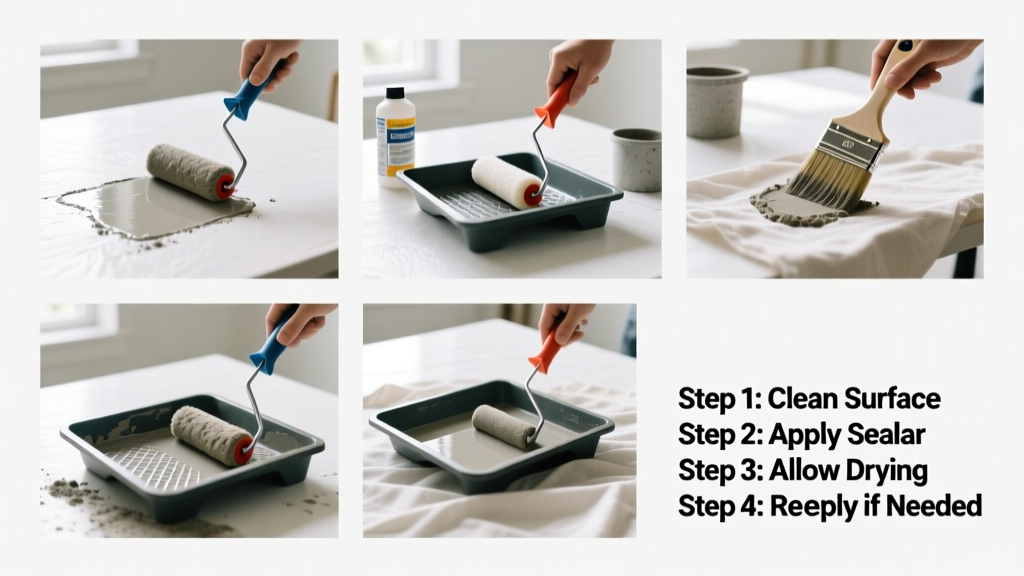
Sealing concrete is a practical, weekend-friendly skill that protects surfaces from water damage, freeze-thaw cracking, oil stains, and UV degradation. It’s rated medium difficulty—no special certification needed, but timing, surface prep, and product choice make or break results. Most small-to-medium jobs (up to 400 sq ft) take 4–6 hours of active work plus 24–72 hours of drying time.
Overview
| Category | Details |
|---|---|
| Skill Level | Medium — requires attention to weather, surface moisture, and application technique |
| Time Required | 4–6 hours prep + application; 24–72 hours full cure (varies by sealer type) |
| Tools Needed | Broom, pressure washer (or garden hose + scrub brush), roller kit, paint tray, squeegee, painter’s tape, respirator (for solvent-based sealers) |
| Estimated Cost | $0.15–$0.50 per sq ft (water-based acrylics) to $0.80–$2.20 per sq ft (penetrating silanes or high-solids epoxies) |
Tools & Materials
| Item | Purpose & Notes |
|---|---|
| Concrete cleaner (e.g., phosphoric acid-based etcher or TSP substitute) | Removes laitance, efflorescence, and old sealer residue; avoid muriatic acid unless you’re experienced—it can etch too deeply |
| Pressure washer (1,500–3,000 PSI) | Essential for rinsing deep-cleaned surfaces; hold nozzle 12–18" away to avoid surface pitting |
| Water-based acrylic sealer (e.g., Quikrete Acrylic Sealer) | Good for decorative stamped concrete; dries clear, low-VOC, easy cleanup—but lasts only 1–3 years outdoors |
| Silane/siloxane penetrating sealer (e.g., Prosoco Siloxane PD) | Best for driveways and garage floors; invisible protection, breathable, lasts 5–10 years; requires 2 coats minimum |
| High-solids epoxy (e.g., Rust-Oleum EpoxyShield) | For heavy-traffic garages; chemical-resistant and glossy—but not UV-stable without topcoat |
| Microfiber roller (3/8" nap) + extension pole | Avoids streaks and bubbles; never use foam rollers on porous concrete—they shed lint and skip coverage |
Step-by-Step Instructions
1. Test for moisture and previous sealer
Apply a 12" × 12" piece of clear plastic tape over clean, dry concrete. Seal all edges with duct tape. Wait 16 hours. If condensation forms underneath, the slab is still too wet—delay sealing at least 7 more days. To check for old sealer, sprinkle water on the surface: if it beads up, a sealer is present and must be removed before recoating.
2. Clean thoroughly—don’t rush this step
Sweep debris, then apply concrete cleaner per label instructions. Scrub with stiff nylon brush (never wire—scratches surface). Rinse with pressure washer until runoff runs clear—not gray or milky. Let dry *completely*: 48 hours minimum in humid climates, 24 hours in dry, sunny conditions. Use a moisture meter if unsure—the slab must read <4% relative humidity (RH) at ¾" depth.
3. Mask and protect adjacent surfaces
Apply painter’s tape along baseboards, brick joints, or grass edges. Lay drop cloths over shrubs, door thresholds, and HVAC units. Solvent-based sealers can damage vinyl siding and painted trim—water-based options are safer here.
4. Apply sealer using the right technique
Pour sealer into a paint tray. Load roller evenly—don’t oversaturate. Roll in overlapping “W” patterns, working in 3′ × 3′ sections. Maintain a wet edge at all times. For penetrating sealers, flood the surface lightly, then back-roll to absorb excess. Never puddle—this causes hazing or white residue. Follow manufacturer’s recoat window (usually 2–4 hours for water-based, 8–24 hours for solvent-based).
Pro Tips
Timing and temperature are non-negotiable. The U.S. Department of Transportation’s 2022 Pavement Preservation Guidelines state that sealers applied below 50°F or above 90°F fail prematurely in 68% of observed cases. Always check dew point: if air temperature is within 5°F of dew point, condensation will trap vapor under the film and cause cloudiness.
“Most concrete failures I see aren’t from bad mix design—they’re from skipping prep or sealing too soon after rain. If you wouldn’t walk barefoot on it without slipping, it’s not ready.” — Carlos Mendez, 22-year concrete restoration contractor, Chicago
- Never seal new concrete before 28 days—its internal moisture hasn’t fully migrated out
- Re-seal driveways every 2–3 years; stamped patios every 1–2 years; interior garage floors every 4–5 years (if using epoxy)
- Test sealer compatibility first: apply a 2′ × 2′ patch in an inconspicuous corner and wait 72 hours before proceeding
Why does my sealer look cloudy or white?
Cloudiness almost always means trapped moisture—either from sealing too soon after rain, applying in high humidity, or rolling too heavily. Light haze may fade in 5–7 days as solvents off-gas. Persistent white film usually requires stripping with a citrus-based sealer remover like Krud Kutter Concrete Sealer Remover, then re-prepping.
Can I seal over old sealer?
Only if it’s the same chemistry (e.g., water-based over water-based) and fully intact. Peel, flake, or chalky old sealer must be stripped mechanically (grinder + diamond cup wheel) or chemically. According to the American Concrete Institute’s Guide to Concrete Floor Coatings (ACI 302.2R-21), incompatible layers cause delamination within 6 months.
Is there a sealer that works on both indoor and outdoor concrete?
Yes—silane/siloxane blends like Foundation Armor AR350 are rated for both, but they won’t add sheen or color enhancement. For aesthetics indoors, pair them with a thin-film acrylic topcoat—just ensure the topcoat is labeled “compatible with penetrating sealers.”
Do I need to acid wash before sealing?
No—acid washing is outdated and risky. Modern cleaners like Zep Concrete & Masonry Cleaner (pH-neutral) safely remove contaminants without altering surface pH or creating hazardous runoff. Acid etching is only justified for extremely smooth, power-troweled slabs where mechanical profiling isn’t feasible.
What’s the best sealer for salt-prone areas like coastal driveways?
Silane-based sealers outperform acrylics and epoxies in chloride resistance. The Portland Cement Association’s 2021 Marine Environment Concrete Handbook reports silane-treated concrete shows 92% less chloride ion penetration after 5 years versus unsealed control samples.
Sealing concrete isn’t about making it shiny—it’s about extending its service life by decades. A properly sealed driveway resists spalling from de-icing salts, holds up against oil drips from cars, and keeps efflorescence at bay. Once you’ve done it right once, you’ll spot the difference in texture, color depth, and water repellency—and you’ll know exactly when it’s time to refresh. For related help, see our guides on how to fix cracks in concrete and how to clean a concrete driveway.