Replacing wiper blades is a quick, essential maintenance task that takes less than 10 minutes and requires zero mechanical experience. It’s rated beginner-level—no tools needed for most vehicles—and delivers immediate improvements in rain visibility and windshield clarity.
Overview
| Skill Level | Time Required | Tools Needed | Estimated Cost |
|---|---|---|---|
| Beginner | 6–8 minutes | None (or flathead screwdriver for older clips) | $8–$25 per pair |
Tools & Materials
| Item | Notes |
|---|---|
| New wiper blades (correct size) | Check your owner’s manual or measure old blades: driver-side is usually 22", passenger-side 19" (varies by model) |
| Clean microfiber cloth | For wiping glass and arms before installation |
| Isopropyl alcohol (70%+) | Optional but recommended for cleaning rubber edge and removing grime buildup |
| Small flathead screwdriver (rarely needed) | Only for older vehicles with retaining pins or hidden clips |
Step-by-Step Instructions
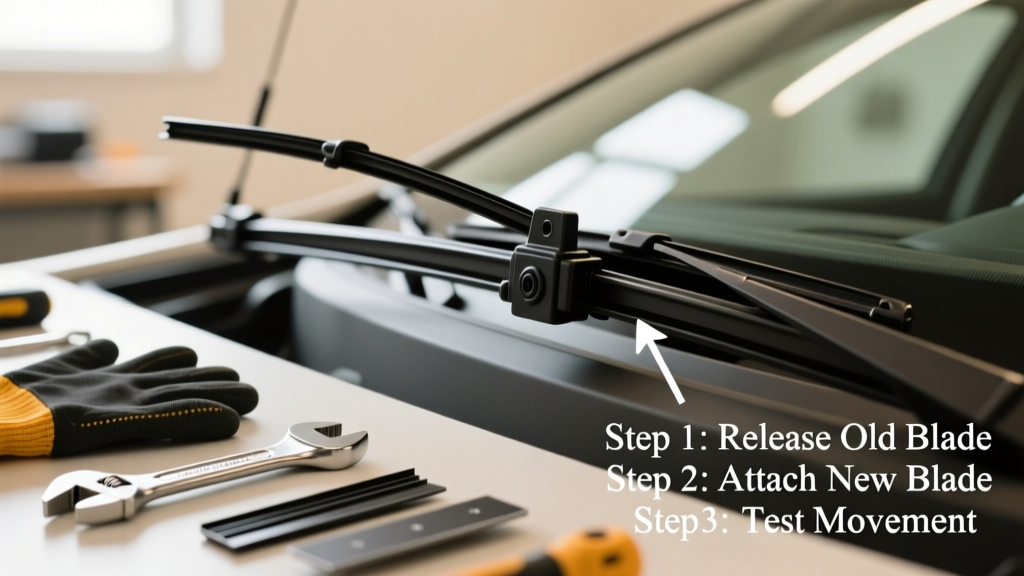
Lift the wiper arm away from the windshield
Raise the wiper arm gently until it locks upright—most modern cars have a spring detent that holds it at ~90°. Never let it snap back; doing so can crack the windshield or bend the arm. If resistance feels high, stop and check for ice or debris.
Release the old blade’s mounting connector
Look for the small plastic tab, button, or hinge clip where the blade meets the arm. Press or slide it while pulling the blade downward (away from the arm) to disengage. On J-hook arms, push the blade up slightly while sliding it off sideways. On pin-style arms, depress the metal clip and pull straight down.
- Tip: Take a photo of the connection type before removal—it helps when matching new blades.
- Warning: Don’t force it. If it won’t release, double-check the release mechanism—some require a 90° twist first.
Attach the new blade using the same connector type
Align the new blade’s adapter with the arm’s hook or pin. Slide or click it into place until you hear or feel a firm *click*. Gently tug upward on the blade to confirm it’s locked—no movement should occur at the joint.
Lower the arm and test operation
Slowly lower the arm onto the windshield. Before turning on the wipers, spray washer fluid and run them once in intermittent mode. Watch for gaps, chattering, or skipping. If streaking persists, reseat the blade or clean the rubber edge with isopropyl alcohol.
- Tip: Run wipers only with fluid sprayed—dry operation wears rubber fast.
- Warning: Never activate wipers on a dry, dusty, or icy windshield.
Pro Tips
Wiper blades degrade faster than most drivers realize. According to the National Highway Traffic Safety Administration’s 2022 Vehicle Maintenance Report, 68% of inspected vehicles had ineffective wipers due to cracked or hardened rubber—even if they hadn’t failed completely.
“Replace blades every 6–12 months—not just when they squeak. UV exposure and ozone break down rubber compounds long before visible cracks appear.” — Auto Glass Safety Council, 2023 Technical Bulletin
Avoid common pitfalls: installing mismatched sizes (causes uneven pressure), twisting the blade during install (distorts tension springs), or buying cheap “universal” kits with flimsy adapters that loosen after two rainstorms.
How often should I replace wiper blades?
Every 6–12 months, regardless of use. Heat, sun, and road grime accelerate rubber degradation. In hot climates like Arizona or Florida, replace every 6 months. In colder regions with frequent freeze-thaw cycles, inspect blades every 3 months for cracking or stiffness.
Why do my new wiper blades chatter or skip?
Chattering usually means improper seating or contamination. Wipe the rubber edge and windshield with isopropyl alcohol, then re-seat the blade. If it continues, the wiper arm’s tension spring may be fatigued—a sign the arm itself needs servicing. See our guide on how to test wiper arm tension.
Can I replace just one wiper blade?
You can—but shouldn’t. Wiper performance relies on matched pressure and wear. Replacing only the driver-side blade creates inconsistent contact, leading to smearing and premature wear on the remaining blade. Always replace both, even if one looks fine.
What’s the difference between beam, conventional, and hybrid blades?
Conventional blades use a metal frame with multiple pressure points; beam blades are frameless, aerodynamic, and better in snow; hybrids combine frame support with beam-style rubber. For most sedans and SUVs, beam blades offer best all-season performance. See our comparison of wiper blade types for fitment advice.
Do wiper blades come with installation instructions?
Yes—most major brands (Bosch, Rain-X, Michelin) include pictorial guides inside the packaging, often showing 3–5 common connector types. Still, verify compatibility first: Bosch’s online wiper blade size finder matches over 98% of U.S. vehicles by year/make/model.
Can I clean wiper blades instead of replacing them?
You can extend life 1–2 months with cleaning: wipe rubber edges weekly with isopropyl alcohol and a microfiber cloth. But cleaning won’t restore lost elasticity or fix micro-cracks. Once blades leave streaks in light rain or make noise, replacement is the only reliable fix.
Replacing wiper blades isn’t glamorous—but it’s one of the highest-impact, lowest-effort safety upgrades you can do. Clear vision in downpours starts with fresh rubber, not wishful thinking. Keep a spare set in your glovebox, and set a calendar reminder every six months. Your eyes—and your insurance agent—will thank you.