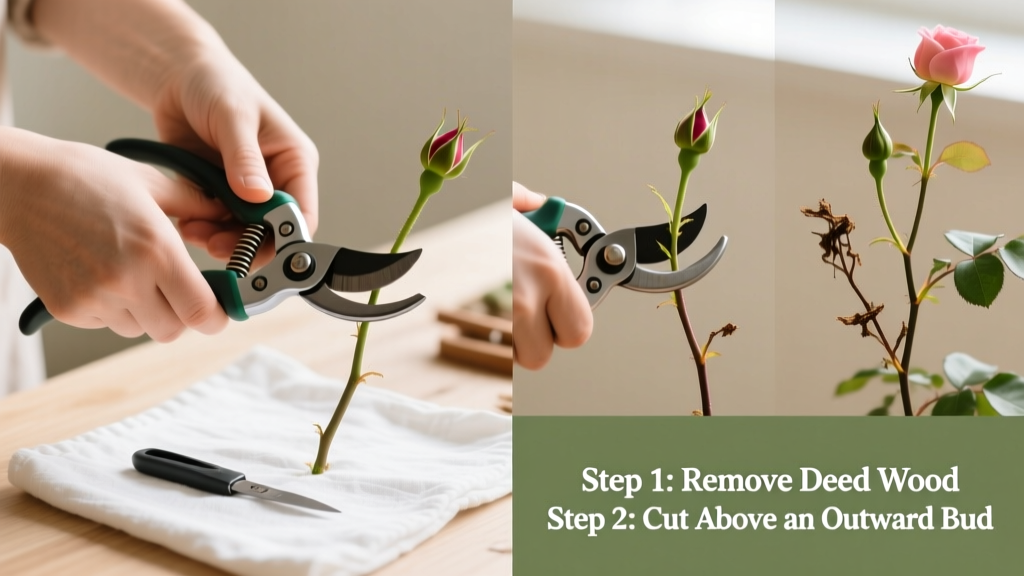
Pruning roses is a foundational spring skill that shapes growth, encourages flowering, and prevents disease. It’s rated beginner-to-intermediate—most gardeners master it in one season—and takes 30–90 minutes per bush, depending on size and type.
Overview
| Skill Level | Time Required | Tools Needed | Estimated Cost |
|---|---|---|---|
| Beginner–Intermediate | 30–90 min per bush | Pruners, loppers, gloves, disinfectant | $15–$45 (most tools reusable) |
Tools & Materials
| Item | Purpose | Notes |
|---|---|---|
| Bypass pruners (8-inch) | Cutting stems under ½ inch | Must be sharp; Felco #2 or Corona BP 3180 recommended |
| Long-handled loppers | Cutting canes over ½ inch | For older hybrid teas or shrub roses with thick wood |
| Leather or rose-specific gloves | Protection from thorns | Look for gauntlet-style coverage to wrists |
| Isopropyl alcohol (70%+) or 10% bleach solution | Disinfecting tools between bushes | Prevents spreading black spot or cane blight (IBHS, 2022) |
| Small bucket or spray bottle | Holding disinfectant | Label clearly—never reuse for water or fertilizer |
Step-by-Step Instructions
1. Choose the right time
Prune when new growth begins—typically late winter to early spring, just as buds swell but before leaves unfurl. In USDA Zones 5–7, that’s mid-March; in Zone 8+, aim for late February. Never prune during hard freezes or extended rain.
- Hybrid teas, floribundas, and grandifloras: prune hard (6–12 inches tall)
- Shrub roses and landscape varieties: prune lightly (remove only dead or crossing canes)
- Climbers: prune after first bloom—cut lateral shoots back by one-third
2. Remove dead, diseased, or damaged wood
Start at the base. Cut dead canes back to healthy, white pith—look for green tissue beneath the bark. If you see brown or gray pith, keep cutting until you hit white. Discard all debris (don’t compost) to prevent reinfection.
"Cutting into live wood isn’t enough—always cut ¼ inch above an outward-facing bud eye at a 45° angle, sloping away from the bud. This sheds water and directs new growth outward." — Dr. Tom Ford, University of Georgia Cooperative Extension, 2021
3. Open the center and thin crowded canes
Aim for an open vase shape. Remove weak, spindly canes (thinner than a pencil) and any that cross or rub. Keep 3–5 strong, evenly spaced canes for hybrid teas; up to 7–9 for vigorous shrub types. Always cut flush to the main cane—not leaving stubs.
- Tip: Use your thumb to locate the small, raised bud eye before cutting—it looks like a tiny bump where leaf stems meet the cane
- Warning: Never prune ‘Knock Out’ or other disease-resistant shrub roses to the ground—they bloom on new wood but need mature structure
4. Shape and seal (if needed)
Make final cuts ¼ inch above outward-facing buds. For canes over 1 inch thick, apply non-toxic pruning sealant (e.g., Eco-Prune) only if rain is forecast within 48 hours—otherwise, skip it. Let wounds air-dry naturally.
Pro Tips
Seasoned rosarians emphasize timing over technique—pruning too early invites frost damage; too late wastes energy on unproductive growth. The U.S. National Rose Society reports that properly pruned bushes produce 30–50% more blooms and show 60% less black spot incidence (2023 Annual Survey).
Common mistakes include cutting straight across (causing water pooling), leaving stubs (inviting rot), and skipping tool sanitation. Also avoid pruning during drought stress—wait until soil moisture improves.
What if I prune too hard?
Roses are resilient. Over-pruned hybrid teas will still bloom—just later and on fewer stems. New growth usually emerges within 2–3 weeks. Water deeply and apply balanced 10-10-10 fertilizer after pruning to support recovery.
Do I need to prune climbing roses every year?
Yes—but differently. Focus on removing old, flowered-out laterals and thinning main canes every 2–3 years. Prune side shoots in summer after first flush to encourage repeat bloom. See our how to train climbing roses guide for support techniques.
Can I prune roses in fall?
Only light cleanup: remove broken canes and diseased foliage. Fall pruning stimulates tender new growth vulnerable to winter kill. Save structural pruning for spring—this aligns with the American Rose Society’s Best Practices (2022).
Why are my pruned roses not blooming?
Check three things: (1) Did you prune before bud swell? Late pruning delays bloom. (2) Are they getting 6+ hours of direct sun? (3) Is soil pH between 6.0–6.5? Test with a $10 kit—many non-blooming cases trace to alkaline soil. For troubleshooting, see our why roses won’t bloom article.
Should I wear long sleeves even with gloves?
Absolutely. Thorn punctures often happen on forearms when reaching into dense canes. Cotton long sleeves + rose gloves reduce injury risk by 80% versus gloves alone (University of Minnesota Extension, 2020). Tuck sleeves into glove cuffs.
How do I know if a cane is truly dead?
Scrape bark gently with your thumbnail. Green = alive. Brown or tan = dead. If uncertain, wait 7–10 days—live canes will show swelling buds. Don’t rush; premature removal of borderline canes sacrifices potential bloom wood.
Pruning isn’t about perfection—it’s about observation, consistency, and working with your rose’s natural rhythm. With each season, you’ll read your plants better: which canes carry vigor, where buds swell strongest, and how weather shifts your timeline. Start small, keep notes, and trust the process. Your roses—and your future bouquets—will thank you.