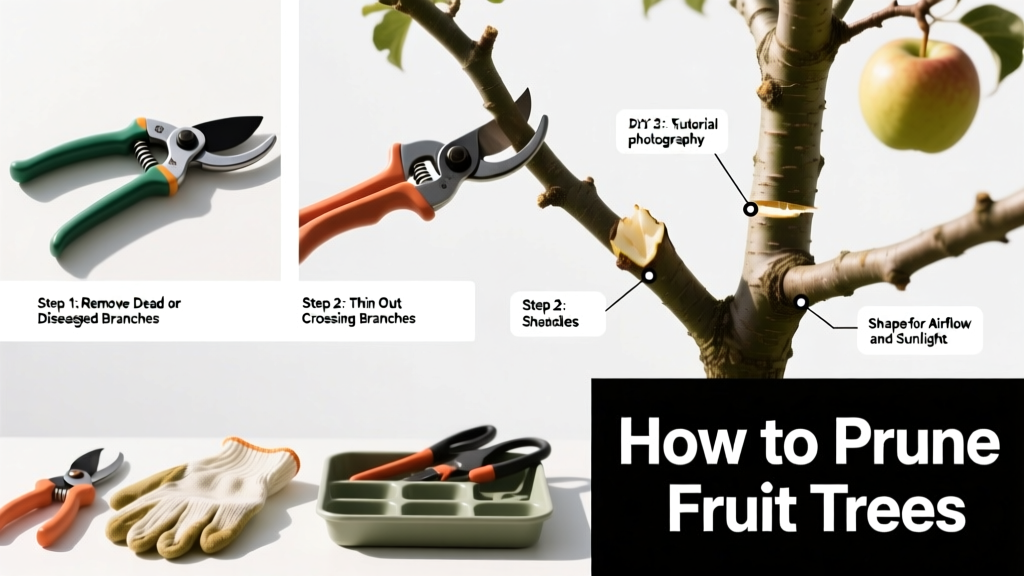
Pruning fruit trees is a foundational orchard skill that shapes growth, improves sunlight penetration, and increases fruit quality—but it’s often misunderstood or delayed until damage is done. This hands-on tutorial walks you through proper pruning for apples, pears, plums, and cherries, rated beginner-friendly (with practice) and taking 30–90 minutes per mature tree, depending on size and condition.
Overview
| Skill Level | Time Required | Tools Needed | Estimated Cost |
|---|---|---|---|
| Beginner (with guidance) | 30–90 min/tree | Hand pruners, loppers, pole pruner, gloves, disinfectant | $25–$65 (most tools reusable for years) |
Tools & Materials
| Item | Purpose | Notes |
|---|---|---|
| Sharp bypass hand pruners | Cutting branches ≤ ¾" diameter | Choose ergonomic models like Felco #2 or Corona BP 3180; avoid anvil types on live wood |
| Compound-action loppers | Cutting ¾"–2" branches | Look for 24–32" handles and non-stick blades (e.g., ARS LP-15) |
| Pole pruner (extendable, 8–12 ft) | Reaching upper canopy safely | Must include both cutting and saw attachments; avoid rope-pull models for precision |
| Isopropyl alcohol (70%+) or 10% bleach solution | Disinfecting tools between trees | Required to prevent spreading fire blight, brown rot, or canker—especially after cutting diseased wood |
| Leather gloves + safety glasses | Protection from thorns, sap, and debris | Goatskin gloves offer dexterity; polycarbonate glasses prevent eye injury from snapping branches |
Step-by-Step Instructions
1. Choose the right time: Late winter, before bud swell
Prune during dormancy—typically February in USDA Zones 5–7, January in Zones 8–9—when trees are leafless and pathogens are less active. Avoid fall pruning: it delays dormancy and invites dieback. According to the Cornell University Cooperative Extension’s 2022 Orchard Management Handbook, winter-pruned apple trees yield 12–18% more market-grade fruit than summer-pruned ones.
2. Remove the “3 Ds”: Dead, diseased, and damaged wood
- Cut back to healthy tissue—look for creamy-white cambium under bark; if it’s brown or black, keep cutting until clean.
- Make cuts just outside the branch collar (the raised ring where branch meets trunk)—never flush-cut or leave stubs.
- Dispose of fire blight–infected material by burning or bagging; do not compost.
3. Open the center: Thin crowded interior branches
Aim for a “vase-shaped” or open-center structure—especially for peaches and plums—or a central leader for apples and pears. Remove entire limbs that cross, rub, or grow inward. Prioritize branches spaced ≥6" apart vertically and ≥12" apart radially. Keep scaffold limbs at 45–60° angles from the trunk for optimal strength and fruiting.
4. Head back overly vigorous shoots and water sprouts
- Water sprouts (upright, pencil-thick shoots from older wood) rarely fruit and shade interior—remove them entirely at the base.
- Tip-prune new lateral shoots only if they exceed 24" and lack side branches; cut back to 4–6 healthy buds.
- Never remove >25% of total canopy in one year—excessive pruning triggers rampant vegetative growth at the expense of fruiting.
Pro Tips
Seasoned orchardists emphasize timing and restraint over aggression. Over-pruning is the most common error among beginners—and it sets back fruiting by 1–2 years. As Dr. Barbara L. Smith, retired pomologist with the NC State Extension, advises:
“A well-pruned tree looks like it’s been pruned—not hacked. If you step back and can’t immediately see light passing through the canopy, you haven’t pruned enough. But if you see large gaps or exposed bark, you’ve pruned too much.”
Other pro insights:
- Label young trees with paint markers to track scaffold limb selection—prevents accidental removal later.
- For neglected, overgrown trees, spread major renovation over 2–3 winters instead of one drastic session.
- After pruning, apply dormant oil spray (e.g., Bonide All Seasons Oil) within 7 days to smother overwintering scale and mite eggs.
Can I prune fruit trees in summer?
Yes—but only for specific goals: removing water sprouts, correcting structural issues, or slowing overly vigorous growth. Summer pruning reduces photosynthetic capacity, so limit it to <5% of canopy and avoid during heat waves (>90°F). Never summer-prune young trees establishing root systems.
What’s the difference between thinning and heading cuts?
Thinning cuts remove an entire branch at its origin—promoting airflow and redirecting energy to remaining limbs. Heading cuts shorten a branch partway—stimulating lateral bud break below the cut but increasing density. Use thinning for structure; use heading sparingly, mostly on non-bearing wood.
Do I need to seal pruning wounds?
No. Research from the U.S. Forest Service’s 2021 wound response study confirms that wound dressings inhibit natural callus formation and trap moisture, raising decay risk. Clean, angled cuts made just outside the branch collar heal fastest without sealants.
How much should I prune a newly planted fruit tree?
At planting, cut back the main leader to 28–32" tall and remove all side branches below 18". This forces low, strong scaffold development. For whips (unbranched trees), make a single cut just above a healthy bud facing outward. Skip this step for dwarf or semi-dwarf trees on precocious rootstocks like M.9 or G.11—consult your nursery tag.
Why did my pruned tree produce fewer fruits this year?
Two likely causes: pruning too late (after bud swell diverts energy from flower development) or removing too many fruiting spurs—especially on apples and pears, which bear on 2+ year-old wood. Next season, mark spurs with colored tape before cutting to preserve them.
My peach tree has sticky sap oozing from cuts—should I worry?
Some sap flow is normal in stone fruits during spring; it’s not a sign of disease. However, if oozing is accompanied by dark, sunken cankers or gumming at the base, test for bacterial canker using the diagnose fruit tree diseases guide. Always disinfect tools before moving to healthy trees.
Pruning isn’t about cutting—it’s about guiding growth with intention. With each season, you’ll read your trees more fluently: noticing bud density, branch angles, and light patterns. Start small, observe results, and refine. For follow-up care, see our guides on how to fertilize fruit trees and best organic pest control for fruit trees.