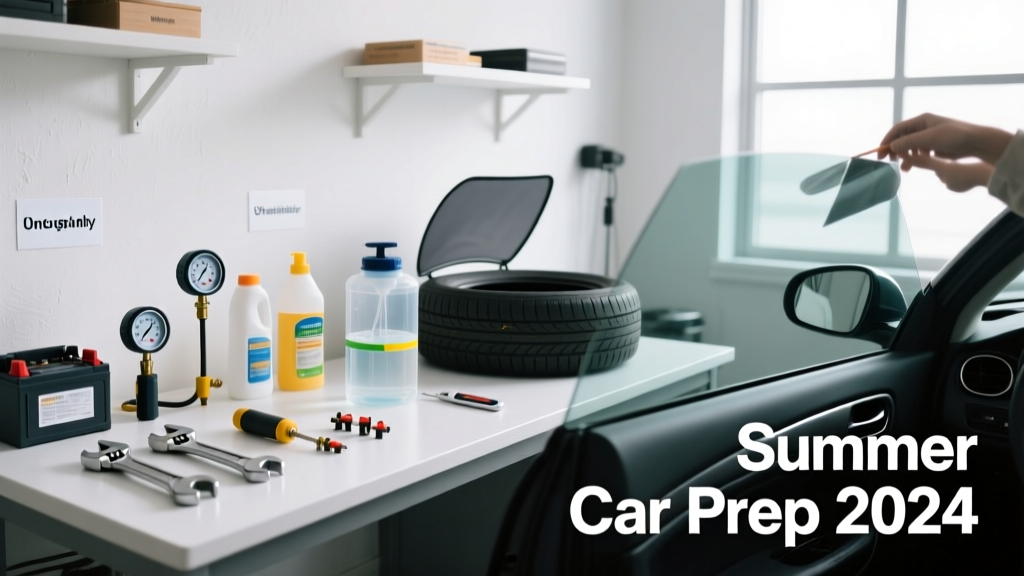
Preparing your car for summer isn’t just about swapping wiper blades—it’s a targeted seasonal tune-up that prevents overheating, preserves rubber components, and keeps cabin temperatures safe and comfortable. This is a moderate-difficulty task requiring 2–3 hours of hands-on work (plus optional professional services), and most steps can be done in a driveway or garage with basic tools.
Overview
| Skill Level | Time Required | Tools Needed | Estimated Cost |
|---|---|---|---|
| Moderate (some mechanical familiarity helpful) | 2–3 hours DIY + 1 hour for AC service if needed | Socket set, tire pressure gauge, coolant hydrometer, UV flashlight (optional), microfiber cloths | $25–$120 (mostly fluids, filters, and sunshades; $80–$150 extra if professional AC recharge) |
Tools & Materials
| Item | Quantity | Purpose & Notes |
|---|---|---|
| Coolant (50/50 ethylene glycol mix) | 1–2 quarts | Replaces old or low coolant; check owner’s manual for spec—many newer cars require OAT or HOAT formulas, not generic green antifreeze. |
| Cabin air filter | 1 | Replace every 12–15,000 miles; summer pollen and dust clog it fast. See our full replacement guide. |
| Tire pressure gauge (digital preferred) | 1 | Check pressures when tires are cold—heat inflates them up to 4 PSI above spec, masking underinflation. |
| UV-protectant interior spray (e.g., 303 Aerospace Protectant) | 1 bottle | Prevents dashboard cracking and vinyl fading; avoid silicone-based sprays—they attract dust and degrade over time. |
| Reflective sunshade | 1 (custom-fit recommended) | Reduces interior temps by up to 40°F (U.S. Department of Energy, 2022). Measure windshield dimensions before buying. |
Step-by-Step Instructions
1. Inspect and top off all critical fluids
Start with the engine bay: check coolant, brake fluid, power steering fluid, and windshield washer fluid. Coolant should be bright green, orange, or pink—not brown or milky. Use a hydrometer to verify freeze/boil point (it should resist boiling up to 265°F). Top off only with the exact type specified in your owner’s manual—mixing coolants causes sludge. Never open the radiator cap on a hot engine.
- Tip: Replace coolant every 5 years or 100,000 miles—even if it looks fine. Corrosion inhibitors break down over time.
- Warning: Brake fluid absorbs moisture. If it’s amber or darker, flush and replace it—moisture lowers its boiling point and risks fade during mountain driving.
2. Test and service the A/C system
Run the A/C at max cold and lowest fan setting for 5 minutes. Cabin air should drop to 40–45°F within 3 minutes. If it doesn’t, check for weak airflow (clogged cabin filter) or warm vents (low refrigerant). Use an inexpensive AC pressure gauge kit ($25–$40) to read low-side pressure—if below 25 PSI while running, you likely have a leak or need recharge. Diagnose common A/C issues here.
- Tip: Run A/C for 10 minutes weekly—even in winter—to keep seals lubricated and prevent refrigerant leaks.
- Warning: Never add refrigerant without verifying system integrity. Overcharging damages the compressor—a $1,200+ repair.
3. Check tires—including tread depth, pressure, and age
Measure tread depth with a quarter: insert it head-first into grooves—if Washington’s head is fully visible, tread is ≤4/32″ and unsafe for wet summer roads. Check sidewalls for cracks or bulges—heat accelerates rubber degradation. Inflate to the door-jamb sticker pressure (not the tire sidewall number), and recheck after driving 15 minutes—the “cold” reading matters most. Tires older than 6 years should be inspected by a pro, even with good tread; rubber dries out internally.
4. Clean and protect interior surfaces
Vacuum seats and floor mats thoroughly. Wipe dash, console, and door panels with a damp microfiber cloth—no ammonia-based cleaners (they cloud instrument clusters). Then apply UV protectant to all vinyl, leather, and plastic surfaces. Let dry 10 minutes before using. Install a reflective sunshade every time you park—especially on south- or west-facing spots.
According to the National Highway Traffic Safety Administration’s 2023 vehicle safety report, 19% of summer roadside assistance calls involve heat-related A/C or cooling system failures—most preventable with this prep routine.
Pro Tips
Seasonal maintenance isn’t one-size-fits-all. Here’s what seasoned fleet mechanics emphasize:
- Don’t skip the battery test—even if it starts fine. Heat increases internal resistance and sulfation. Load-test it if it’s over 3 years old.
- Swap wiper blades now. Summer downbursts bring sudden heavy rain; worn blades smear more than winter ones.
- Keep a 1-gallon water jug and roadside emergency kit in the trunk. Interior temps exceed 140°F in parked cars within 30 minutes on 90°F days (American Academy of Pediatrics, 2022).
"Most 'summer breakdowns' aren’t caused by heat alone—they’re the result of deferred winter maintenance. A coolant flush skipped last fall becomes a cracked hose in July." — Carlos Mendez, ASE Master Technician since 1998, Metro Auto Care Group
Why does my AC blow warm air only at idle?
That’s often a failing electric cooling fan or clogged condenser fins. At idle, airflow drops sharply—so the condenser relies entirely on the fan. Clean debris from the front of the condenser (behind the grille) with compressed air, then test fan operation with the A/C on and engine running at idle. If it doesn’t spin, check fuses, relays, and wiring.
Can I use water instead of coolant in summer?
No. Pure water boils at 212°F—engine coolant mixtures raise the boiling point to ~265°F and lower the freezing point to –34°F. Water also corrodes aluminum radiators and cylinder heads. Even a 70/30 mix compromises protection.
Do I need different oil for summer?
Not usually—but verify viscosity. Most modern engines use 0W-20 or 5W-30 year-round. If you drive long stretches above 100°F regularly—or tow—heavy loads, consider upgrading to a high-quality synthetic 10W-30. Always follow your owner’s manual’s “severe service” recommendations.
How often should I clean the radiator fins?
Twice yearly: once before summer and once before winter. Road grime, bugs, and pollen block airflow and reduce cooling efficiency by up to 22% (SAE International Journal of Engines, 2021). Use a soft brush and low-pressure water—never a pressure washer, which bends delicate fins.
Is it safe to leave my dog in the car with windows cracked?
No. Cracked windows reduce interior temperature by less than 2°F in 10 minutes. On a 78°F day, the cabin hits 100°F in under 10 minutes. Leave pets at home—or bring a portable crate fan and cooling pad if travel is unavoidable.
What’s the best way to remove sticky residue from dashboard buttons?
Use 91% isopropyl alcohol on a microfiber cloth—never acetone or citrus solvents. Gently roll (don’t scrub) the cloth over the button surface. For stubborn buildup, let alcohol dwell for 15 seconds before wiping. Follow immediately with UV protectant to prevent future stickiness.
A well-prepped car handles summer stress smoothly—less strain on systems, better fuel economy, and safer cabin temps. Revisit these checks every 4,000 miles or two months, especially if you’re planning a road trip. And remember: checking tire pressure correctly takes 60 seconds but prevents blowouts, uneven wear, and 3% fuel loss. Stay cool, stay safe.