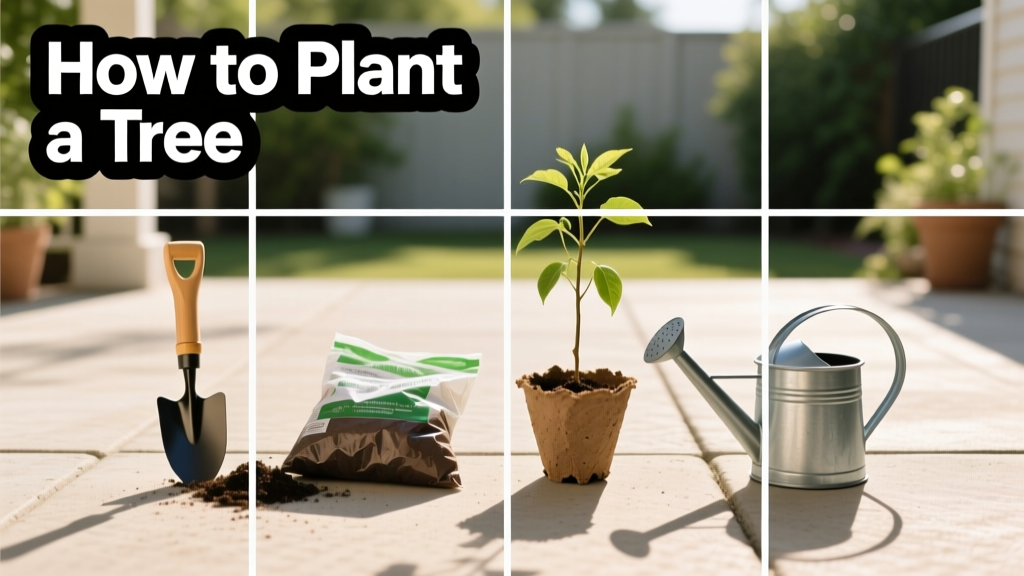
Planting a tree is a simple skill—but doing it right determines whether that tree thrives for decades or struggles and dies within two years. This tutorial walks you through proper planting technique for bare-root, balled-and-burlapped, and container-grown trees. Difficulty: beginner. Total time: 45–90 minutes, depending on soil conditions and tree size.
Overview
| Skill Level | Time Required | Tools Needed | Estimated Cost |
|---|---|---|---|
| Beginner | 45–90 minutes | Shovel, tape measure, garden hose, gloves | $0–$15 (if buying mulch or stakes) |
Tools & Materials
| Item | Purpose | Notes |
|---|---|---|
| Round-point shovel | Digging the planting hole | Avoid trenching spades—they create smooth sidewalls that impede root growth |
| Hand trowel or cultivator | Loosening compacted root balls | Essential for container-grown trees with circling roots |
| Organic mulch (shredded bark or wood chips) | Maintaining moisture and suppressing weeds | Apply 2–4 inches deep, but keep 3 inches away from trunk |
| Garden hose with gentle spray nozzle | Watering during and after planting | Soil should be saturated to 12 inches deep—not just surface-wet |
Step-by-Step Instructions
1. Choose the right location and timing
Select a site with adequate space for mature height and spread—check utility lines using 811 before digging. Plant in early spring (after frost) or fall (6 weeks before hard freeze) for best root establishment. Avoid low spots where water pools longer than 24 hours.
2. Dig a wide, shallow hole
Dig a hole 2–3 times wider than the root ball—but only as deep as the root ball’s height. Measure depth with a shovel handle laid across the hole; adjust until the top of the root ball sits 1–2 inches above grade. Never dig deeper and backfill with soil—it causes settling and suffocation.
- Tip: Use the shovel handle to check depth—no guesswork needed.
- Warning: Don’t amend backfill soil with compost or fertilizer. Native soil encourages roots to grow outward (University of Minnesota Extension, 2021).
3. Prepare the root system
For container-grown trees: Slide out gently, then use a sharp knife to make four vertical cuts ½ inch deep around the root ball’s perimeter—and one horizontal cut across the bottom third. For balled-and-burlapped trees: Remove all synthetic twine, wire baskets, and burlap (even “biodegradable” types often don’t break down fast enough). Bare-root trees need soaking for 1–2 hours before planting.
4. Set and backfill carefully
Place the tree so the root flare (where trunk widens into roots) is visible and sits 1–2 inches above final soil level. Backfill with native soil only—no amendments. Gently tamp with your foot every 3–4 inches to remove air pockets, but don’t compact heavily. Stop filling when soil reaches the root flare.
- Tip: Have a helper hold the tree upright while you backfill.
- Warning: Never bury the root flare—even 1 inch too deep invites rot and girdling roots.
Pro Tips
Most newly planted trees fail not from drought, but from improper planting depth or mulch volcanoes. According to the International Society of Arboriculture’s 2020 Best Management Practices, up to 30% of landscape trees die within three years due to root collar disorders caused by over-mulching or deep planting.
“If you can’t see the root flare, you’ve planted too deep. Always excavate to expose it—even if that means removing 3 inches of soil.”
— Dr. Nina Bassuk, Cornell University Urban Horticulture Institute, 2023
Common mistakes include staking unnecessarily (only stake if the tree wobbles more than 2 inches in wind), using gravel or rocks under the root ball (impedes drainage), and pruning at planting (save structural pruning for year two).
How deep should the root flare be?
The root flare must sit 1–2 inches above finished grade. If buried, use a hand trowel or soft brush to gently remove soil until the flare is fully exposed. Do this immediately—even if the tree was planted last week.
Do I need to stake my newly planted tree?
Only if the trunk diameter is less than 2 inches AND the tree leans more than 2 inches in steady wind. Use wide, flexible ties (like rubber tree straps), and remove stakes after one growing season. Over-staking weakens trunk development.
Should I fertilize right after planting?
No. Fertilizer stimulates top growth before roots are established, increasing stress. Wait until year two—and only if a soil test shows deficiency. The Arbor Day Foundation recommends relying on mulch and proper watering instead.
How much water does a new tree need?
Water deeply once per week in dry weather: 10–15 gallons for a 1-inch caliper tree, increasing by 5 gallons per additional inch of trunk diameter. Use a bucket with a small hole or a soaker hose—not a sprinkler—to deliver water slowly to the root zone.
Can I plant a tree near my septic system?
Yes—but choose slow-growing, shallow-rooted species like serviceberry or dogwood, and plant at least 20 feet from drain fields. Avoid willows, poplars, and silver maples—their aggressive roots seek moisture and can clog pipes. See our guide on trees safe near septic systems.
What’s the best mulch for newly planted trees?
Shredded hardwood bark or pine chips—2–4 inches deep, extending to the drip line (but pulled back 3 inches from the trunk). Avoid cocoa hulls (toxic to pets) and dyed mulches (may contain heavy metals). Mulch reduces weed competition by 70% and cuts water loss by half (USDA Forest Service, 2022).
Planting a tree isn’t just about putting it in the ground—it’s about giving it the foundation to anchor, breathe, and grow for generations. Get the first 30 days right, and you’ll rarely need to intervene again. For ongoing care, check out our watering schedule for young trees and pruning guide for formative years.