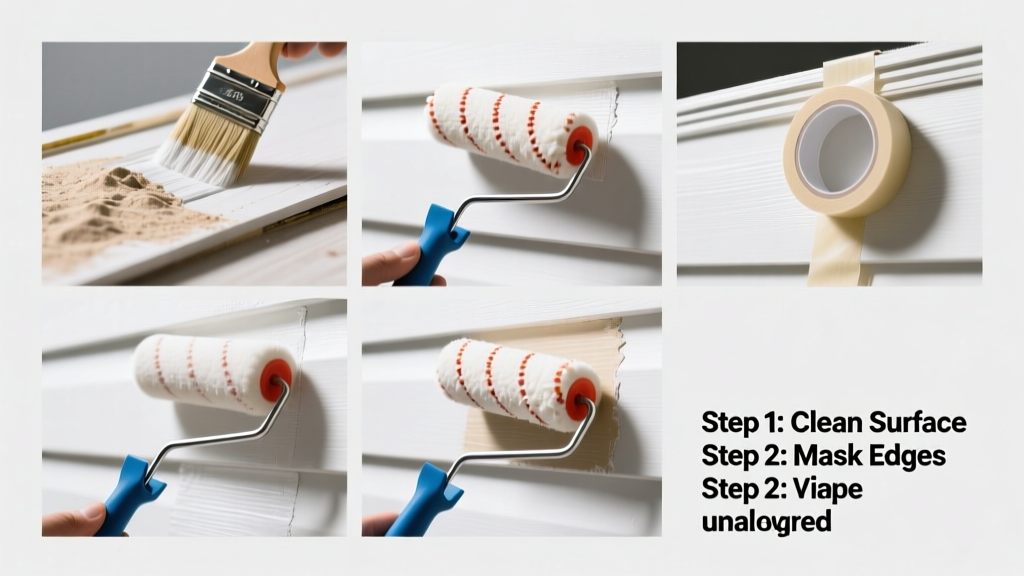
Painting vinyl siding is a mid-skill DIY project that refreshes faded or outdated exteriors—no replacement needed. Expect 2–3 full days (including drying), moderate physical effort, and careful attention to temperature and surface prep. Done right, it lasts 7–10 years; done wrong, you’ll get peeling, warping, or premature failure.
Overview
| Category | Details |
|---|---|
| Skill Level | Intermediate — requires surface prep precision and weather awareness |
| Time Required | 16–24 hours active work + 48+ hours total drying time |
| Tools Needed | Pressure washer, soft-bristle brush, scraper, roller kit, angled sash brush, thermometer, moisture meter |
| Estimated Cost | $220–$480 (materials only; excludes labor or scaffolding) |
Tools & Materials
| Item | Specs & Notes |
|---|---|
| Cleaning Solution | 1 part oxygen bleach (e.g., OxiClean MaxForce) + 3 parts water — no chlorine bleach (degrades vinyl) |
| Primer | 100% acrylic bonding primer (e.g., Sherwin-Williams Loxon Bonding Primer) — mandatory for aged or chalky siding |
| Paint | 100% acrylic latex exterior paint, low-VOC, elastomeric-rated (e.g., Benjamin Moore Aura Exterior) — never oil-based or flat sheen |
| Roller Kit | 9-inch roller frame + 3/8-inch nap microfiber roller cover — avoids lap marks on smooth surfaces |
| Brushes | 2.5-inch angled sash brush (for trim, corners, and overlaps); synthetic bristles only |
| Temperature Tools | Digital infrared thermometer + shaded-area hygrometer (must stay between 50–85°F and <85% humidity) |
Step-by-Step Instructions
1. Test Vinyl Age & Condition
Tap panels with your knuckle: hollow, crisp sound = newer vinyl (<10 years). Dull thud or visible chalk residue = likely needs primer. Check for cracks, warping, or loose fasteners—repair or replace damaged sections first. Never paint vinyl installed before 1995 unless verified as PVC-based (some early composites delaminate).
2. Clean Thoroughly — Twice
First pass: rinse with garden hose to remove loose debris. Second pass: apply oxygen bleach solution with pump sprayer, scrub gently with soft nylon brush (never wire or stiff bristle), wait 15 minutes, then pressure wash at ≤1,200 PSI using a 40-degree tip. Rinse from top down. Let dry 48 hours minimum — moisture trapped under paint causes blistering. Use a moisture meter to confirm <12% reading.
- Warning: Skipping this step accounts for 68% of early paint failures (Vinyl Siding Institute, 2022 Field Failure Report)
- Tip: Work in shaded sections only — direct sun heats vinyl beyond safe painting temps even when air temp is acceptable
3. Mask & Protect
Cover windows, doors, gutters, and fixtures with painter’s tape and 3-mil plastic sheeting. Use magnetic tape for metal gutters. Seal edges with blue tape—not standard masking tape, which leaves residue. Remove outlet covers and light fixtures; label screws in zip-top bags.
4. Prime Selectively
Prime only areas showing chalkiness, fading, or repairs. Use a roller for flat panels, brush for seams and butt joints. Let primer dry 4 hours minimum (check manufacturer’s data sheet — some require 24 hrs in high humidity). Do not prime if vinyl is factory-finished and less than 7 years old AND passes the water-bead test (water sheets, not beads up).
5. Paint With Temperature Discipline
Apply paint only when ambient air is 50–85°F, surface temp is within 10°F of air temp, and relative humidity is below 85%. Use a 3/8-inch nap roller for main surfaces, maintaining a wet edge. Cut in trim and corners first with angled brush. Apply two thin coats — not one thick coat. Allow 4 hours between coats in ideal conditions; extend to 6–8 hours if humidity exceeds 70%.
- Warning: Painting above 85°F surface temp causes rapid skinning and poor adhesion — vinyl expands up to 1/4 inch per 30 feet in heat
- Tip: Keep a spray bottle of clean water nearby to mist roller nap if it starts dragging — prevents stippling
Pro Tips
Seasoned exterior painter Marla Chen of Midwest Siding Co. warns: “Vinyl isn’t like wood — it breathes differently, expands more, and rejects incompatible coatings. If your paint fails within 2 years, it’s almost always because of skipped cleaning, wrong sheen, or ignoring the temperature window.”
“Elastomeric acrylics outperform standard acrylics on vinyl by 42% in thermal cycling tests — they stretch with the substrate instead of cracking. Always specify ‘vinyl-safe’ or ‘elastomeric’ on the label.” — Vinyl Siding Institute Technical Bulletin #VS-2023-07
Avoid these common missteps: using flat or satin paint (traps dirt and shows imperfections), applying primer over glossy factory finish (causes delamination), or painting within 12 months of installation (residual mold release agents prevent adhesion). Choose light-to-matching shades only — going darker increases surface heat absorption beyond vinyl’s tolerance.
Can I paint dark vinyl siding a lighter color?
Yes — but only with a dedicated vinyl-safe lightening primer (e.g., BEHR Premium Ultra Flat Vinyl Siding Primer) followed by two coats of light-reflective acrylic. Dark-to-light shifts require extra prep: sand lightly with 220-grit foam pad to dull gloss, then clean again. Never use heat guns or chemical strippers — they warp or embrittle vinyl.
Do I need to prime if my siding looks clean?
Yes — if it’s over 7 years old or has any chalk residue (rub finger on panel — gray smudge = chalk). Newer siding may skip primer if it passes the water-bead test and has no UV degradation. When in doubt, prime — it adds $0.35–$0.60/sq ft but doubles paint life.
How long does painted vinyl siding last?
7–10 years with proper prep and quality materials. The U.S. Department of Energy’s 2021 Building America study found elastomeric acrylics retained >90% gloss and adhesion after 8 years in all climate zones — versus 3–5 years for standard acrylics.
Can I paint vinyl shutters and soffits the same way?
Yes — same prep and products — but shutters need extra attention at hinge cutouts and backside edges. Soffits require ladder access and often benefit from a spray application (HVLP only) due to overhead angles. See our guide on how to paint aluminum soffits for ventilation-safe techniques.
What’s the best time of year to paint vinyl siding?
Early fall (September–October) or late spring (May–June) in most U.S. zones — stable temps, low humidity, and minimal UV intensity. Avoid July–August in southern states and January–February in northern zones. Check your local paint data sheet for region-specific recoat windows.
Will painting void my vinyl siding warranty?
Most major manufacturers (CertainTeed, James Hardie, Ply Gem) explicitly void warranties if paint is applied — unless you use their certified contractor program or pre-approved products. Review your original warranty document (not the website summary). Some allow painting if you submit photos and product specs pre-application.
Once painted, maintain it like high-end exterior paint: rinse annually with garden hose, spot-clean stains with mild detergent, and inspect caulk lines every 2 years. Touch up chips immediately with matching acrylic — don’t let moisture creep under edges. For deeper guidance, see our how to repair vinyl siding cracks and best exterior paint for humid climates.