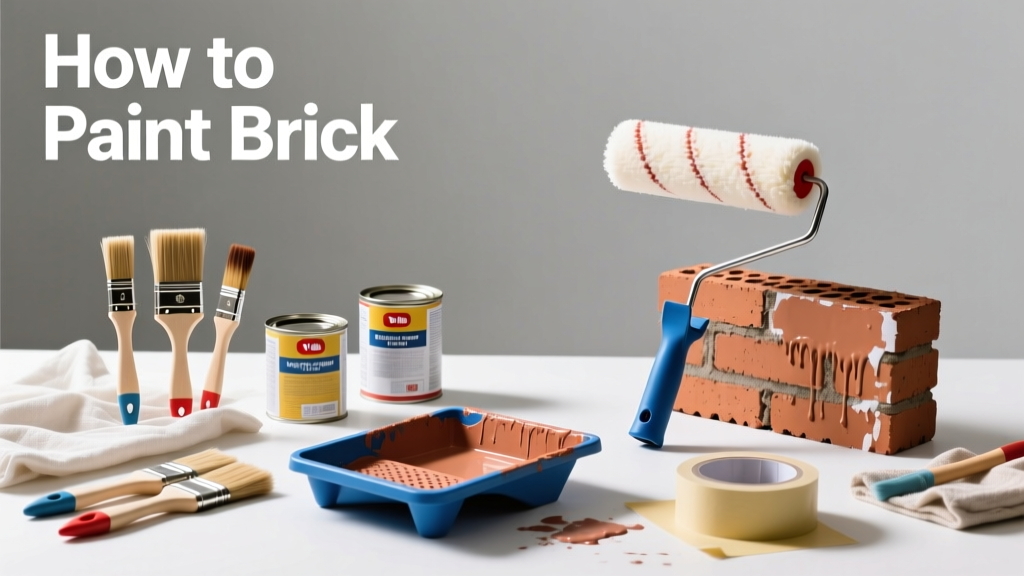
Painting brick transforms weathered, stained, or outdated masonry into a clean, cohesive surface—but it’s not as simple as rolling on color. Done right, painted brick lasts 7–10 years; done wrong, it traps moisture, causes spalling, and fails within 2 seasons. This tutorial walks you through every step with real-world timing, tool specifics, and pro-level cautions.
Overview
| Category | Details |
|---|---|
| Skill Level | Intermediate (requires surface assessment & moisture testing) |
| Time Required | 3–5 days (including drying, curing, and weather delays) |
| Tools Needed | Wire brush, pressure washer (optional), scraper, roller kit, angled brush, moisture meter |
| Estimated Cost | $180–$420 (for 250 sq ft, including primer, paint, and rental gear) |
Tools & Materials
| Item | Specifications & Notes |
|---|---|
| Concrete/masonry primer | Benjamin Moore Moorguard or Sherwin-Williams Loxon Concrete & Masonry Primer (alkali-resistant, vapor-permeable) |
| Exterior acrylic latex paint | 100% acrylic, elastomeric-rated (e.g., Sherwin-Williams SuperPaint Exterior Acrylic Latex, 12-mil dry film thickness) |
| Cleaning solution | 3:1 water-to-oxygen bleach (not chlorine—preserves mortar joints) |
| Moisture meter | Wagner MMC 220 (reads below 12% moisture content before priming) |
| Roller setup | 9-inch roller frame + 3/4" nap roller cover (for textured brick); 2-inch angled sash brush for mortar lines |
Step-by-Step Instructions
1. Test for moisture and efflorescence
Use a moisture meter on 10 random spots across the wall—especially near grade and under eaves. Readings must be ≤12% MC. Wipe a section with white vinegar: if white powder reappears within 48 hours, scrub with oxygen bleach and rinse thoroughly. Skip this step, and trapped salts will bloom through paint in 6–8 weeks.
2. Clean deeply—not just surface-dust
Mix 3 parts water to 1 part oxygen bleach. Apply with a stiff nylon brush, working top-to-bottom. Let dwell 15 minutes, then scrub mortar joints with a 2-inch wire brush. Rinse with low-pressure garden hose (never >500 PSI—high pressure erodes soft mortar). Allow 72 hours of full sun exposure to dry before proceeding.
- Pro tip: Tape off windows, vents, and landscaping with painter’s tape—not masking tape. Oxygen bleach degrades standard adhesives.
- Warning: Never use muriatic acid on older brick (pre-1950). It dissolves historic mortar and etches face veneers.
3. Repair and prime
Fill cracks >1/8" wide with hydraulic cement (e.g., Damtite Water Plug), not caulk. Scrape loose mortar with a cold chisel and repoint using Type N mortar. Once repairs cure (48 hrs), apply primer with a roller—then immediately back-brush mortar joints with an angled brush to ensure full coverage. Let primer dry 24 hours in temps above 50°F and <85% humidity.
4. Paint with two thin coats
Stir paint thoroughly (don’t shake—creates bubbles). Load roller fully, then roll excess off on tray ridges. Apply first coat vertically; second coat horizontally—this ensures even coverage in recesses. Maintain a wet edge and avoid lap marks by working in 3' × 3' sections. Wait 4–6 hours between coats (check manufacturer specs—some elastomerics require 8+ hours).
- Pro tip: Use a paint conditioner like Floetrol (10% by volume) in temps below 65°F—it slows dry time and reduces roller stipple.
- Warning: Don’t paint if rain is forecast within 48 hours. Even light mist compromises adhesion.
Pro Tips
Brick isn’t drywall—it breathes, expands, and holds moisture differently. Skipping vapor-permeable products invites failure. According to the Brick Industry Association’s Technical Note 7B (2022), improperly sealed brick walls account for 68% of premature paint failures in humid climates.
“If your brick feels cool and damp to the touch at noon on a sunny day, don’t prime yet. That’s a sign of hidden moisture migration—and painting over it guarantees blistering.” — Maria Chen, masonry restoration specialist with 22 years’ field experience
Avoid these three common errors: (1) Using interior paint—its low UV resistance chalks within 18 months; (2) Skipping primer—even ‘paint-and-primer-in-one’ products fail on porous brick; (3) Painting over efflorescence without acid wash and re-rinse, which leaves soluble salts that migrate and lift paint from behind.
Can I paint over previously painted brick?
Yes—if the existing paint is sound (no peeling, chalking, or alligatoring). Test adhesion with cross-hatch tape test per ASTM D3359. If >30% lifts, strip with soy-based gel (e.g., Soy Gel) or media blast. Never sandblast historic brick—it removes the hard-fired outer layer.
What’s the best color for exterior brick?
Light to medium tones reflect UV and reduce thermal expansion stress. Dark colors (like charcoal or navy) absorb heat and accelerate paint breakdown—studies by the U.S. Department of Energy’s Building Technologies Office (2021) show they increase surface temps by 35–45°F over beige or soft gray.
Do I need to seal painted brick?
No—and don’t. A sealer blocks vapor transmission, trapping moisture beneath the paint film. Elastomeric acrylic paint is designed to breathe. Adding sealer violates its formulation and voids warranties.
How long does painted brick last?
With proper prep and quality materials, expect 7–10 years in moderate climates (e.g., Pacific Northwest, Midwest). In high-sun, high-humidity zones (e.g., Florida, Gulf Coast), plan for recoat at year 5–7. Repaint only after full inspection—don’t assume it’s time just because it looks dull.
Is painting brick reversible?
Technically yes—but practically no. Chemical strippers require multiple applications and often damage mortar. Sandblasting removes original brick texture. Most pros recommend accepting the paint as permanent and choosing colors with long-term flexibility, like greige or warm white.
Can I paint brick fireplace interiors?
No. Standard masonry paint isn’t rated for sustained heat above 200°F. For fireboxes, use only high-temp ceramic paint (e.g., Rust-Oleum High Heat Ultra, rated to 1200°F) and follow NFPA 211 clearance guidelines. Interior chimney brick should never be painted—it interferes with flue gas venting and creates toxic fumes when heated.
Painting brick well isn’t about speed—it’s about honoring the material’s behavior. When you match product chemistry to brick physics, you get rich, lasting color that enhances structure instead of hiding flaws. For related techniques, see our guides on how to repoint brick mortar and how to clean brick facades safely.