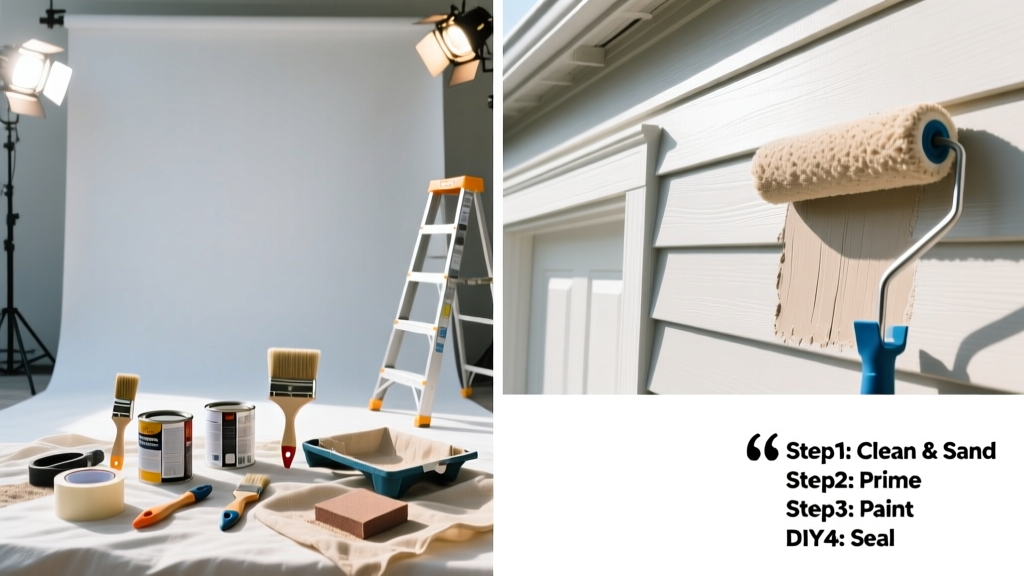
Painting aluminum is a practical skill for refreshing faded siding, restoring gutters, or updating window trim—but skip the prep and you’ll get chalky, flaking paint within months. It’s a moderate-difficulty project that takes 6–8 hours over two days (including drying), with most time spent cleaning and prepping—not applying paint.
Overview
| Skill Level | Time Required | Tools Needed | Estimated Cost |
|---|---|---|---|
| Moderate (requires attention to surface prep) | 6–8 hours total (2 days) | Wire brush, sandpaper (120 & 220 grit), TSP substitute, spray bottle, painter’s tape, roller & extension pole | $45–$85 (depending on surface area and paint quality) |
Tools & Materials
| Item | Quantity/Spec | Notes |
|---|---|---|
| Aluminum-specific primer | 1 quart (covers ~100–150 sq ft) | Must be acrylic latex or epoxy-based; oil-based primers cause saponification on aluminum |
| 100% acrylic exterior paint | 1 gallon (covers ~350–400 sq ft) | Choose satin or semi-gloss—flat finishes show imperfections and hold moisture longer |
| TSP-free cleaner (e.g., Krud Kutter Original) | 1 quart | Avoid phosphate-based cleaners—they leave residue that blocks primer adhesion |
| Scotch-Brite pads (green or maroon) | 3–4 pads | More effective than steel wool for light abrasion without embedding metal particles |
| Microfiber cloths | 6–8 clean cloths | Lint-free and absorbent—critical for removing fine dust after sanding |
Step-by-Step Instructions
Clean the surface thoroughly with a TSP-free degreaser
Aluminum oxidizes quickly, and even invisible oils from handling inhibit paint bonding. Mix cleaner per label instructions, apply with a soft brush or sponge, scrub gently in sections, then rinse with low-pressure water. Let dry fully—minimum 24 hours in low-humidity conditions. Warning: Never pressure-wash aluminum siding above 1,200 PSI—it can force water behind panels and damage insulation or sheathing.
Remove oxidation and smooth the surface
Use a maroon Scotch-Brite pad or 120-grit sandpaper to lightly abrade the entire surface. Focus on chalky or powdery areas—you’re not trying to remove metal, just dull the shine and open pores. Wipe away all dust with a damp microfiber cloth, then follow with a dry cloth. Repeat with 220-grit for smoother finish on visible trim or gutters.
Apply aluminum-specific primer in thin, even coats
Stir—not shake—the primer to avoid bubbles. Use a high-quality 3/8-inch nap roller for large areas; an angled brush works best for corners and seams. Apply one thin coat—don’t try to cover in one pass. Let dry 2–4 hours (check manufacturer’s specs). Tip: If you see bare spots after drying, don’t recoat immediately—lightly sand and re-prime only where needed. Over-priming causes cracking.
Paint with 100% acrylic exterior paint using cross-hatching technique
Load your roller evenly, then roll in one direction (e.g., vertical), lift, and roll again perpendicular (horizontal) while the first pass is still wet. This ensures full coverage without lap marks. Two coats are mandatory—even if the first looks solid. Wait at least 4 hours between coats, and never paint when temps are below 50°F or above 90°F, or if rain is expected within 24 hours.
Pro Tips
Most failures trace back to skipping cleaning or using the wrong primer. According to the American Coatings Association’s 2022 Field Performance Report, 68% of premature aluminum paint failures were linked to inadequate surface preparation—not product quality.
“Aluminum doesn’t need ‘etching’—it needs *cleaning* and *micro-abrasion*. Acid washes and vinegar soaks do more harm than good: they accelerate corrosion under paint.” — Greg Rinaldi, Senior Coatings Technician, Benjamin Moore Technical Services (2023)
- Never use galvanized-metal primer on aluminum—it contains zinc that reacts poorly with aluminum oxide
- Test paint adhesion before full application: tape a 2-inch square of painter’s tape over dried primer, rip it off sharply—if primer lifts, re-clean and re-sand
- For gutters, mask inside edges with 1-inch tape—paint bleeding into the channel invites rust and clogs
Can I paint over existing paint on aluminum?
Yes—if the old paint is intact, well-adhered, and cleaned properly. Test adhesion with tape first. If it flakes, strip it completely using a citrus-based stripper (not methylene chloride—it degrades aluminum). Sand any remaining gloss to a matte finish before priming.
Do I need to sand factory-painted aluminum?
Yes—even new aluminum siding has a protective mill coating that repels paint. Light scuff-sanding with 220-grit removes it without damaging the substrate. Skip this, and your primer will peel like a sticker in under a year.
Why does my painted aluminum look streaky?
Streaks usually mean uneven film thickness or rolling over partially dried paint. Always maintain a wet edge, use cross-hatching, and avoid extending beyond your reach—fatigue leads to inconsistent pressure and coverage. Also check your roller sleeve: worn or cheap rollers shed lint and hold too little paint.
How long does painted aluminum last?
With proper prep and premium acrylic paint, expect 7–10 years on vertical surfaces like siding, and 5–7 years on horizontal elements like gutters (which endure UV exposure, thermal cycling, and debris abrasion). The U.S. Department of Energy estimates that properly maintained painted aluminum reduces heat absorption by up to 30% compared to bare, oxidized metal.
Can I use spray paint on small aluminum parts?
Yes—for items like door handles or light fixtures—but only with aluminum-rated aerosol primer and topcoat (e.g., Rust-Oleum Stops Rust Aluminum Primer + Protective Enamel). Hold the can 10–12 inches away, use light, overlapping passes, and allow full cure (72 hours) before handling. Avoid spray painting in direct sun—it dries too fast and blisters.
What’s the best paint color for aluminum in hot climates?
Lighter colors reflect more solar radiation. A study published in Building and Environment (2021) found that white or light gray aluminum surfaces stayed up to 42°F cooler than dark charcoal equivalents at peak afternoon sun—reducing thermal stress on both paint and substrate.
Once cured, your painted aluminum resists chalking, fading, and blistering far better than untreated metal. For ongoing care, rinse annually with a garden hose and inspect caulk lines—especially around windows and soffits—where moisture intrusion often starts. If you’re tackling garage doors or fascia boards next, check our guide on how to paint garage doors and exterior paint prep checklist for complementary techniques.