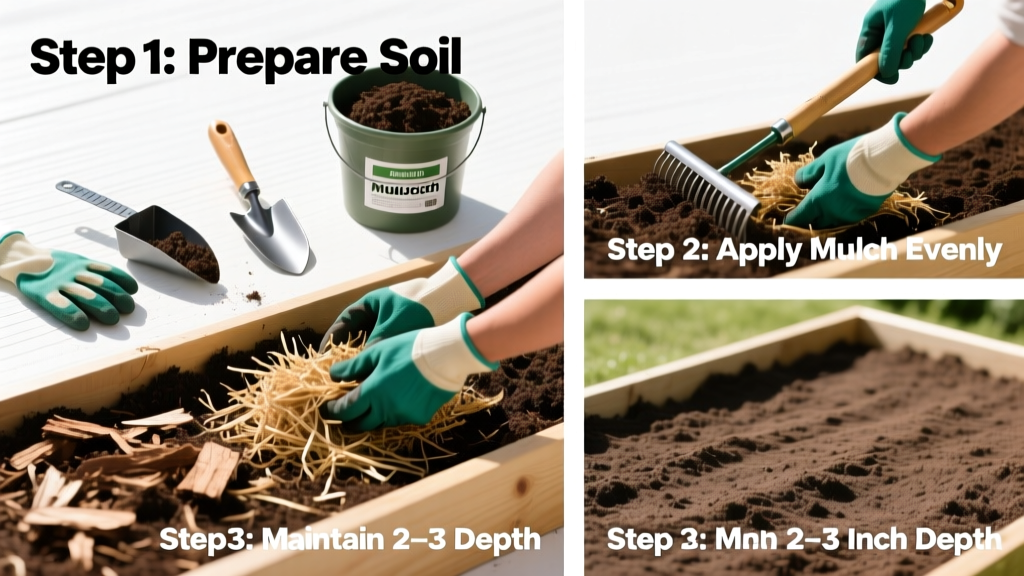
Mulching a garden bed is a foundational gardening skill—moderate difficulty, under two hours for a 10' x 4' bed, and one of the highest-impact, lowest-cost maintenance tasks you can do. Done right, it conserves moisture, suppresses weeds, moderates soil temperature, and gradually improves soil structure.
Overview
| Skill Level | Time Required | Tools Needed | Estimated Cost |
|---|---|---|---|
| Beginner-friendly (no prior experience needed) | 1–2.5 hours, depending on bed size and material type | Gloves, rake, wheelbarrow, garden fork, hose with spray nozzle | $15–$45 (bagged mulch) or $0 if using on-site compost or shredded leaves |
Tools & Materials
| Item | Quantity/Type | Notes |
|---|---|---|
| Organic mulch | 3–4 inches depth (2–3 cubic feet per 10 sq ft) | Shredded hardwood, cocoa hulls, straw, or compost—avoid dyed wood chips near edibles (they may leach heavy metals; University of Vermont Extension, 2022) |
| Weed barrier (optional) | Perforated landscape fabric or cardboard | Cardboard is biodegradable and blocks light without trapping moisture—ideal under organic mulch |
| Garden fork | 1 | Used to loosen compacted soil *before* mulching—not after |
| Sharp sand or grit | 1 cup (optional) | Add to mulch piles prone to fungal growth (e.g., in shaded, humid zones) |
Step-by-Step Instructions
1. Clear and prep the bed
Remove all visible weeds—including taproots like dandelions—and pull out debris. Water the soil deeply (1–2 inches), then let surface dry slightly so it’s moist but not muddy. This primes the soil to absorb moisture *under* the mulch layer.
- Tip: Use a trowel to dig out perennial weed roots—especially bindweed and quackgrass—before mulching. A single missed rhizome can resprout through 4 inches of mulch.
- Warning: Never mulch over dry, cracked soil. Mulch will seal in drought conditions and worsen plant stress.
2. Lay down a breathable barrier (if using)
If applying cardboard, overlap sheets by 4 inches and wet them thoroughly before covering. Avoid plastic sheeting—it blocks air and water exchange, suffocating soil microbes and encouraging root rot.
- Tip: For vegetable beds, skip fabric entirely. Cardboard + 3 inches of compost mulch gives better nutrient cycling and earthworm activity.
3. Apply mulch evenly
Spread mulch with a rake or gloved hands to a consistent 3-inch depth—never pile it against plant stems or tree trunks. Use a level board or straight-edge to check uniformity across irregular beds.
- Tip: Measure depth with a ruler stuck vertically into mulch—not by eye. A 2-inch layer lets 78% more weed seeds germinate than 3 inches (University of California Agriculture & Natural Resources, 2021).
- Warning: Piling mulch against woody stems creates moisture-trap zones that invite borers, fungi, and rodent nesting.
4. Water and monitor
Lightly water the mulch surface to settle it and reduce dust. Check weekly for compaction, mold, or bare spots. Replenish only where decomposed—typically every 3–6 months for shredded bark, annually for straw.
- Tip: After heavy rain, use a cultivator fork to gently aerate the top inch of mulch—this prevents anaerobic souring in cool, wet springs.
Pro Tips
Seasoned gardeners know mulch isn’t just “top dressing”—it’s active soil management. The U.S. EPA estimates that proper mulching reduces outdoor water use by 20–30%, especially in clay and sandy soils where evaporation spikes.
"Mulch depth matters more than material type for weed suppression—3 inches of any organic mulch blocks 90% of light-dependent weed seeds. Go thinner, and you’re just decorating." — Dr. Linda Chalker-Scott, Washington State University Extension, 2020
Avoid these three frequent missteps: mixing mulch into soil (it starves microbes of oxygen during decomposition), using fresh grass clippings alone (they mat and smell), and applying mulch before soil temperatures stabilize in spring (it delays warming and planting).
Can I mulch over existing weeds?
No—not without first removing them. Mulch suppresses *new* seedlings but won’t kill established roots. Small annual weeds may smother under 4 inches, but perennials like nutsedge or Canada thistle will push through. Hand-pull or spot-treat first, then mulch.
Is dyed mulch safe for vegetable gardens?
Not recommended. While most dyes are carbon-based, studies from the University of Arkansas Division of Agriculture (2023) found trace chromium and arsenic leaching from some red- and black-dyed mulches into soil within 8 weeks. Stick to natural hardwood, straw, or compost for edibles.
How thick should mulch be around trees?
Maintain a 3-inch depth—but keep it 6 inches away from the trunk in a “donut” shape. Tree roots need oxygen; a “mulch volcano” traps moisture, invites Phytophthora, and stresses vascular tissue. Young trees benefit most from this practice.
Do I need to remove old mulch before adding new?
Only if it’s matted, sour-smelling, or less than 1 inch deep. Healthy, partially decomposed mulch feeds soil life. Simply fluff it with a fork and top with 1–2 inches of fresh material. Removing it wastes nutrients and disrupts beneficial fungi networks.
Can I use leaves as mulch?
Yes—if shredded. Whole leaves blow away and mat into impermeable layers. Run them through a mower (set to lowest height) or use a leaf shredder. Shredded oak or maple makes excellent winter mulch for perennials—just avoid walnut leaves (juglone toxicity affects tomatoes and peppers).
What’s the best mulch for a sloped garden bed?
Shredded bark or cocoa hulls—they interlock and resist washout better than straw or pine needles. For steep slopes (>30°), staple biodegradable jute netting under mulch to hold it in place during heavy rains.
Mulching well is less about perfection and more about consistency—reapply thoughtfully, observe how your soil responds, and adjust based on local rainfall and plant needs. Once you’ve mastered this, try how to amend garden soil or how to prune perennials to build on your foundation. Your plants—and your future self—will thank you.