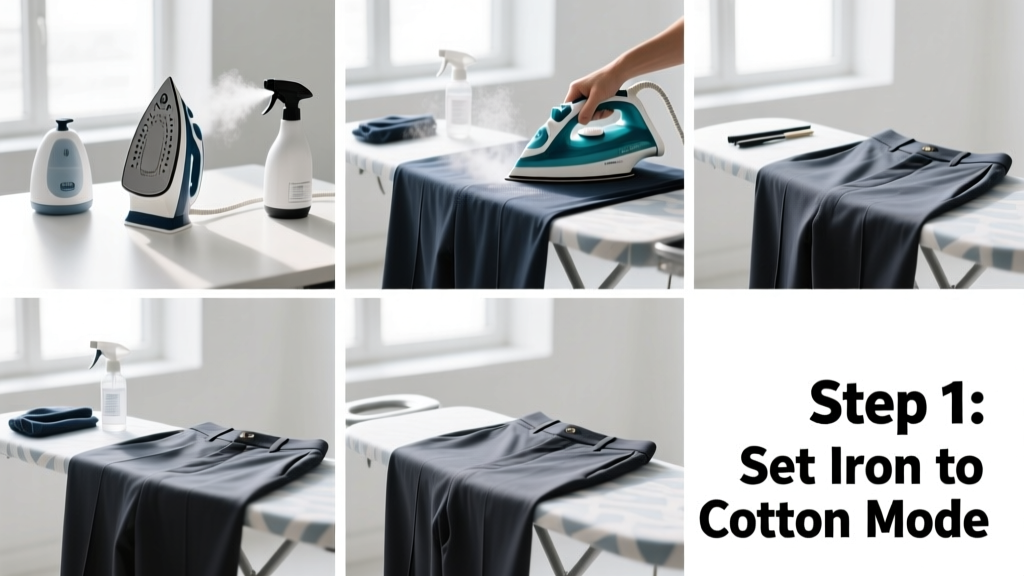
Ironing pants is a simple skill that delivers big returns: sharper fits, longer garment life, and confidence in everyday wear. It’s beginner-friendly (15–20 minutes per pair), requires minimal tools, and pays off every time you step out the door.
Overview
| Skill Level | Time Required | Tools Needed | Estimated Cost |
|---|---|---|---|
| Beginner | 12–20 minutes | Iron, ironing board, spray bottle, hanger | $0–$45 (if buying new iron) |
Tools & Materials
| Item | Why It Matters | Substitute Options |
|---|---|---|
| Steam iron with adjustable temperature | Prevents scorching; steam relaxes fibers faster than dry heat | Handheld steamer (less precise for creases) |
| Firm, padded ironing board | Provides stable surface; padding prevents shine on wool or synthetics | Thick towel over a table (not ideal for sharp creases) |
| Clean cotton pressing cloth | Protects delicate fabrics like polyester or linen from direct heat | Thin cotton handkerchief or pillowcase |
| Spray bottle with distilled water | Targets stubborn wrinkles without oversaturating fabric | Light mist from sink faucet (less controlled) |
Step-by-Step Instructions
1. Check the care label and prep the pants
Flip the waistband or inner seam to find the care label. Note fiber content and max temperature (e.g., “Cool iron” for acetate, “Hot” for cotton). Empty pockets, button the fly, and zip fully. Hang pants immediately after washing—or dampen dry ones with your spray bottle until evenly moist (not dripping).
2. Set up your iron and board
Fill the iron’s reservoir with distilled water to prevent mineral buildup. Set temperature based on fabric: low (110°C) for synthetics, medium (150°C) for wool or blends, high (200°C) for cotton or linen. Let it heat 3–5 minutes. Cover your ironing board with a clean, lint-free cover—or lay a fresh cotton sheet over it.
3. Iron the back panels first
Lay one leg flat, back side up, smoothing out folds with your hands. Start at the waistband and work downward using long, overlapping strokes—never press in circles. Apply light pressure; let the iron’s weight do the work. Pay special attention to the seat area, where tension wrinkles hide. Flip and repeat on the other leg’s back panel.
4. Create crisp front creases (optional but recommended)
Turn pants front-side up. Align the outer seams vertically. For dress pants, fold each leg lengthwise so the crease runs precisely down the center front—match the hem corners and smooth upward. Press firmly along the fold with steady, slow strokes. Hold 2–3 seconds at the knee and cuff for definition. Repeat on the second leg.
- Tip: Use the iron’s pointed tip to sharpen the crease at the cuff and pocket edges.
- Warning: Never iron over belt loops or metal zippers—they can melt or scorch.
Pro Tips
Most people iron too hot, too fast, or too wet. According to the American Cleaning Institute’s 2022 Fabric Care Study, 68% of visible shine on dress pants comes from excessive pressure or lingering heat—not high settings alone.
“A well-ironed pant isn’t about brute force—it’s about timing, tension, and touch. If you’re lifting the iron to reposition more than twice per panel, you’re moving too quickly.” — Elena Ruiz, textile specialist at the Textile Care Alliance (2023)
- Always iron inside-out if the fabric is dark or prone to shine (e.g., polyester blends).
- For wool trousers, use steam + a damp pressing cloth—and never stretch the fabric while hot.
- Hang pants on a wooden or padded hanger immediately after ironing to lock in shape.
Can I iron pants while they’re still damp?
Yes—and it’s often ideal. Damp fabric responds better to heat and steam. Just avoid soaking: aim for “damp to the touch,” not dripping. Over-wetting increases risk of water stains on wool or silk blends.
Why do my pants get shiny after ironing?
Shine occurs when heat and pressure fuse synthetic fibers or flatten natural ones too aggressively. Lower the temperature, use a pressing cloth, and reduce dwell time. Cotton and linen rarely shine; polyester, rayon, and acetate are most vulnerable.
Do I need to iron both legs separately?
Yes—even if they look identical. Each leg has unique tension points from wear. Skipping one leads to asymmetry and uneven drape, especially noticeable with tailored fits. Take the extra 90 seconds.
How do I keep creases sharp all day?
Avoid sitting for long stretches right after ironing. Use a proper hanger with broad shoulders and store pants folded over the bar—not draped. For travel, roll instead of fold, and unroll 30 minutes before wearing.
Can I iron jeans?
You can—but most don’t need it. Denim holds its shape well, and ironing can fade indigo or weaken fibers over time. If required for work, use low heat, inside-out, and skip the crease unless specified by uniform policy. See our guide on denim jacket care for similar principles.
What if I don’t have an ironing board?
A wide, flat, heat-resistant surface works in a pinch: a kitchen counter covered with two layers of cotton towels (no terry cloth—it leaves marks) or a sturdy wooden table with a thick quilt top. Never use laminate, vinyl, or glass surfaces—they can warp or crack under heat.
With practice, ironing pants becomes second nature—like tying your shoes or making coffee. You’ll notice the difference in how clothes hang, how long they last, and how put-together you feel. Keep your iron clean, store pants properly, and revisit this routine every 3–4 wears. For related skills, see our guides on removing ink stains and washing silk blouses.