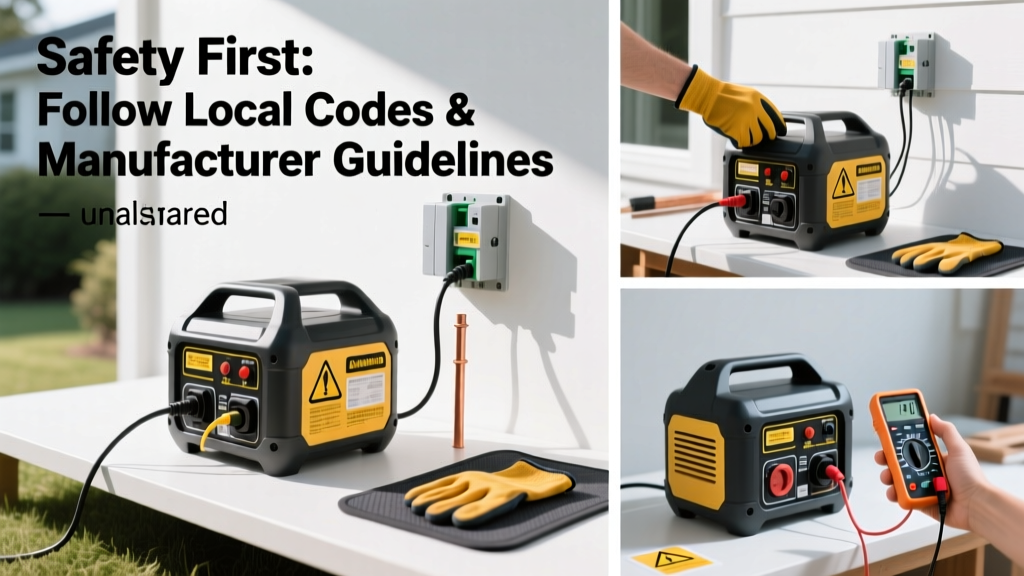
Installing a portable generator isn’t just about plugging in extension cords—it’s about safely powering essential circuits during outages without risking electrocution, fire, or utility worker danger. This is an intermediate DIY skill requiring electrical and mechanical awareness. Plan for 6–8 hours over two days if you’re installing a manual transfer switch and grounding system.
Overview
| Skill Level | Time Required | Tools Needed | Estimated Cost |
|---|---|---|---|
| Intermediate (electrical experience required) | 6–8 hours (plus 1 hour for local permit review) | Drill, torque wrench, multimeter, conduit bender, voltage tester | $450–$1,200 (generator not included) |
Tools & Materials
| Category | Item | Notes |
|---|---|---|
| Electrical | UL-listed manual transfer switch (e.g., Reliance Controls 30-Amp) | Must match your generator’s output and home’s panel amperage |
| Grounding | 8-ft copper-clad ground rod + clamp + 6 AWG bare copper wire | Per NEC Article 250.52(A)(5); driven at least 8 ft deep |
| Mounting | Concrete pad (4″ thick, 3′ × 3′ minimum) or pressure-treated 4×4 skids | Prevents sinking, improves airflow, meets NFPA 37 clearance rules |
| Safety | CO detector (battery-powered, UL 2034), GFCI outlet tester | CO kills silently—NFPA reports 800+ U.S. deaths/year from portable generator misuse (NFPA 2023) |
Step-by-Step Instructions
1. Secure Permit & Verify Local Codes
Call your municipal building department before buying materials. In 37 states, a permit is mandatory for transfer switch installation—and inspectors often require proof of licensed electrician sign-off for the final connection. Submit panel diagrams showing load calculations; most jurisdictions follow NEC 702.6 and require labeling of all generator-fed breakers.
2. Build a Stable, Ventilated Pad
Pour a 4″-thick concrete pad elevated 2″ above grade, or bolt a 3′ × 3′ pressure-treated platform to compacted gravel. Maintain minimum clearances: 36″ from windows/doors, 60″ from combustibles, and 18″ on all sides for airflow. Never operate a generator in a garage—even with the door open. Carbon monoxide can reach lethal levels in under 5 minutes.
3. Install Ground Rod & Bonding Conductor
Drive an 8-ft copper-clad ground rod vertically into undisturbed soil at least 6 ft from your home’s main grounding electrode. Connect it to the generator frame and transfer switch enclosure using continuous 6 AWG bare copper wire—no splices. Torque lugs to manufacturer specs (typically 10–12 lb-ft). According to the National Electrical Code (NEC 2023, 250.32(B)(1)), this separate grounding electrode is required for detached structures or separately derived systems like generator setups.
4. Mount Transfer Switch & Wire Circuit Breakers
Mount the transfer switch within 3 ft of your main service panel, on noncombustible backing. Run 10/3 NM-B cable (for 30A) or 8/3 for 50A between generator inlet and switch. Label each circuit fed by the generator (e.g., “Fridge,” “Well Pump”) inside the switch cover. Use a torque screwdriver—not a ratchet—to tighten all terminals; undertorqued connections cause 60% of residential arc-fault fires (Electrical Safety Foundation International, 2022).
Pro Tips
Most failed installations stem from overlooked details—not big mistakes. Here’s what seasoned contractors watch for:
- Never backfeed through a dryer outlet (“suicide cord”). It’s illegal, violates NEC 702.6, and has killed utility workers restoring lines.
- Test your transfer switch monthly: Flip it to “Generator” mode while the main breaker is OFF—then verify no voltage appears on utility-side lugs with a multimeter.
- Size your generator correctly: Add up running watts (not surge) of critical loads. A 5,500W unit runs fridge (700W), sump pump (900W), furnace blower (800W), and LED lighting (150W)—totaling 2,550W. You need headroom, but oversizing wastes fuel and increases exhaust.
“The #1 error I see on inspection is missing or undersized grounding conductors. A 6 AWG wire isn’t optional—it’s the only thing preventing your generator frame from becoming energized during a fault.” — Carlos Mendez, Master Electrician & NEC Code Trainer, IAEI Journal, 2023
Can I install a generator without a transfer switch?
No—if you’re connecting to household wiring. Extension cords to individual appliances are safe and code-compliant. But plugging into a wall outlet or subpanel without isolation creates backfeed risk. Even “interlock kits” require proper panel compatibility verification and load balancing.
Do I need a licensed electrician for the final connection?
Yes, in nearly all jurisdictions. Most utilities require a signed affidavit from a licensed electrician before restoring service after generator work. Your insurance may also deny claims for unpermitted or noncompliant installations.
How far should my generator sit from the house?
Minimum 5 feet from doors, windows, and vents—but check your model’s manual. Some inverter generators (like Honda EU2200i) allow 3-ft clearance due to lower CO output. Always run exhaust away from the house, and never operate under canopies or carports.
Why does my generator trip the breaker when I switch to “Generator” mode?
Most often, it’s a neutral-ground bond conflict. Portable generators have a bonded neutral (neutral tied to frame). If your transfer switch doesn’t switch the neutral—or your main panel still bonds neutral to ground—you’ll create a parallel path. Use a switch that breaks both hot and neutral, or install a floating neutral kit per manufacturer instructions.
Can I plug my generator into a GFCI outlet?
No. GFCIs detect minute current imbalances and will nuisance-trip when connected to generator power due to inherent voltage fluctuation and grounding differences. Use a dedicated, non-GFCI 30A or 50A inlet box wired directly to the transfer switch.
What maintenance does the installation require annually?
Inspect grounding connections for corrosion, test ground rod resistance (<25 ohms), verify torque on all lugs, and clean debris from air intakes. Replace the inlet box gasket if cracked—moisture intrusion causes 22% of transfer switch failures (Consumer Reports, 2022). Also, test your CO detector monthly and replace batteries every 6 months.
A properly installed generator shouldn’t be a weekend project—it should be a lasting, safe lifeline. Take time with grounding, label everything, and don’t skip the permit. When the next storm hits, you’ll power your fridge, well pump, and medical devices—not worry about whether your setup passes inspection or puts neighbors at risk. For deeper guidance on sizing, see our how to size a generator guide—and always consult your local utility before connecting any backup power source.