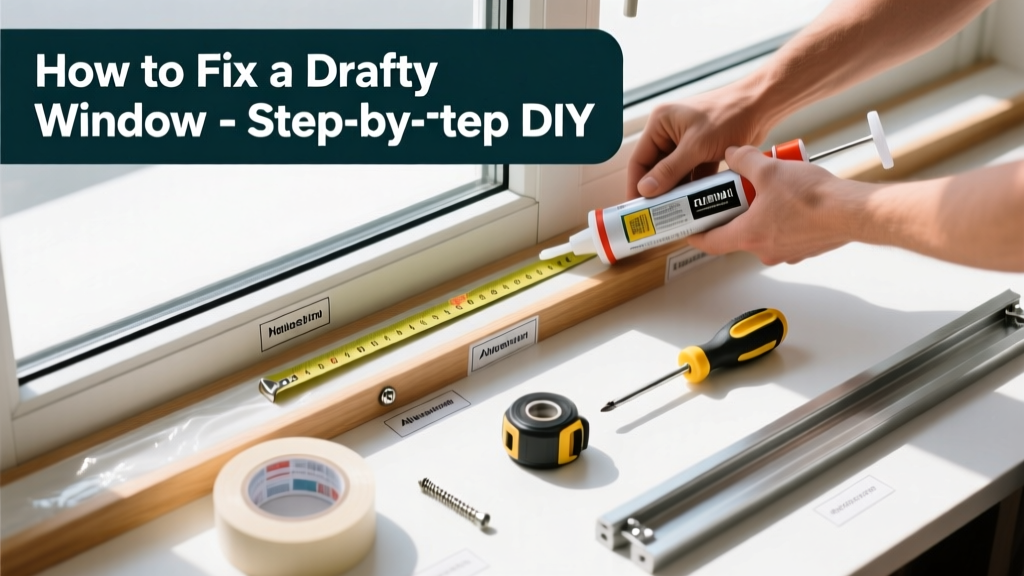
Fixing a drafty window is a practical home maintenance skill that boosts comfort, cuts energy waste, and extends window life. It’s beginner-friendly—most repairs take under two hours—and requires no specialized training, just careful observation and the right materials.
Overview
| Skill Level | Time Required | Tools Needed | Estimated Cost |
|---|---|---|---|
| Beginner | 45–120 minutes per window | Utility knife, tape measure, screwdriver, caulk gun | $8–$25 (varies by sealant type and window size) |
Tools & Materials
| Item | Notes | Where It’s Critical |
|---|---|---|
| Low-expansion window & door foam sealant (e.g., Great Stuff Window & Door) | Avoid high-expansion foam—it can warp jambs or crack glass | Gap behind window frame (interior trim removal required) |
| Indoor/outdoor acrylic-latex caulk (paintable, flexible) | Not silicone: it doesn’t bond well to painted wood or vinyl | Exterior casing joints and interior stop bead gaps |
| Vinyl or foam weatherstripping (V-strip or bulb type) | V-strip fits most sash channels; bulb works best on older wood windows | Meeting rails, sash edges, and operable parts |
| Door sweep or compression seal (for sliding windows) | Choose adjustable height if bottom rail is uneven | Bottom of sliding sash or hung window lower rail |
Step-by-Step Instructions
1. Locate and map all air leaks
On a windy day—or using a lit incense stick—move slowly around the perimeter of the closed window. Note where smoke wobbles or you feel cool air. Mark each leak with painter’s tape. Common spots: top corners (settled framing), meeting rail (double-hung), and where the sash meets the jamb. Don’t assume the draft is coming from the glass—90% originate from gaps in the frame or sash fit (U.S. Department of Energy, 2022).
2. Clean and prep surfaces
Wipe all caulk lines, weatherstrip grooves, and jamb surfaces with isopropyl alcohol. Remove old, cracked caulk with a plastic scraper—never metal, which scratches vinyl or paint. Let surfaces dry fully; moisture traps cause premature sealant failure. If paint is peeling near the jamb, sand lightly and spot-prime before caulking.
3. Seal interior frame gaps
Remove interior trim only if gaps exceed 1/8" behind the jamb. Use a pry bar wrapped in cloth to avoid gouging. Fill voids with low-expansion foam—spray in 3-second bursts, let expand for 15 minutes, then trim flush with a serrated knife. Reattach trim with finishing nails. For smaller gaps (<1/8"), use acrylic-latex caulk applied with steady pressure and smoothed with a damp finger.
4. Install weatherstripping on moving parts
For double-hung windows: press V-strip into the side jamb groove (top and bottom sash), then add bulb seal along the meeting rail’s outer edge. For casements: apply adhesive-backed foam tape to the sash perimeter where it contacts the frame—avoid the hinge side. Test operation: the window should close firmly but not bind. If it sticks, peel and reposition the strip slightly inward.
Pro Tips
Weatherstripping fails fastest where friction and UV exposure combine—so replace it every 3–5 years, even if it looks intact. And never caulk the weep holes at the bottom of vinyl or aluminum window frames; blocking them causes trapped moisture and rot.
“Most homeowners over-caulk the exterior and under-seal the interior sash. The biggest energy gains come from sealing the hidden gap between the window unit and rough opening—not the visible crack around the trim.” — Sarah Lin, Building Science Technician, Building America Solution Center (2023)
- Test your repair with an infrared thermometer: scan the glass and frame before and after. A 5°F+ reduction in surface temperature difference means you’ve cut convection loss significantly.
- If drafts persist after sealing, check for failed glazing compound on older wood windows—the putty may be cracked or missing, letting air bypass the glass entirely.
Why does my window draft only in winter?
Cold air contracts framing materials, widening gaps—especially in older homes with seasonal wood movement. That same window may feel tight in summer. This is normal, but repeated expansion/contraction accelerates wear on weatherstripping and caulk.
Can I fix a drafty window without removing trim?
Yes—for surface-level gaps (<1/8") and operable parts. Use caulk on stationary joints and self-adhesive weatherstripping on sashes. But if air is blowing from behind the wall or you hear whistling from the jamb, the issue is structural and requires trim removal to access the rough opening.
Is plastic wrap and hair dryer a real fix?
It’s a short-term test—not a solution. Covering the glass with shrink film *can* confirm whether the leak is through the glass (rare) or the frame (common). If the draft disappears with film, your frame seals need attention. If it remains, inspect the rough opening or consider rotten sill replacement.
My vinyl window won’t stay sealed—what’s wrong?
Vinyl windows often develop warped sashes or misaligned locks due to sun exposure or overtightened screws. Loosen the lock screws slightly, close the window, then retighten while applying gentle inward pressure on the meeting rail. Also check for bent or worn cam locks—replace them with OEM parts from the manufacturer’s site.
Should I replace the whole window instead?
Only if you see fogged, failed insulating glass, cracked frames, or >1/4" gaps that won’t compress with weatherstripping. According to the National Fenestration Rating Council (2021), properly repaired windows retain 85–92% of their original thermal performance—making repair the smarter first step.
How long will my fix last?
Caulk lasts 5–7 years outdoors, 10+ indoors. Foam sealant is permanent unless disturbed. Weatherstripping lasts 3–5 years, depending on operation frequency and sun exposure. Mark your calendar to inspect each window every fall—before heating season starts.
A drafty window isn’t just an annoyance—it’s a measurable energy leak. With these steps, you’re not just patching air; you’re reclaiming comfort, lowering utility bills, and protecting your home’s envelope. For persistent issues, consult a certified home energy auditor who uses blower door testing to quantify leakage. And if your windows are over 25 years old with single-pane glass, consider upgrading to ENERGY STAR®-certified replacements as part of a phased efficiency plan.