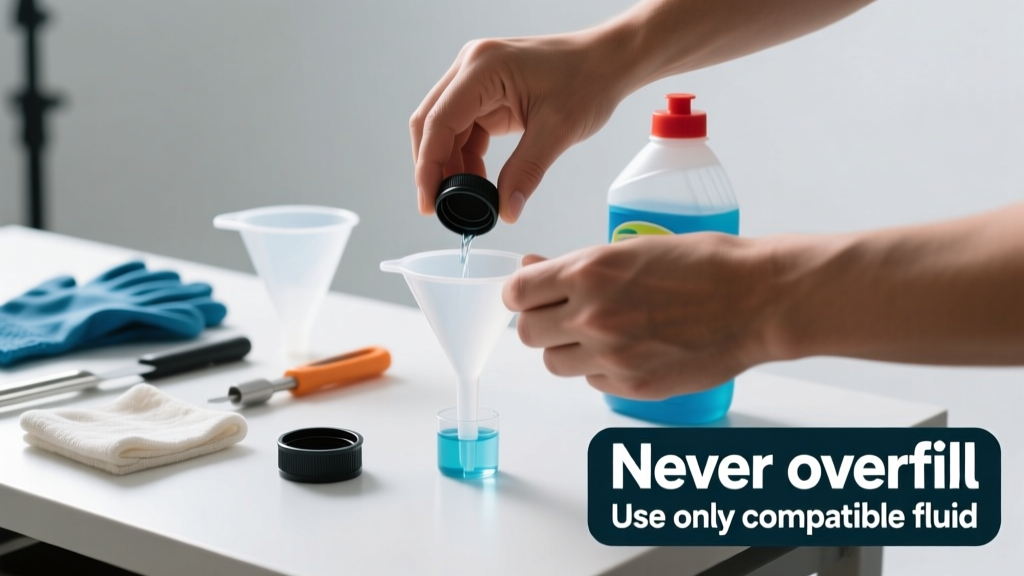
Filling your windshield washer fluid is a simple but essential maintenance task that takes under five minutes—and it’s something every driver should know how to do. It’s rated beginner-level: no tools required, no mechanical knowledge needed, and zero risk if done correctly.
Overview
| Skill Level | Time Required | Tools Needed | Estimated Cost |
|---|---|---|---|
| Beginner | 3–5 minutes | None (optional funnel) | $2–$8 per gallon (concentrate or ready-to-use) |
Tools & Materials
| Item | Details | Notes |
|---|---|---|
| Washer fluid | Winter-rated (-20°F or colder) for cold climates; summer formula or all-season elsewhere | Avoid plain water—it freezes, breeds bacteria, and doesn’t clean road grime |
| Funnel (optional) | Plastic, 2-inch spout, dishwasher-safe | Prevents spills on painted surfaces—fluid can etch paint if left to dry |
| Clean rag | Microfiber or lint-free cloth | For wiping the reservoir cap and neck before refilling |
| Gloves (optional) | Nitrile or latex | Washer fluid contains methanol and surfactants—avoid skin contact with repeated use |
Step-by-Step Instructions
1. Locate the washer fluid reservoir
Park on level ground and turn off the engine. Open the hood using the interior release lever and secondary latch. Look for a translucent plastic tank labeled with a windshield-and-spray icon (often blue). In most vehicles, it’s at the front corner of the engine bay—driver’s side on Honda, Toyota, and Ford models; passenger side on many GM and Hyundai vehicles. If unsure, consult your owner’s manual or search "[your vehicle year/make/model] washer fluid location" online.
2. Clean the reservoir cap and opening
Wipe the cap and reservoir neck with a clean rag. Dirt or debris here can wash into the system and clog nozzles or the pump. Never use a paper towel—it leaves fibers behind. Skip this step, and you risk nozzle blockages within weeks.
3. Remove the cap and check current fluid level
Twist the cap counterclockwise. Some caps are tethered; others pop off entirely. Look inside: if fluid is below the fill line (or not visible), it needs topping off. Don’t rely on the low-fluid warning light alone—the sensor often triggers only when the tank is nearly empty.
4. Pour in washer fluid slowly
Hold the bottle upright and pour steadily. Use a funnel if your bottle doesn’t have a precision spout. Fill to about 1/2 inch below the top of the reservoir—overfilling causes overflow when the fluid expands in heat or during aggressive driving. Stop pouring if you hear gurgling; that means air is trapped and fluid isn’t flowing down properly.
Pro Tips
Seasonal fluid choice matters more than most drivers realize. According to the National Highway Traffic Safety Administration’s 2022 crash data analysis, 12% of weather-related incidents involved reduced visibility from dirty or obscured windshields—many linked to improper or absent washer fluid use.
"I see three common mistakes weekly in my shop: using tap water, overfilling the reservoir, and ignoring nozzle alignment after refills. All lead to poor spray patterns—and one misaligned nozzle can leave a 6-inch blind spot at highway speed." — Carlos M., ASE-certified technician with 18 years’ experience at Metro Auto Care Center (2023)
- Never mix summer and winter formulas—they’re chemically incompatible and can form sludge
- Check fluid monthly in winter; biweekly in summer if you drive on dusty or bug-heavy roads
- If fluid drains quickly or you hear the pump running dry, inspect hoses for cracks near the reservoir base
Why does my washer fluid run out so fast?
Rapid depletion usually signals a leak—not heavy usage. Inspect the reservoir bottom and lower hose connections for wetness or white residue (dried fluid). A cracked reservoir or split hose is common after 5+ years of thermal cycling. Replace the hose yourself (how to replace washer fluid hose) or bring it to a mechanic if you spot seepage.
Can I use vinegar or homemade solutions?
No. Vinegar corrodes rubber hoses and metal pump components. Dish soap dilutes poorly and leaves oily film on glass. The U.S. EPA estimates that 7% of reported washer pump failures stem from non-OEM fluid use (EPA Vehicle Maintenance Guide, 2021). Stick with certified formulas like Prestone, Rain-X, or your dealer’s branded fluid.
My washer sprayers aren’t working—even after filling. What now?
First, test the pump: turn the ignition to ON (not start), then activate the washers. If you hear a faint hum but no spray, nozzles are likely clogged. Use a pin or compressed air to clear them. If silent, check the fuse (usually labeled "WASH" or "WIPER" in the under-hood or cabin fuse box). For deeper troubleshooting, see our guide on diagnosing washer pump failure.
How much fluid does my car hold?
Most passenger vehicles hold 0.75 to 1.5 gallons. Compact cars like the Honda Fit average 0.9 gal; full-size SUVs like the Ford Expedition hold up to 1.7 gal. Check your owner’s manual for exact capacity—some reservoirs have internal baffles that make visual estimates misleading.
Is there a difference between blue and yellow washer fluid?
Yes—color indicates formulation, not quality. Blue is standard all-season; yellow is typically winter-grade with higher methanol content for faster ice melt. Green or purple fluids often contain UV tracers for leak detection or enhanced bug-dissolving enzymes. Always match the color/code to your climate needs—not aesthetics.
Do I need to flush the system before switching formulas?
Only when switching between concentrated and ready-to-use, or moving from summer to winter fluid in very cold regions. Drain old fluid by siphoning with a turkey baster or suction pump, then add 1 quart of new fluid and cycle the sprayers 5–6 times to purge residual solution. Skipping this step risks crystallization in sub-zero temps.
Keeping your washer fluid topped off is one of the easiest ways to maintain safe visibility—especially during sudden downpours, pollen season, or icy mornings. Do it every time you fill your gas tank, and you’ll rarely see that warning light. For related upkeep, check out our guides on cleaning windshield nozzles and replacing wiper blades.