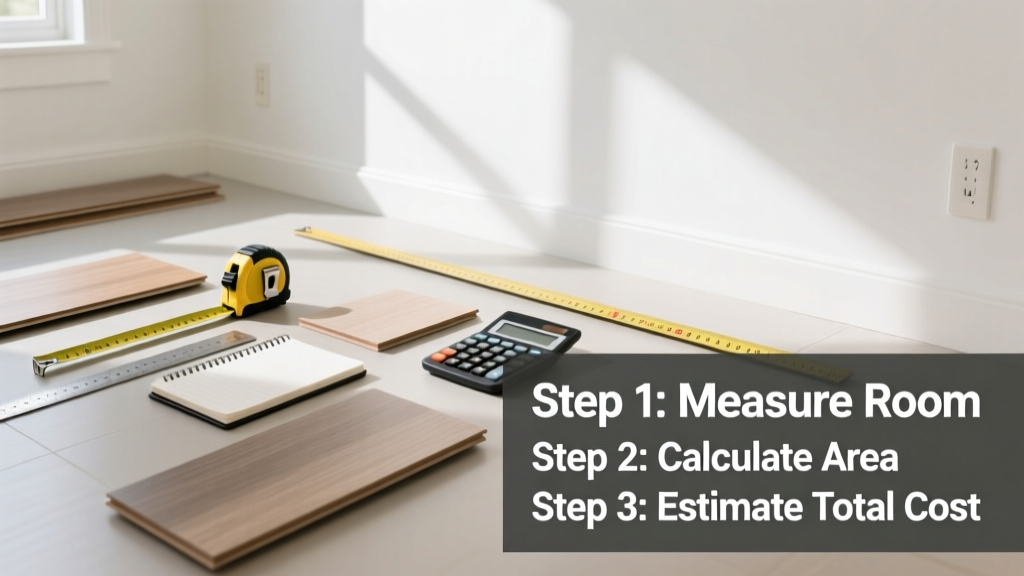
Estimating flooring cost is a practical skill that helps you budget confidently before ordering materials or hiring contractors—no guesswork, no surprises. It’s a beginner-friendly task that takes under 30 minutes once you’ve measured your space and gathered quotes. You’ll need only basic tools and 15–20 minutes of focused time.
Overview
| Skill Level | Time Required | Tools Needed | Estimated Cost Range (per sq ft) |
|---|---|---|---|
| Beginner | 15–25 minutes | Tape measure, notepad, calculator, smartphone | $2.50 (vinyl) – $18.00 (hardwood) |
Tools & Materials
| Item | Purpose | Notes |
|---|---|---|
| Retractable tape measure (25 ft) | Measuring room dimensions | Laser measures work well for large or irregular spaces; avoid cloth tapes—they stretch. |
| Graph paper or digital floor plan app | Sketching layout and noting obstacles | Try how to draw a floor plan for accuracy. |
| Calculator (or spreadsheet) | Computing area, waste, and totals | Use our free flooring cost calculator template. |
| Current vendor quotes (3+) | Comparing material and labor rates | Ask for line-item breakdowns—not just “$X/sq ft installed.” |
Step-by-Step Instructions
1. Measure the room’s square footage precisely
Measure length and width in feet and inches, then convert inches to decimals (e.g., 12' 6" = 12.5'). Multiply to get gross square footage. For L-shaped rooms, divide into rectangles and sum each area. Always double-check measurements—errors here cascade through every cost estimate.
- Tip: Measure at floor level—not baseboard height—since walls may taper.
- Warning: Don’t subtract doorways or closets unless they’re permanently uncarpeted or tiled. Contractors charge per total floor area covered.
2. Add 5–15% for waste and cuts
Waste allowance depends on material and layout complexity. Vinyl plank and laminate need ~5–7%. Hardwood or tile laid diagonally or around curves requires 10–15%. According to the National Wood Flooring Association’s 2022 installation guidelines, underestimating waste causes 68% of mid-project material shortages.
3. Calculate material cost using current unit pricing
Multiply total square footage (including waste) by the material’s price per square foot. Remember: some products are sold by the box (e.g., 22 sq ft/box). Round up to the next full box—vendors won’t sell partial boxes. Include underlayment, transition strips, and adhesives separately if not bundled.
- Tip: Check if the vendor includes delivery or charges $45–$95 extra—this impacts your bottom line.
- Warning: “Sale-priced” flooring often excludes freight, acclimation fees, or stair installation surcharges.
4. Estimate labor and removal costs
Contractors typically charge $2–$8/sq ft for installation, depending on region and complexity. Removal of existing flooring adds $1–$3/sq ft—and disposal fees may apply. The U.S. Bureau of Labor Statistics reports median flooring installer wages rose 7.2% in 2023, pushing average labor rates up 5–9% year-over-year.
“Most homeowners underestimate prep work: subfloor leveling, moisture testing, and transitions eat 20–30% of labor time—and aren’t always included in ‘$3/sq ft’ quotes.” — Maria Chen, certified NAFCD estimator and 18-year flooring contractor (2024 interview)
Pro Tips
Seasonality matters: Order hardwood in late winter (low demand, better stock availability) and avoid summer vinyl installations—high humidity can cause expansion gaps. Always verify whether your quote includes haul-away of old flooring—many do not, and dumpster rentals run $300–$500. If you’re installing yourself, factor in rental fees for nail guns ($45/day) or tile cutters ($35/day).
- Never skip moisture testing for concrete subfloors—failed tests void most hardwood warranties.
- Compare “installed” quotes side-by-side: one may include 12 months of labor warranty; another offers only 30 days.
- Ask for photos of similar past jobs—not just showroom samples—to assess real-world finish quality.
What’s the biggest cost variable I should watch?
Subfloor condition. A level, dry, structurally sound subfloor saves hundreds—or thousands. But if you discover rot, unevenness, or moisture above 75% RH (measured with a pinless meter), remediation can add $1.50–$4.00/sq ft before a single plank is laid.
Do I need to pay for delivery and acclimation time?
Yes—most engineered wood and solid hardwood require 48–72 hours of on-site acclimation in the room where it will be installed. Delivery fees average $65–$120 for orders under 500 sq ft. Some retailers waive both for orders over $2,500.
How accurate are online flooring calculators?
They’re reliable for material math—but ignore regional labor rates, disposal fees, and prep variables. A 2023 HomeAdvisor audit found 41% of online estimates missed removal and subfloor repair costs entirely.
Should I get multiple quotes—and how many?
Yes—get at least three written quotes, each itemizing material, labor, prep, and disposal. Compare line items, not just totals. The National Association of the Remodeling Industry recommends quoting within a 10-day window to control for price volatility.
Can I negotiate labor rates?
Rarely on per-sq-ft basis—but you can negotiate value-adds: free threshold installation, extended warranty, or complimentary moisture testing. Contractors often prefer bundling services over discounting labor.
What if my estimate comes in over budget?
Trim costs strategically: choose a less expensive grade of the same species (e.g., “select” instead of “clear” maple), reduce waste allowance only if layout is simple and you’re experienced, or phase the project—do main living areas first, bedrooms later. Avoid downgrading subfloor prep—it’s the #1 cause of premature failure.
With these steps, you’ll move from vague ballpark guesses to precise, defensible estimates—and gain real leverage when talking to vendors or contractors. Whether you’re planning a bathroom refresh or a whole-house renovation, knowing exactly how much flooring *should* cost puts you in control from day one. For help choosing materials that fit both your budget and lifestyle, see our guide on best flooring for dogs and kids or hardwood vs. laminate flooring.