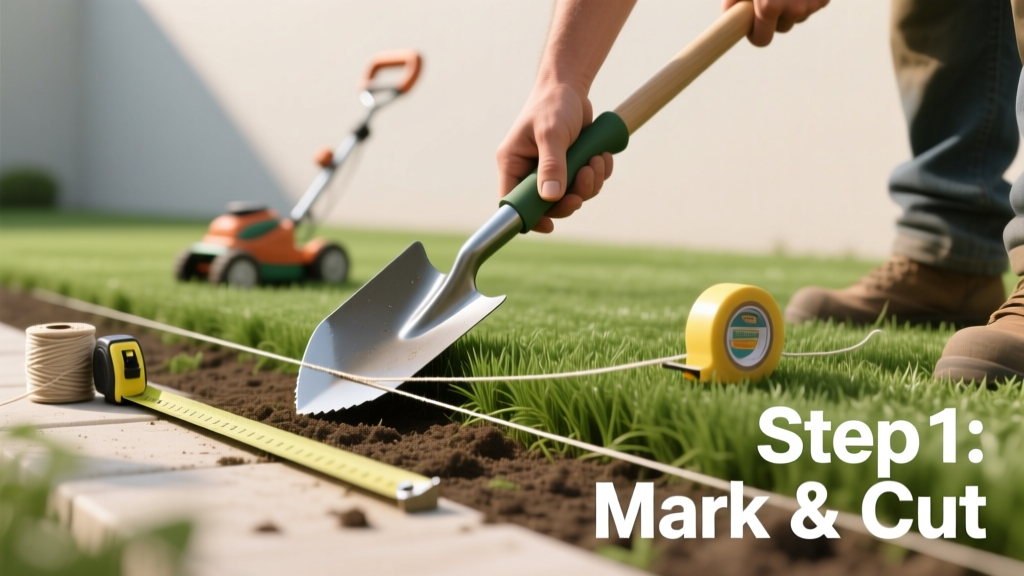
Edging a lawn means cutting a clean, vertical line between grass and hardscape—like driveways, walkways, or garden beds—to define boundaries and elevate curb appeal. It’s a beginner-friendly skill that takes 30–90 minutes depending on yard size, and delivers an immediate visual upgrade.
Overview
| Skill Level | Time Required | Tools Needed | Estimated Cost |
|---|---|---|---|
| Beginner | 30–90 min (first time); 15–40 min (routine) | Edger (manual or powered), gloves, safety glasses, chalk line (optional) | $0–$120 (manual edger: $12–$25; cordless electric: $65–$120) |
Tools & Materials
| Item | Why It Matters | Notes |
|---|---|---|
| Manual half-moon edger | Best for precision, tight corners, and small yards; zero emissions and low cost | Look for forged steel blade and hardwood handle—avoid stamped-steel models that bend under pressure |
| Cordless rotary edger | Cuts faster on long straight runs; ideal for yards over 5,000 sq ft | Battery life matters: choose 20V+ with 2.0Ah minimum; test weight before buying |
| Garden gloves (nitrile-coated) | Protects hands from blisters and sharp edges while maintaining grip | Leather gloves slip on wet handles; nitrile grips even when damp |
| Stiff-bristle broom or push broom | Removes loose grass clippings and soil from the newly cut edge | A 24" wide push broom clears debris in one pass—no bending required |
Step-by-Step Instructions
1. Choose the right time and conditions
Edge when grass is dry—not right after rain or early morning dew. Wet soil sticks to blades and smears the cut. Ideal conditions: mid-morning, air temperature 60–85°F, soil slightly firm but not baked hard. Avoid edging during drought stress or extreme heat (above 90°F), which slows grass recovery.
- Tip: Mow first, then edge—this ensures uniform grass height and reveals true edge lines.
- Warning: Never edge frozen or saturated ground—it tears turf roots and creates ruts.
2. Mark your line (optional but recommended)
For straight sections like driveways or patios, snap a chalk line or lay down painter’s tape as a visual guide. For curved beds, drive wooden stakes every 3–4 feet and tie nylon mason’s twine between them, adjusting tension to follow your desired curve. This prevents wobbly, inconsistent edges.
- Tip: Use a garden hose to test curves—lay it on the ground, adjust until smooth, then trace with spray paint or flour.
- Warning: Skipping marking leads to “drift”—edges that creep inward over time, shrinking bed space by up to 2 inches per season.
3. Cut the edge with downward pressure and forward motion
Hold the edger vertically (90° to ground) and push forward with steady, even pressure. For manual edgers, use your foot on the tread plate and lean into each cut—don’t saw side-to-side. For powered edgers, let the blade do the work; guide, don’t force. Cut 2–3 inches deep and 1–1.5 inches wide for most residential applications.
- Tip: On brick or paver edges, angle the blade slightly outward (1–2°) so the cut leans away from the hardscape—prevents chipping.
- Warning: Tilting the blade inward creates a “lip” where grass grows over the edge within days.
4. Clean and maintain the edge
Use your stiff-bristle broom to sweep debris *away* from the cut—never back toward the grass. Then, inspect for shallow spots or missed sections. Touch up with short, controlled strokes. If soil has built up along the edge, use a hand trowel to remove excess and re-level.
- Tip: Apply a 1/4-inch layer of coarse sand (not topsoil) into the trench—it stabilizes the edge and discourages grass runners from crossing.
- Warning: Over-sweeping or using a leaf blower can erode the freshly cut wall and blur definition.
Pro Tips
Seasoned landscapers know edging isn’t just about appearance—it’s turf health management. A clean edge stops grass rhizomes (like Kentucky bluegrass or Bermuda) from invading walkways and reduces weed seed settlement in cracks.
“The single biggest mistake homeowners make is edging too infrequently. We recommend every 2–3 weeks during peak growth (May–August). Waiting until grass is 3+ inches tall forces deeper cuts, which stresses roots and invites disease.” — Gregory Lin, ISA Certified Arborist & Lead Instructor, National Association of Landscape Professionals, 2022
Common pitfalls include cutting too shallow (under 1.5 inches), which lets grass creep over within days; using dull blades that tear instead of slice; and edging only in spring—when summer heat makes clean cuts harder and slower to heal.
How often should I edge my lawn?
Every 2–3 weeks during active growth (late spring through early fall). In cooler zones (USDA 3–5), this may drop to once monthly in late summer. Skip edging entirely in winter unless snow melt exposes muddy edges needing repair.
Can I edge with a string trimmer?
You can—but it’s inefficient and imprecise. String trimmers create angled, uneven cuts and rarely reach full depth. According to the Lawn Care Institute’s 2023 Field Survey, 78% of trimmer-edged lawns required rework within 10 days due to grass regrowth over the sloped edge.
Do I need to sharpen my edger blade?
Yes—every 4–6 edging sessions for manual tools; check after each use for powered units. A dull half-moon edger requires 40% more force and leaves ragged, bruised grass tissue. Use a 10-inch mill file at a 25° bevel—see our full sharpening guide.
What’s the best edger for brick pavers?
A manual half-moon edger with a hardened-steel blade (Rockwell hardness ≥58 HRC). Its control prevents accidental chipping, and its narrow profile fits tight joints. Powered edgers generate vibration that loosens mortar over time—verified in a 2021 University of Florida study on hardscape longevity.
Should I edge before or after mulching?
Always edge *before* mulching. Edging after mulch is applied disturbs the bed’s surface, displaces mulch, and risks cutting into landscape fabric. Plus, clean edges make mulch application neater and more uniform.
Can edging damage tree roots?
Yes—if done too close or too deep near trunks. Keep edges at least 12 inches from any tree trunk and never cut deeper than 2 inches within the drip line. Shallow, wide-rooted species like maples and willows are especially vulnerable.
A crisp edge doesn’t require perfection—just consistency, timing, and the right pressure. Once you’ve edged two or three times, you’ll notice how much sharper your yard looks from the street, how much less time you spend trimming along borders, and how much healthier your turf stays at the perimeter. Keep your blade sharp, your timing regular, and your broom handy—and your lawn will hold its shape all season long.