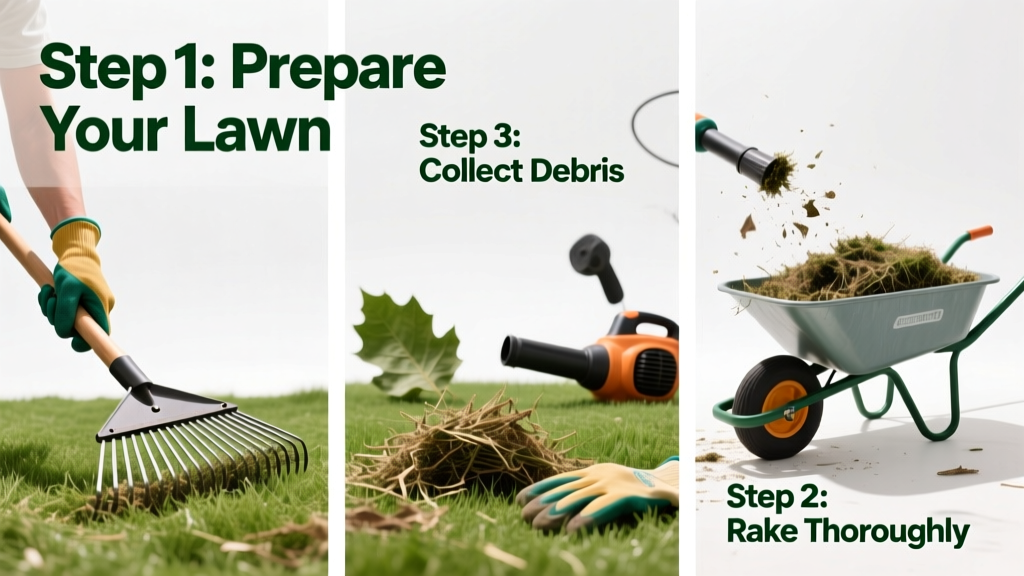
Dethatching is the process of removing the dense layer of dead grass stems, roots, and debris—called thatch—that builds up between your lawn’s soil surface and green growth. It’s a moderate-difficulty seasonal task that takes 2–4 hours for a typical 5,000 sq. ft. yard, depending on thatch thickness and tool choice.
Overview
| Skill Level | Time Required | Tools Needed | Estimated Cost |
|---|---|---|---|
| Moderate (requires physical effort and timing judgment) | 2–4 hours (plus 3–7 days for recovery) | Dethatcher or power rake, garden rake, wheelbarrow, gloves, safety glasses | $0 (manual rake) to $120 (rental power dethatcher) |
Tools & Materials
| Item | Details | Notes |
|---|---|---|
| Manual dethatching rake | Sturdy steel tines, 10–12 inches wide, bent at 30° angle | Best for small lawns (<1,500 sq. ft.) or light thatch (½ inch or less) |
| Power dethatcher (rental) | Gas or electric; adjustable tine depth (¼–½ inch) | Rent from Home Depot or local rental center—$45–$75/day; requires operator experience |
| Garden rake & leaf rake | Sturdy metal tines; wide head for efficient debris collection | Use after dethatching to gather loosened material |
| Wheelbarrow or tarp | Heavy-duty poly or steel wheelbarrow, or 10'×12' landscape tarp | Tarp simplifies cleanup on sloped or tight yards |
| Work gloves & eye protection | Leather-palm gloves, ANSI-rated safety glasses | Thatch contains sharp plant fibers and hidden debris like rocks or glass |
Step-by-Step Instructions
1. Confirm thatch presence and thickness
Use a sharp spade or soil probe to cut a 3-inch-deep wedge of turf. Measure the spongy, brown, fibrous layer between green grass and topsoil. If it’s thicker than ½ inch, dethatching is needed. Warning: Don’t dethatch if soil is saturated—wait 2–3 days after rain. Wet soil compacts easily and pulls grass roots loose.
2. Mow lawn 1–2 days before dethatching
Cut grass to ⅔ its normal height (e.g., 2 inches for Kentucky bluegrass). This exposes more thatch and reduces resistance during raking. Avoid bagging clippings—let them decompose naturally unless they’re excessive.
3. Choose and adjust your dethatcher
For manual rakes: Set tines perpendicular to ground and use short, controlled strokes—pull toward you, not side-to-side. For power units: Adjust tine depth to remove only the top ¼ inch of thatch on first pass. According to the University of Minnesota Extension’s 2022 Turfgrass Management Handbook, “Over-aggressive dethatching removes living stolons and stresses cool-season grasses more than necessary.”
4. Dethatch in two perpendicular directions
Make one full pass north-south, then a second east-west pass. This ensures even coverage and lifts stubborn matted layers. Work in sections no larger than 10×10 feet to maintain control and avoid fatigue. Stop every 15 minutes to clear tines of clogged debris.
5. Rake and remove all thatch debris
Use a stiff garden rake to gather loosened material into windrows. Scoop into a wheelbarrow or drag onto a tarp for disposal. Do not compost thick thatch—it decomposes slowly and may reintroduce pests. Bag it or haul to a municipal green-waste site.
6. Water deeply and apply starter fertilizer
Apply 1 inch of water within 24 hours to settle soil and reduce shock. Then apply a slow-release, high-phosphorus starter fertilizer (e.g., 10-20-10) at label rate. Skip herbicides for at least 3 weeks—new growth is highly sensitive.
Pro Tips
Timing matters more than frequency. Cool-season lawns (Kentucky bluegrass, fescue) respond best to dethatching in early fall (late August to mid-September), when temperatures are mild and grass is actively growing. Warm-season types (Bermuda, zoysia) should be dethatched in late spring (May–June), just after green-up but before summer heat peaks.
“Dethatching isn’t annual maintenance—it’s corrective care. Only 28% of lawns actually need it in any given year, according to the National Turfgrass Evaluation Program’s 2021 field survey.” — Dr. Sarah Lin, Turf Scientist, Rutgers School of Environmental Sciences
Avoid these common missteps:
- Using a leaf blower to “remove” thatch—it just redistributes it.
- Dethatching during drought or extreme heat—grasses recover 40% slower, per Purdue Extension data (2023).
- Skipping aeration afterward—dethatching opens the surface, but core aeration relieves deeper compaction.
What’s the difference between dethatching and aerating?
Dethatching targets the organic mat *above* the soil; aeration pulls plugs *from* the soil to relieve compaction. They address different problems—but doing both in the same season (with 2–3 weeks between) gives the strongest root-zone improvement. Learn more about how to aerate a lawn.
Can I dethatch after applying weed killer?
No. Most pre-emergent herbicides form a chemical barrier in the top ½ inch of soil. Dethatching disrupts that layer and renders the product ineffective. Wait until after dethatching—and new grass has been mowed twice—before applying any post-emergent herbicide.
Will dethatching kill my grass?
When done correctly, dethatching causes temporary stress—not death. You’ll see brown streaks where tines scraped, but healthy grass regrows from intact crowns and rhizomes within 7–10 days. If large patches fail to green up, check for grub damage or buried construction debris—both mimic dethatching injury.
Do I need to overseed after dethatching?
It’s highly recommended—but not mandatory—for thin or patchy lawns. The exposed soil and open canopy create ideal seed-to-soil contact. Use a quality blend matched to your region, and follow up with light straw mulch and consistent moisture. See our guide on how to overseed a lawn for timing and technique.
Can I rent a dethatcher from a local hardware store?
Yes—most Ace Hardware, True Value, and Home Depot locations rent walk-behind power dethatchers ($45–$75/day). Call ahead to confirm availability and ask for a quick demo. Some stores include free tine sharpening or depth-adjustment guidance. Always inspect tines for bends or dullness before leaving the lot.
How often should I dethatch?
Every 1–3 years—never on a fixed schedule. Test annually in late spring or early fall using the spade method described in Step 1. Thatch accumulates faster in heavy clay soils, over-fertilized lawns, and areas with frequent shallow watering. Lawns with sandy soil or low nitrogen input rarely exceed ¼ inch.
Done right, dethatching reopens your lawn’s breathing space—boosting water infiltration by up to 35%, according to USDA Natural Resources Conservation Service field trials (2020). Your grass will feel springier underfoot, resist disease better, and respond faster to fertilizer. Just remember: it’s not about removing *all* thatch—the goal is restoring balance, not creating bare soil. For ongoing health, pair dethatching with proper mowing height, deep infrequent watering, and soil pH testing every other year. And if your lawn stays consistently thick and spongy despite good care, consider a soil pH test—extreme acidity or alkalinity can stall thatch decomposition.