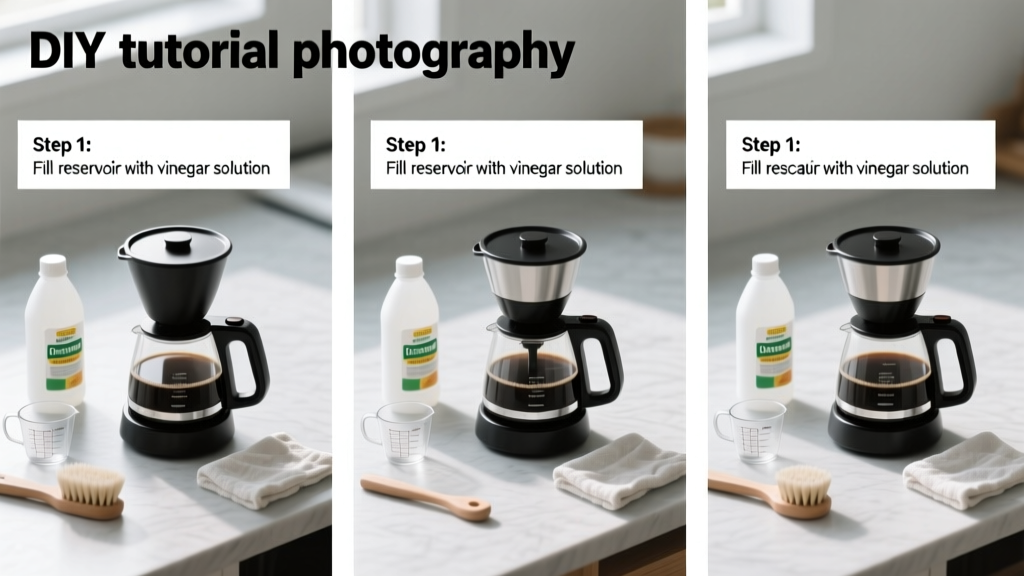
Descaling a coffee maker is a simple maintenance skill that keeps your brew tasting clean and your machine running reliably. It’s beginner-friendly, takes 30–45 minutes (plus waiting time), and requires no special tools—just household items or a $5–$12 descaling solution.
Overview
| Skill Level | Time Required | Tools Needed | Estimated Cost |
|---|---|---|---|
| Beginner | 30–45 min active + 30 min dwell time | Coffee maker, measuring cup, white vinegar or descaler, clean water | $0–$12 |
Tools & Materials
| Item | Quantity | Notes |
|---|---|---|
| White vinegar (5% acidity) OR commercial descaler | 16–20 oz (½–⅔ carafe) | Vinegar works for most drip machines; use citric acid–based descalers for espresso or single-serve units per manufacturer specs |
| Clean, cold water | Full carafe (or as needed) | Always rinse thoroughly—residual vinegar or descaler affects taste and safety |
| Clean microfiber cloth or paper towels | 2–3 | For wiping exterior surfaces and drip tray |
| Small funnel (optional) | 1 | Helps avoid spills when pouring descaling solution into narrow reservoirs |
Step-by-Step Instructions
1. Unplug and cool down the machine
Never descale a hot or powered-on unit. Let it sit for at least 15 minutes after last use. Unplug it completely—this prevents accidental activation during cleaning and reduces electrical risk.
2. Empty and rinse all removable parts
Remove the carafe, filter basket, and water reservoir. Wash each in warm soapy water, then rinse thoroughly. Wipe the heating plate with a damp cloth to remove coffee oils and residue. Skip soap on rubber gaskets—they can degrade over time.
3. Prepare and pour the descaling solution
Mix 1 part white vinegar to 1 part water (e.g., 10 oz vinegar + 10 oz water). For heavily scaled machines (3+ months without descaling), use undiluted vinegar—but never exceed manufacturer-recommended concentrations. Pour directly into the water reservoir. Avoid overfilling past the “max” line.
4. Run a full brew cycle—and pause mid-cycle
Start the brew cycle, then pause it after 30 seconds of brewing (when ~¼ of the solution has passed through the system). Let it sit for 30 minutes—this dwell time dissolves limescale in the internal tubing and heating element. Resume the cycle once paused time ends.
- Tip: If your machine lacks a pause function, run half the cycle, unplug, wait 30 minutes, then plug back in and finish.
- Warning: Never leave vinegar sitting longer than 60 minutes—it can corrode metal components in older machines.
5. Rinse thoroughly with fresh water
Refill the reservoir with clean water and run two full brew cycles. Discard each batch. Use a third cycle if you detect any vinegar odor or taste. According to the National Coffee Association’s 2022 Maintenance Guidelines, incomplete rinsing is the #1 cause of post-descaling off-flavors.
Pro Tips
Descaling isn’t just about taste—it’s critical for longevity. The U.S. EPA estimates that hard water deposits reduce heating efficiency by up to 22% in appliances with thermal elements, shortening lifespan by 1–3 years.
“I see more coffee makers fail from scale-related overheating than from electrical faults. Descaling every 3 months—even with filtered water—is non-negotiable for machines used daily.” — Maria Chen, Appliance Technician, Certified by the Appliance Service Association (2023)
- Use filtered water daily to cut descaling frequency in half.
- Mark your calendar—or set a phone reminder—after each descaling. Most users forget until they notice weak flow or bitter taste.
- Never mix vinegar and commercial descaler. Residue reactions can create harmful fumes or clog valves.
How often should I descale my coffee maker?
Every 1–3 months, depending on usage and water hardness. If you brew 4+ cups daily in a hard-water area (above 7 grains per gallon), descale monthly. In soft-water zones with light use (<2 cups/day), every 3 months suffices. You’ll know it’s time when brewing slows, steam smells metallic, or the machine displays a “clean” alert.
Can I use lemon juice instead of vinegar?
No. Lemon juice contains citric acid, but its variable concentration (3–6%) and natural sugars increase mold risk in reservoirs and tubing. Stick to distilled white vinegar (5% acetic acid) or NSF-certified descalers like Urnex Dezcal or Durgol Swiss Espresso.
Why does my coffee taste sour after descaling?
Residual vinegar or descaler remains in the system. Run at least three full water-only cycles and sniff the steam port before brewing coffee. If sourness persists, disassemble and hand-wash the showerhead (on drip models) or backflush your espresso group head.
Do Keurig or Nespresso machines need descaling too?
Yes—especially Keurig K-Cup brewers, which heat water rapidly in narrow chambers prone to rapid scale buildup. Follow the exact instructions in your model’s manual: many require proprietary descaling solutions or specific button sequences to enter descaling mode. See our how to clean a Keurig K-Cup machine for model-specific steps.
Is descaling the same as cleaning?
No. Cleaning removes coffee oils and grounds from baskets, carafes, and grinders. Descaling targets mineral deposits inside heating elements and tubing. Both are essential—but neither replaces the other. For best results, clean weekly and descale quarterly.
What if my machine won’t brew after descaling?
First, check for residual solution blocking the water path. Run one more water cycle. If that fails, unplug the unit for 10 minutes to reset electronics. If still unresponsive, consult your manual’s troubleshooting section—or refer to our coffee maker not turning on guide for power diagnostics.
Regular descaling takes less time than troubleshooting a stalled machine or replacing a $150 brewer prematurely. Once you’ve done it twice, it becomes second nature—like refilling the bean hopper. Keep vinegar in your pantry, set that calendar reminder, and enjoy consistently rich, balanced coffee for years to come.