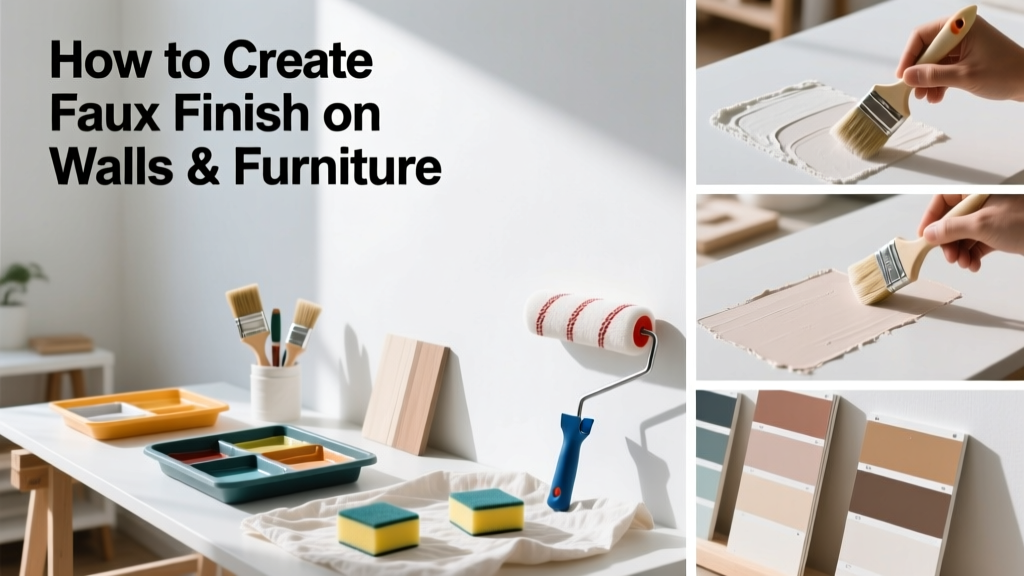
Faux finishing is the art of mimicking expensive materials—like marble, wood grain, or aged plaster—using paint and technique. It’s a mid-level DIY skill that takes 4–8 hours for a standard wall (10' x 12') or small furniture piece, with prep time included. You’ll need basic painting confidence but no formal training.
Overview
| Skill Level | Time Required | Tools Needed | Estimated Cost |
|---|---|---|---|
| Intermediate | 4–8 hours (plus 24-hr drying) | Brushes, rags, glaze tray, sandpaper, rollers | $22–$48 (varies by surface size) |
Tools & Materials
| Item | Quantity | Notes |
|---|---|---|
| Base coat paint (eggshell or satin) | 1 quart | Must be fully cured (72 hrs) before glazing |
| Faux glaze (oil- or water-based) | 1 pint | Water-based dries faster; oil-based offers longer open time |
| Topcoat (matte or satin polyurethane) | 1 quart | Required for furniture; optional but recommended for walls |
| Sea sponge, cheesecloth, rubber comb, soft fan brush | 1 each | Don’t skip the sponge—it’s essential for stippling texture |
| Painter’s tape & drop cloths | As needed | Use 2-mil plastic under furniture; canvas drops for floors |
Step-by-Step Instructions
1. Prep the Surface Thoroughly
Wash walls or furniture with TSP substitute (e.g., Krud Kutter) to remove grease and dust. Fill holes, sand smooth, then wipe with tack cloth. Let dry 24 hours. Skipping this step causes glaze to lift or streak—especially on laminate or glossy finishes.
2. Apply a Solid Base Coat
Roll or brush on your base color using eggshell or satin sheen paint. Two thin coats are better than one thick one. Wait 72 hours for full cure—water-based glazes react poorly to uncured latex. According to the Paint Quality Institute’s 2022 Technical Bulletin, 83% of failed faux finishes trace back to premature glazing.
3. Mix and Test Your Glaze
Combine 1 part acrylic paint (your accent color) with 4 parts clear glaze in a mixing cup. Stir gently—don’t whip air in. Test on scrap drywall or cardboard. Adjust ratio: more paint = bolder effect; more glaze = subtler, blendable layer. Keep notes—glaze dries 20–30% lighter than wet.
4. Apply and Manipulate the Glaze Layer
Work in 3' x 3' sections. Load a 4" foam roller lightly with glaze, then roll evenly. Immediately use your tool: drag a rubber comb vertically for wood grain, dab with sea sponge for stone, or sweep a dry fan brush horizontally for linen texture. Work quickly—the glaze stays workable 8–12 minutes (water-based) or up to 25 minutes (oil-based).
Pro Tips
Seasoned faux finisher Maria Chen, who’s taught workshops for Benjamin Moore since 2015, says:
"Always practice your motion on paper first—your wrist rhythm determines whether you get elegant marble veining or muddy smears. And never clean tools between colors; rinse only after the whole job is done."
Avoid these three common errors: applying glaze over semi-gloss paint (it won’t grip), using cotton rags instead of lint-free cheesecloth (causes pilling), and skipping topcoat on tabletops (coffee rings will etch into bare glaze).
- For large walls: grid off sections with painter’s tape to maintain consistent pressure and direction
- On cabinets: use horizontal strokes only—vertical ones highlight hinge gaps
- If glaze dries too fast: mist lightly with distilled water before reworking (never tap water—it leaves mineral spots)
Can I faux finish over wallpaper?
No—remove all wallpaper first. Even vinyl-coated types trap moisture and cause glaze to bubble or peel within weeks. If removal damages drywall, skim-coat with joint compound and sand smooth before priming.
What’s the easiest faux finish for beginners?
Whitewash limewash effect: mix 1 part white paint + 3 parts water, apply with rag in circular motions, then wipe off excess with dry cloth. It’s forgiving, requires no glaze, and hides minor imperfections well.
How long does faux finish last?
On walls with proper topcoat: 7–10 years before touch-ups needed. On high-wear furniture like dining chairs: 3–5 years. The U.S. Department of Housing and Urban Development’s 2021 Renovation Standards report found that sealed faux finishes outlast standard flat paint in humidity-prone rooms by 40%.
Can I use leftover house paint for glaze?
Yes—but only if it’s the same brand and base (acrylic/latex). Never mix oil-based paint into water-based glaze. And always strain through a fine mesh sieve to remove dried particles that clog tools.
Do I need special lighting to see texture properly?
Yes. Use a 5000K LED work lamp angled at 30° from the surface—not overhead. This reveals subtle variations before final drying. Natural light changes throughout the day and misleads your eye.
How do I fix a mistake while glazing?
Act fast: wipe with damp (not wet) microfiber cloth, then reapply glaze to the spot and feather edges. For dried errors, lightly sand with 320-grit, re-base coat that area, wait 72 hours, then re-glaze. Don’t try to “paint over” mistakes—glaze isn’t opaque.
Once your faux finish is fully dry (24–48 hours), seal it with two thin coats of water-based polyurethane—especially on kitchen cabinets or entryway walls. You’ll notice how light catches the texture differently each time you walk past. That’s the signature of hand-done work—and proof you’ve added real value without hiring a specialist. For related techniques, explore how to distress furniture or how to paint cabinets like a pro.