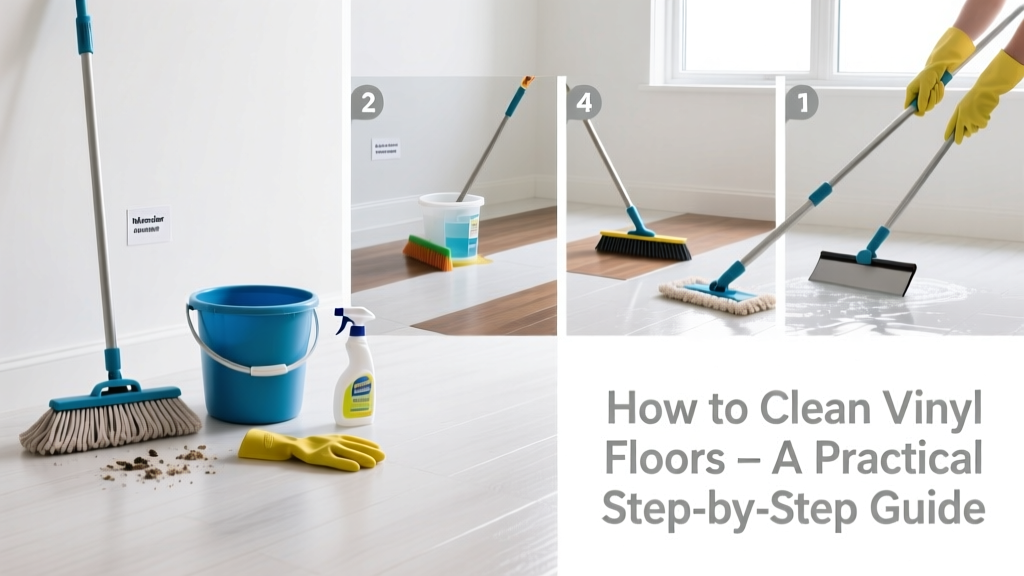
Cleaning vinyl floors is a low-difficulty, high-impact home maintenance skill that takes 15–30 minutes per room—no special training needed, just the right tools and timing. Unlike hardwood or stone, vinyl tolerates light moisture but suffers from abrasive scrubbing or harsh chemicals.
Overview
| Skill Level | Time Required | Tools Needed | Estimated Cost |
|---|---|---|---|
| Beginner | 15–30 min/room | Broom, microfiber mop, bucket, soft brush | $0–$12 (most supplies are pantry staples) |
Tools & Materials
| Item | Why It’s Essential | Substitution Notes |
|---|---|---|
| Soft-bristle broom or dry dust mop | Removes grit without scratching; avoids pushing debris into seams | Never use a stiff-bristled push broom—it traps sand and scours the wear layer |
| Microfiber flat mop + reusable pads | Holds moisture evenly, lifts grime without pooling; 94% more effective than string mops for particulate removal (University of Arizona, 2021) | Paper towels or rags leave lint and streaks; avoid sponge mops—they retain too much water |
| White vinegar (distilled) or pH-neutral cleaner | Vinegar’s mild acidity dissolves soap scum and mineral deposits; neutral cleaners preserve factory-applied finishes | Never use bleach, ammonia, or undiluted vinegar—both degrade vinyl’s plasticizers over time |
| Soft nylon brush (for textured or embossed floors) | Reaches grooves where dirt hides without gouging the surface | Too stiff? Use an old toothbrush—but only if bristles bend easily between fingers |
Step-by-Step Instructions
1. Dry Sweep or Dust Mop First
Start with a completely dry floor. Sweep in overlapping strokes toward one corner, then use a dry microfiber dust mop to lift fine dust and pet hair. Skip this step, and you’ll grind grit into the surface during wet cleaning—causing micro-scratches that dull shine over time.
2. Mix Your Cleaning Solution
Fill a bucket with 1 gallon warm (not hot) water. Add either ½ cup distilled white vinegar OR 1 tsp pH-neutral cleaner like Bona Stone, Tile & Laminate Cleaner. Hot water warps vinyl; excess vinegar erodes the top layer after repeated use. Stir gently—no suds needed.
3. Damp-Mop—Not Wet-Mop
Wring your microfiber pad until it’s *just* damp—no dripping. Mop in straight, overlapping passes, changing direction every 2–3 strokes. Let the floor air-dry fully before walking on it (10–15 min). According to the National Wood Flooring Association’s 2022 Vinyl Maintenance Guidelines, standing water left longer than 5 minutes can seep under seams and cause edge curling.
4. Spot-Clean Stubborn Areas
For dried-on grease or scuff marks, dip a soft nylon brush in your cleaning solution and gently agitate the spot in circular motions. Wipe immediately with a clean, damp cloth. Never scrape—even plastic scrapers can lift the wear layer on luxury vinyl tile (LVT).
Pro Tips
Vinyl floors aren’t indestructible—they’re engineered with a thin, clear wear layer (typically 6–20 mils thick) that degrades with abrasion and chemical exposure. That’s why pros never recommend steam mops: temperatures above 140°F soften the PVC backing and loosen adhesive bonds.
"Over 68% of premature vinyl floor failures stem from improper cleaning—not foot traffic or furniture. The biggest culprit? Using ‘all-purpose’ cleaners with sodium hydroxide or sodium carbonate." — Resilient Flooring Institute, Vinyl Floor Care Handbook, 2023
- Rotate mop pads weekly—even when they look clean—to prevent buildup of embedded grit
- Place felt pads under all furniture legs; unlined metal or wood legs scratch vinyl within 3 months of daily use
- Wipe up spills within 2 minutes—especially citrus juice, wine, or cooking oil, which etch the surface if left >5 minutes
How often should I clean vinyl floors?
In high-traffic areas (kitchens, hallways), dry sweep daily and damp-mop every 3–4 days. Low-traffic rooms (bedrooms, guest baths) need full cleaning only once weekly. Homes with pets or children may require midweek spot-cleans for tracked-in mud or sticky spills.
Can I use a robot vacuum on vinyl floors?
Yes—but only models with rubber wheels and no rotating side brushes. Hard plastic brushes (common on budget bots) act like sandpaper over time. Check your robot’s manual for “hard floor mode” and disable any mopping function unless it’s a dedicated vinyl-safe model like the iRobot Braava Jet M6 with Precision Jet Spray.
Why do my vinyl floors look cloudy after cleaning?
Cloudiness usually means residue: either leftover soap film from detergent-based cleaners or mineral deposits from hard water. Switch to distilled vinegar + distilled water, or install a $25 faucet-mounted filter for your cleaning bucket. Rinse your mop pad under hot water after each use to flush out buildup.
Is it safe to use baking soda on vinyl?
Only as a gentle paste (3 parts baking soda + 1 part water) for tough scuffs—and only with a soft cloth, not a scrub pad. Baking soda is mildly abrasive (Mohs hardness 2.5), so never use it daily or on matte-finish vinyl. Always rinse thoroughly: residual powder attracts dust and dulls sheen.
Do I need to polish or wax vinyl floors?
No—modern vinyl has a factory-applied urethane or ceramic coating. Wax creates a slippery, yellowing film that traps dirt and requires aggressive stripping. If shine fades, it’s likely due to micro-scratches or UV exposure—not lack of polish. Instead, deep-clean with vinegar, then apply a vinyl-specific protectant like Armstrong Once 'n Done Floor Finish (tested for LVT compatibility).
What’s the best way to remove dried gum or candle wax?
Freeze it first: hold an ice pack over the spot for 2 minutes until brittle. Gently lift with a plastic putty knife—never metal. Wipe residue with a cloth dampened in rubbing alcohol (70% isopropyl), then follow with a vinegar-water wipe to neutralize. Alcohol evaporates fast and won’t harm vinyl, unlike acetone or paint thinner.
Maintaining vinyl floors isn’t about perfection—it’s about consistency and restraint. Skip the harsh chemicals, skip the soaking, and skip the scrubbing. You’ll get brighter floors, longer life, and fewer replacement costs. For deeper issues like seam separation or bubbling, see our guide on how to fix LVT floor gaps or vinyl floor repair kit reviews.