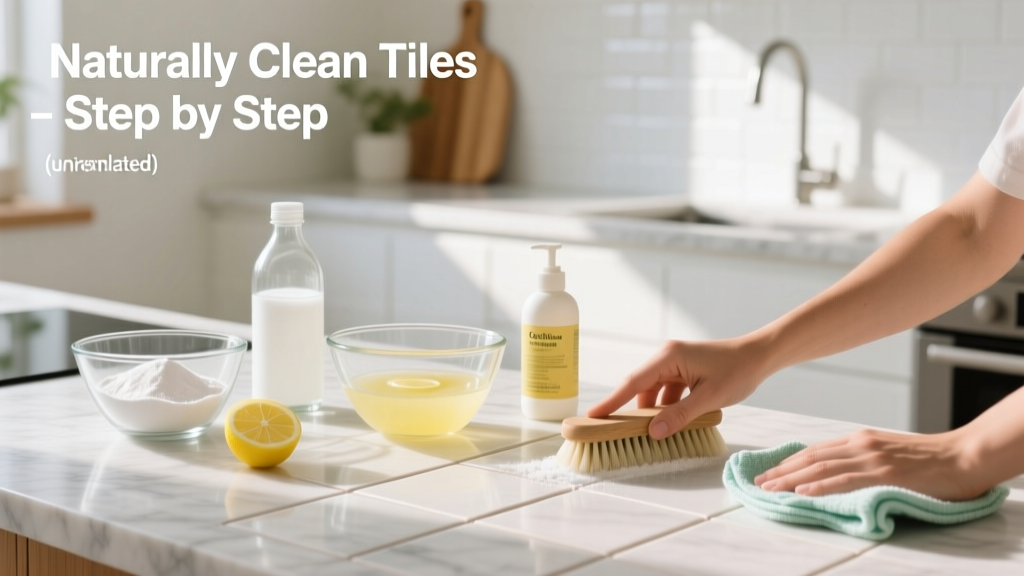
Cleaning tile naturally means removing built-up grime, soap scum, and mildew without bleach, ammonia, or synthetic surfactants—using ingredients you likely already have in your pantry. This skill is beginner-friendly, takes 30–60 minutes per room, and works on ceramic, porcelain, and sealed stone tile (but not unsealed natural stone like marble or limestone).
Overview
| Skill Level | Time Required | Tools Needed | Estimated Cost |
|---|---|---|---|
| Beginner | 30–60 min per 100 sq ft | Soft-bristle brush, microfiber cloths, spray bottle, grout brush | $3–$8 (most supplies cost under $5; castile soap is the priciest at ~$4–$8 per bottle) |
Tools & Materials
| Ingredient | Purpose | Notes |
|---|---|---|
| White vinegar (5% acidity) | Dissolves mineral deposits, soap scum, and light mold | Do not use on unsealed grout or natural stone—acid can etch surfaces |
| Baking soda (sodium bicarbonate) | Gentle abrasive for scrubbing; neutralizes odors | Use aluminum-free baking soda for consistent performance |
| Liquid castile soap (unscented or tea tree oil–infused) | Plant-based surfactant that lifts grease and organic matter | Avoid peppermint or citrus variants if pets are present—they can be toxic to cats |
| Hydrogen peroxide (3%) | Non-chlorine disinfectant for grout stains and mildew | Store in dark bottle; loses potency after 6 months |
Step-by-Step Instructions
1. Dry Sweep and Vacuum First
Remove loose dust, hair, and debris with a soft-bristle broom or vacuum with a hard-floor attachment. Skip this step, and you’ll just grind grit into grout lines during wet cleaning. For high-traffic kitchens or bathrooms, do this weekly—even between deep cleans.
2. Mix Your All-Purpose Cleaner
In a 16-oz spray bottle, combine 1 cup white vinegar, 1 cup warm water, and 1 tsp unscented liquid castile soap. Shake gently—don’t over-shake, or it will foam excessively and clog the sprayer. Warning: Never mix vinegar with hydrogen peroxide or baking soda in the same bottle—it neutralizes both ingredients’ effectiveness.
3. Spray and Soak Grout Lines
Lightly mist grout joints—not the tile surface—and let sit for 5–7 minutes. Vinegar breaks down calcium deposits; castile soap helps suspend soil. For stubborn black grout stains, switch to a paste: mix 3 parts baking soda with 1 part 3% hydrogen peroxide. Apply with an old toothbrush, wait 10 minutes, then scrub.
4. Scrub and Rinse Thoroughly
Use a stiff nylon grout brush (not wire—too abrasive) for grout, and a microfiber mop pad or damp sponge for tile. Rinse with clean water using a second microfiber cloth or squeegee. Residue left behind attracts new dirt—especially castile soap film, which can leave streaks if not rinsed well.
Pro Tips
According to the American Lung Association’s 2022 Indoor Air Quality Report, conventional bathroom cleaners contribute to 27% of volatile organic compound (VOC) exposure in homes—making natural alternatives especially valuable for asthmatics and young children.
“Baking soda isn’t just a scrubber—it buffers pH. When mixed with vinegar on grout, it creates a brief effervescence that lifts embedded biofilm without damaging cement-based grout.” — Dr. Lena Cho, Environmental Chemist, Building Science Institute, 2023
- Test any solution on a hidden tile corner first—especially if your grout is epoxy-based or your tile has a matte glaze
- Never use vinegar on unsealed grout more than once monthly—it slowly degrades the Portland cement binder
- For daily maintenance, wipe floors with a damp microfiber cloth and 1 tsp castile soap per quart of water
Can I use lemon juice instead of vinegar?
No. Lemon juice is less acidic (pH ~2.0–2.6 vs. vinegar’s pH ~2.4–3.4), but its citric acid is more reactive with calcium carbonate in grout and can cause faster deterioration. Stick with distilled white vinegar for consistency and safety.
Will baking soda scratch my tile?
Not on glazed ceramic or porcelain—its Mohs hardness is 2.5, well below tile’s 6–7. But avoid it on polished natural stone (e.g., travertine) or acrylic tub surrounds, where even mild abrasives can dull finishes.
How often should I deep-clean tile naturally?
Every 4–6 weeks in bathrooms; every 8–12 weeks in low-moisture areas like kitchen backsplashes. High-humidity zones benefit from weekly vinegar-water wipes (1:3 ratio) on grout to inhibit mold regrowth.
Why does my natural cleaner leave a cloudy film?
That’s usually undiluted castile soap residue or hard-water minerals reacting with vinegar. Always rinse with distilled or filtered water in hard-water areas—and reduce castile soap to ½ tsp per cup of solution if streaking persists.
Can I steam-clean tile with natural methods?
Yes—but skip adding vinegar or essential oils to the steam tank. Heat deactivates vinegar’s acetic acid, and oils can clog internal valves. Use plain steam + a microfiber pad, then follow up with a quick vinegar-water wipe only on grout.
Does hydrogen peroxide bleach grout?
At 3%, it lightens biological staining (mold, mildew) but won’t alter the pigment in properly sealed sanded grout. Unsealed grout may lighten slightly after repeated applications—so seal grout annually with a penetrating silane-siloxane sealer like this top-rated option.
Natural tile cleaning isn’t about perfection—it’s about consistency, smart ingredient pairing, and knowing when to pause and reassess. Keep a small spray bottle of vinegar-water in your shower caddy for post-shower wipe-downs, and refresh grout with baking soda paste every other month. Over time, you’ll spend less time scrubbing and more time enjoying clean, healthy surfaces. For deeper restoration, see our guide on how to regrout tile or how to remove grout haze.