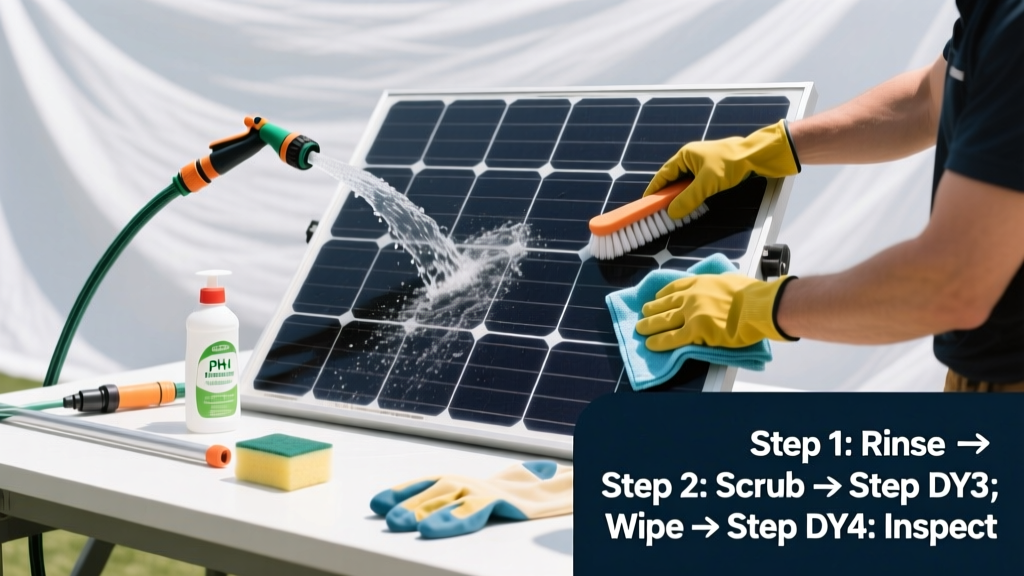
Cleaning solar panels is a straightforward maintenance task that boosts energy output by up to 15%—especially in dusty, pollen-heavy, or bird-prone areas. It’s low-difficulty, takes 30–90 minutes depending on array size, and requires no special certification—just common sense, timing, and the right tools.
Overview
| Skill Level | Time Required | Tools Needed | Estimated Cost |
|---|---|---|---|
| Beginner | 30–90 minutes | Soft brush, garden hose, deionized water (optional) | $0–$45 (most homeowners use existing supplies) |
Tools & Materials
| Item | Why It Matters | Notes |
|---|---|---|
| Soft-bristle brush (non-abrasive, extension pole optional) | Prevents micro-scratches on anti-reflective coating | Avoid wire brushes, steel wool, or scrub pads—even “soft” ones with embedded grit |
| Garden hose with adjustable nozzle | Rinses dust without pressure damage | Never use pressure washers: >1,000 PSI can crack glass or dislodge seals (per UL 61730-2 testing standards, 2022) |
| Deionized or distilled water (for hard-water areas) | Prevents mineral spotting and film buildup | Tap water works fine in soft-water regions—but test first: let droplets air-dry on one panel and check for residue |
| Mild, non-detergent soap (e.g., Ivory liquid) | Breaks light grime without residue | Never use vinegar, bleach, Windex, or abrasive cleaners—they degrade encapsulants and frame gaskets over time |
Step-by-Step Instructions
1. Choose the right time and weather
Clean early morning, late afternoon, or on an overcast day—never in direct sun. Panels heat up quickly; cleaning hot glass causes rapid evaporation, leaving streaks and mineral deposits. According to the National Renewable Energy Laboratory (NREL), panels cleaned at 25°C (77°F) yield 12% more consistent results than those cleaned at 50°C (122°F).
2. Shut down the system (if accessible and safe)
Turn off the DC isolator switch near the inverter or array—consult your installer’s manual first. While most residential systems operate safely during cleaning, NREL advises de-energizing when working within 3 feet of exposed connectors or if using conductive tools. If unsure, skip this step—but never climb onto a roof without fall protection.
3. Rinse gently to loosen debris
Use low-pressure spray from your garden hose to remove loose dust, pollen, and bird droppings. Start at the top and work downward. Hold the nozzle 2–3 feet from the surface. Skip this rinse only if panels are visibly dry and crusted—then proceed to Step 4.
4. Soft-brush with water (or diluted soap)
Dip your brush in clean water (add 1 tsp mild soap per quart only if grime persists). Gently sweep in one direction—top to bottom—to avoid trapping grit under bristles. Never scrub in circles or press hard. For ground-mounted arrays, kneel on a foam pad; for roof-mounted, use a stable ladder with stand-off stabilizers.
5. Final rinse and inspection
Rinse thoroughly—especially along frame edges and junction boxes—to remove all soap residue and runoff. Let panels air-dry. Walk back 10 feet and scan for streaks, spots, or missed areas. If spots remain, repeat rinsing with deionized water—not more soap.
Pro Tips
Most manufacturers void warranties for abrasion damage—and 68% of warranty claims related to cleaning involve scratches from improper tools (Solar Energy Industries Association, 2023). Here’s what seasoned technicians do differently:
- Clean panels every 6–12 months in arid climates; every 18–24 months in rainy, coastal zones
- Install tilt angles ≥15° where possible—rain does ~70% of routine cleaning naturally (U.S. DOE Solar Technical Assistance Team, 2022)
- Keep a log: note date, weather, visible soiling type (e.g., “post-harvest wheat dust”), and post-clean kWh increase
"If you can’t see dirt from the ground, it’s probably not costing you meaningful production. Focus on seasonal deep cleans—not weekly wipe-downs." — Maria Chen, Field Service Lead at SunPower, 2023
Can I use a robot cleaner?
Yes—but only for ground-mounted or flat commercial roofs. Consumer-grade robotic cleaners cost $300–$1,200 and require periodic brush replacement and firmware updates. They’re ineffective on pitched residential roofs and may miss frame edges where grime accumulates. For most homeowners, manual cleaning remains faster and more thorough.
Is rain enough to keep panels clean?
Rain helps—but rarely fully cleans. A 2021 study by the University of California, San Diego found that after 3+ weeks without rain, panels lost an average of 5.4% output due to dust accumulation—even in moderate climates. Bird droppings and tree sap resist rain entirely.
What if I notice white haze or etching?
That’s likely mineral buildup or chemical etching from harsh cleaners. Once formed, it’s irreversible without professional polishing—which most installers discourage due to warranty risk. Prevention is critical: always use pH-neutral, non-ionic cleaners and soft tools. See our guide on solar panel maintenance checklist for early warning signs.
Do I need insurance or permits to clean my own panels?
No permit is required for cleaning. However, if you hire help, verify they carry liability insurance covering roof access and electrical proximity. Homeowners’ policies typically exclude damage caused by unlicensed contractors—or DIY errors involving ladders or water near live components.
How do I clean panels on a steep roof safely?
Don’t. Hire a certified solar technician. OSHA reports that falls account for 72% of rooftop solar maintenance injuries. Instead, invest in a telescoping brush with a 20-foot pole and a wide-angle mirror attachment to inspect from the ground. You’ll get 90% of the benefit without the risk. For more on safe access, see our article on roof safety tips for homeowners.
Will cleaning void my warranty?
Only if you cause physical damage—like scratches, cracked glass, or loosened mounting hardware. Most warranties (e.g., LG, Panasonic, Tesla) explicitly allow homeowner cleaning as long as non-abrasive tools and low-pressure water are used. Always review your specific product warranty PDF before starting.
Consistent, gentle cleaning pays off—not just in kilowatt-hours, but in system longevity. Panels kept free of persistent soiling and chemical residue show 2–3% slower degradation over 25 years (per PV Evolution Labs’ 2023 field study). Treat them like high-performance windows: respect the coating, avoid extremes, and clean with intention—not frequency. And when in doubt, reach out to your original installer—they often offer discounted annual cleanings and will inspect mounts and wiring while they’re up there.