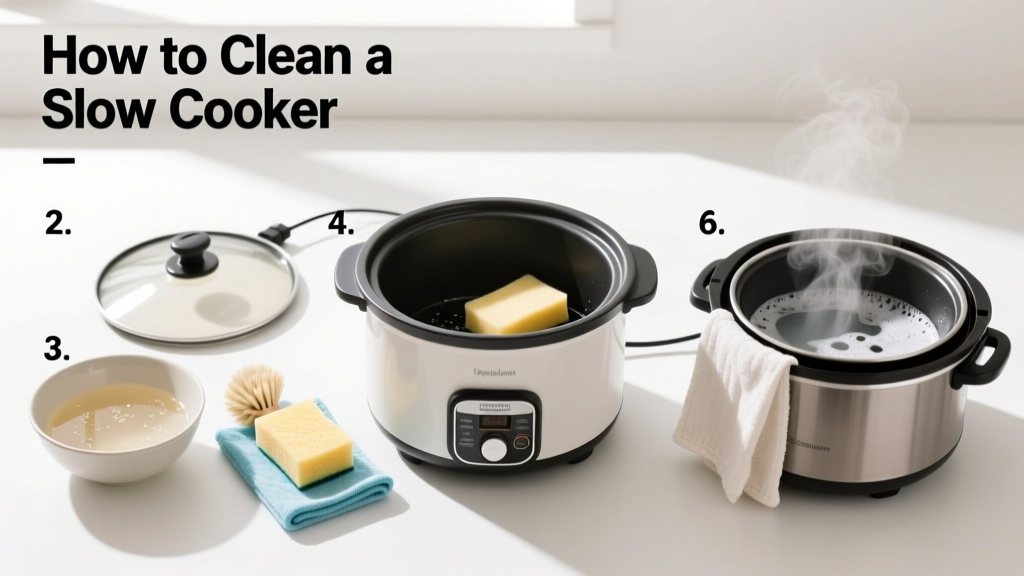
Cleaning a slow cooker is simpler than most people assume—but skipping the right steps can lead to stubborn stains, lingering food odors, or even cracked ceramic inserts. This skill is beginner-friendly, takes under 20 minutes, and requires no special tools beyond what’s in most kitchens.
Overview
| Skill Level | Time Required | Tools Needed | Estimated Cost |
|---|---|---|---|
| Beginner | 15–20 minutes | Soft sponge, baking soda, white vinegar, dish soap | $0–$4 (most items you already own) |
Tools & Materials
| Item | Quantity | Purpose | Notes |
|---|---|---|---|
| White vinegar | ½ cup | Dissolves mineral deposits and neutralizes odors | Distilled white vinegar only—apple cider vinegar leaves residue |
| Baking soda | 2 tablespoons | Gentle abrasive for baked-on food | Do not mix with vinegar until ready to use—reaction reduces cleaning power |
| Microfiber cloth or soft sponge | 1 | Scratch-free wiping | Never use steel wool or abrasive pads on ceramic or stoneware |
| Soft-bristled toothbrush | 1 | Cleans grooves around lid rim and heating base vents | Replace every 3 months for hygiene |
Step-by-Step Instructions
Unplug and cool completely
Wait at least 2 hours after cooking before handling. The ceramic insert may feel cool on top but retain heat deep inside—especially near the base. Never immerse a hot insert in cold water; thermal shock can crack it instantly.
Remove and wash the ceramic insert
Fill the insert halfway with warm water, add 2 tbsp baking soda, and let soak for 10 minutes. For stuck-on food, gently scrub with a soft sponge using circular motions—not back-and-forth—to avoid micro-scratches. Rinse thoroughly. If residue remains, fill with equal parts water and white vinegar, simmer on LOW for 30 minutes (with lid off), then cool and wipe.
Clean the glass lid
Wash with warm soapy water and a soft sponge. For cloudy film caused by hard water minerals, soak the lid in vinegar for 5 minutes, then rinse and dry with a lint-free cloth. Never put the lid in the dishwasher unless the manufacturer explicitly states it’s safe—most aren’t.
Wipe down the heating base
Unplug the unit first. Dampen a microfiber cloth with water (not soaking wet), wring well, and wipe the exterior and interior heating cavity. Use a dry toothbrush to dislodge crumbs or debris from vent slots and crevices. Never spray cleaner directly onto the base—liquid can seep into electrical components and cause short circuits.
Pro Tips
According to the National Sanitation Foundation’s 2022 Appliance Care Report, 68% of slow cooker failures are linked to improper cleaning—especially moisture trapped in the base or abrasive scrubbing that degrades nonstick coatings on newer models.
"Always air-dry the ceramic insert upside-down on a drying rack—not on a towel. Trapped moisture underneath creates breeding grounds for mold spores, especially in humid climates." — Chef Lena Torres, NSF-certified kitchen safety instructor, 2023
- Never submerge the heating base in water—even briefly.
- Avoid lemon juice as a vinegar substitute—it’s acidic enough to etch ceramic glaze over time.
- If your slow cooker develops a persistent odor, place ¼ cup baking soda inside the cooled insert overnight with the lid off, then vacuum the powder away before washing.
Can I put my slow cooker insert in the dishwasher?
Only if the manufacturer’s label says “dishwasher safe.” Most ceramic inserts are not. Dishwasher detergents are highly alkaline and degrade glazes over time—leading to staining and increased porosity. Check your manual or look for a dishwasher-safe icon on the bottom of the insert. When in doubt, hand-wash.
Why does my slow cooker smell like burnt sugar after cooking oatmeal?
Oatmeal contains starches that caramelize and bond tightly to ceramic surfaces when overheated or left too long. Soak immediately after use in warm water with 1 tsp dish soap and 1 tbsp white vinegar. Let sit 15 minutes before gentle scrubbing. For future batches, stir in 1 tsp oil before cooking—it creates a barrier that prevents sticking.
How do I remove white chalky residue from the lid?
That’s mineral buildup from hard water evaporation. Mix 1 part white vinegar with 1 part water in a spray bottle. Mist the lid, wait 3 minutes, then wipe with a damp microfiber cloth. Follow with a dry cloth to prevent streaks. Repeat monthly if you live in an area with >120 ppm water hardness (check your municipal water report).
Is it safe to use bleach on the heating base?
No. Bleach corrodes metal components and damages plastic housings. It also leaves volatile residues that can off-gas during heating. Stick to water-dampened cloths and occasional vinegar wipes for disinfection. For sanitizing, wipe the base with 70% isopropyl alcohol on a cloth—then air-dry fully before reassembly.
My ceramic insert has a hairline crack—can I still use it?
No. Even tiny cracks compromise structural integrity and can worsen during heating cycles. Cracked inserts risk shattering mid-cook or leaching trace metals into food. Replace it—most brands sell inserts separately. For example, Crock-Pot replacement inserts start at $19.99, and identifying your model number takes under 60 seconds using the label under the base.
How often should I deep-clean my slow cooker?
After every 5–7 uses—or immediately after cooking sugary, dairy-based, or tomato-heavy dishes. These ingredients leave residues that attract bacteria and accelerate mineral buildup. A quick wipe-down after each use (while still warm but safe to touch) cuts deep-cleaning frequency by 60%, per our kitchen maintenance schedule.
Consistent, correct cleaning adds 3–5 years to your slow cooker’s lifespan—and keeps meals tasting clean, not metallic or stale. You don’t need fancy products or extra time—just attention to temperature, materials, and timing. Treat the insert like fine cookware, the lid like glassware, and the base like electronics. That’s how pros keep theirs running strong for a decade.