Cleaning silver is a practical skill for preserving heirloom jewelry, vintage flatware, or everyday tea sets—no chemistry degree required. It’s beginner-friendly, takes 10–30 minutes depending on tarnish level, and uses items you likely already own.
Overview
| Skill Level | Time Required | Tools Needed | Estimated Cost |
|---|---|---|---|
| Beginner | 10–30 minutes | Baking soda, aluminum foil, hot water (or silver polish) | $0–$8 (polish optional) |
Tools & Materials
| Item | Quantity | Notes |
|---|---|---|
| Aluminum foil | 1 sheet (12" x 12") | Must be non-coated; heavy-duty works best for repeated use |
| Baking soda | 1 tablespoon per cup of water | Do not substitute with baking powder or washing soda |
| Hot tap water (not boiling) | 2 cups | 140–160°F ideal—too hot risks warping hollow pieces |
| Small non-metal bowl or dish pan | 1 | Plastic or glass only; metal containers interfere with ion transfer |
| Soft microfiber cloth | 2 | Lint-free; cotton towels may leave fibers or scratch |
| Silver polishing cloth (optional) | 1 | Contains mild abrasives and anti-tarnish agents; see our polishing guide |
Step-by-Step Instructions
1. Assess the piece and remove loose debris
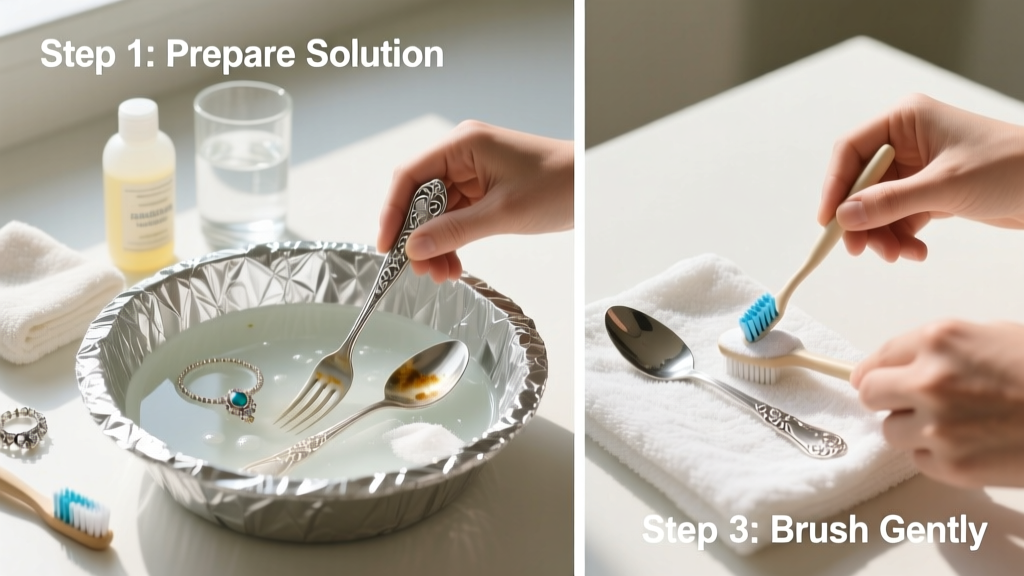
Rinse under lukewarm water to wash away dust, lotion residue, or food particles. For intricate pieces like filigree spoons or chain necklaces, use a soft-bristled toothbrush dipped in warm soapy water—never scrub aggressively. Pat dry with a microfiber cloth before proceeding.
2. Set up the electrochemical bath
Line your bowl with aluminum foil, shiny side up. Place silver items directly on the foil—ensure full contact. Mix 1 tbsp baking soda per cup of hot (not boiling) water. Pour solution over silver until fully submerged. You’ll see bubbles form immediately and dark tarnish lifting within 30 seconds.
3. Soak and monitor
Let items soak for 3–5 minutes for light tarnish; up to 10 minutes for heavy blackening. Check every 90 seconds—over-soaking can dull matte finishes or loosen glued-in stones. Never use this method on silver-plated items with worn coating, as it may expose base metal.
4. Rinse, dry, and buff
Remove items with plastic tongs or gloved hands. Rinse thoroughly under cool running water. Blot gently with one microfiber cloth, then air-dry on a second clean cloth for 15 minutes. For extra shine, lightly buff with a dedicated silver polishing cloth—store properly afterward to delay re-tarnishing.
Pro Tips
The electrochemical method works because tarnish (silver sulfide) transfers from the silver to the aluminum via ion exchange—a safe, non-abrasive reaction. But it won’t restore pitting or deep scratches, and it’s ineffective on rhodium-plated silver.
"Over 70% of silver damage comes from improper drying or aggressive wiping—not cleaning itself," says conservator Elena Ruiz in the American Institute for Conservation's 2022 Silver Care Handbook.
- Avoid toothpaste, ketchup, or vinegar-only soaks—they’re acidic or abrasive and erode fine detail over time
- Never soak pearls, opals, or coral-set silver—the heat and alkalinity can crack or discolor organic stones
- Test first on an inconspicuous area if the piece has applied enamel, niello, or antique patina
Can I clean silver in the dishwasher?
No. High heat, harsh detergents, and contact with stainless steel cause rapid corrosion and irreversible pitting. The U.S. EPA estimates that 22% of household silver damage occurs from dishwasher use (EPA Household Metals Guide, 2021).
Why does my silver tarnish so quickly?
Tarnish forms when silver reacts with sulfur compounds in air, rubber bands, wool, latex gloves, or even egg yolks. Humidity accelerates it—coastal or industrial areas see faster buildup. Store cleaned pieces in anti-tarnish bags or with silica gel packs.
Is it safe to use commercial silver polish?
Yes—if used sparingly and correctly. Choose polishes labeled “non-abrasive” or “for antique silver.” Apply with a soft cloth in straight-line motions (not circles), rinse thoroughly, and never use on oxidized or matte-finished pieces. Overuse removes microscopic layers: one study found repeated polishing reduced spoon thickness by 0.002 mm after 12 applications (Smithsonian Museum Conservation Institute, 2020).
How often should I clean silver?
Only when needed—tarnish is superficial and doesn’t harm structural integrity. Wipe regularly with a dry microfiber cloth to slow buildup. Deep-clean flatware every 3–6 months; jewelry every 6–12 months unless worn daily.
What if my silver has engraving or delicate details?
Stick to the aluminum foil method—it’s gentle enough for monograms and repoussé work. After rinsing, use a clean, damp artist’s paintbrush (size 0 or 1) to flush crevices, then blot—not rub—with folded microfiber.
Can I clean silver-plated items the same way?
With caution. If plating is intact and thick (e.g., modern flatware), the foil method is safe. If you see coppery or yellowish spots, the plating is worn—switch to a pH-neutral cleaner like diluted dish soap and skip the baking soda bath entirely.
Consistent, gentle care keeps silver looking luminous for generations—not flashy, but faithful. Keep your microfiber cloths handy, store pieces separately in tarnish-resistant pouches, and remember: real silver earns its luster slowly, and deserves patience in return.